Job search
How to find a graduate job in Switzerland — step by step
Updated:
In short
Search in the language you can work in, not the one that feels international. Across the open Swiss adverts in our index, a rank word in the title — Senior, Lead, Head, Director, Chef — appears in 28.8 per cent of English-language adverts and 8.2 per cent of German-language ones. Count "Manager" too and the gap is 41.4 against 12.6 per cent. The English-language slice of this market looks like the open door for a graduate and is in fact its most senior corner.
The permit step reports what the federal statute and the authorities publish. It is not legal or immigration advice: the binding bodies are the cantonal migration authority at your intended place of work and the State Secretariat for Migration.
The Swiss job portals at a glance
Click an image for the full-size view. What each portal actually is stands beside it.
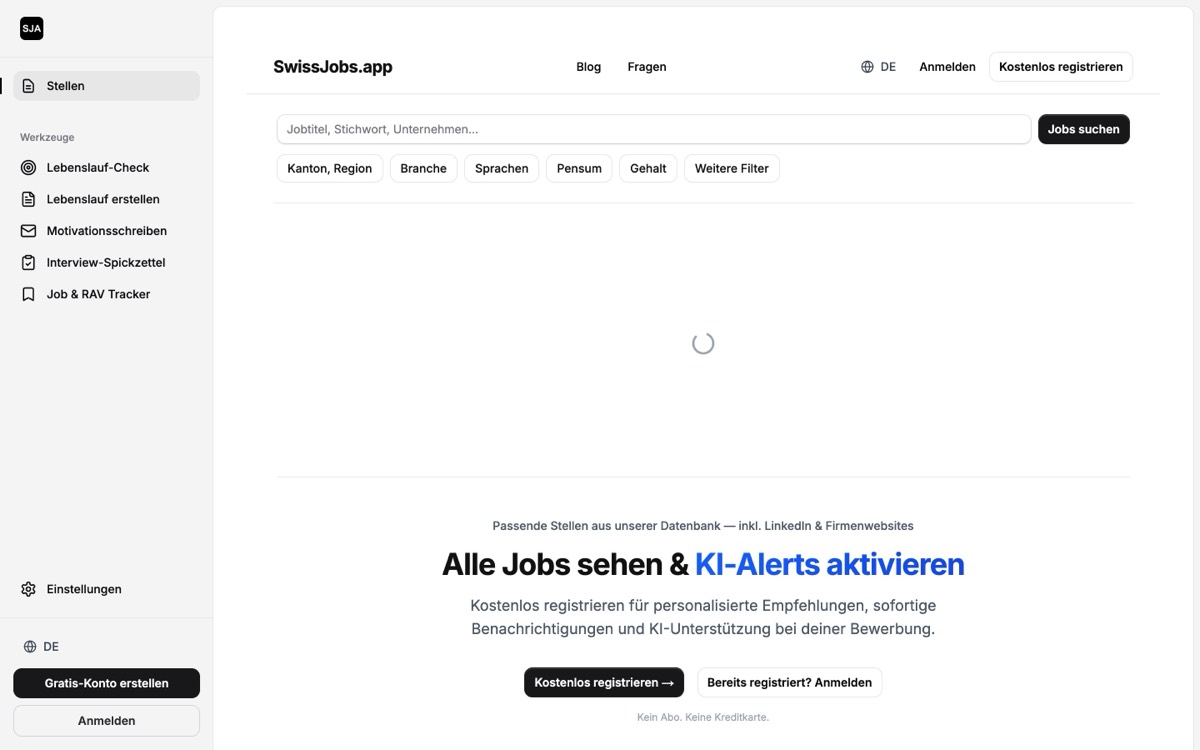
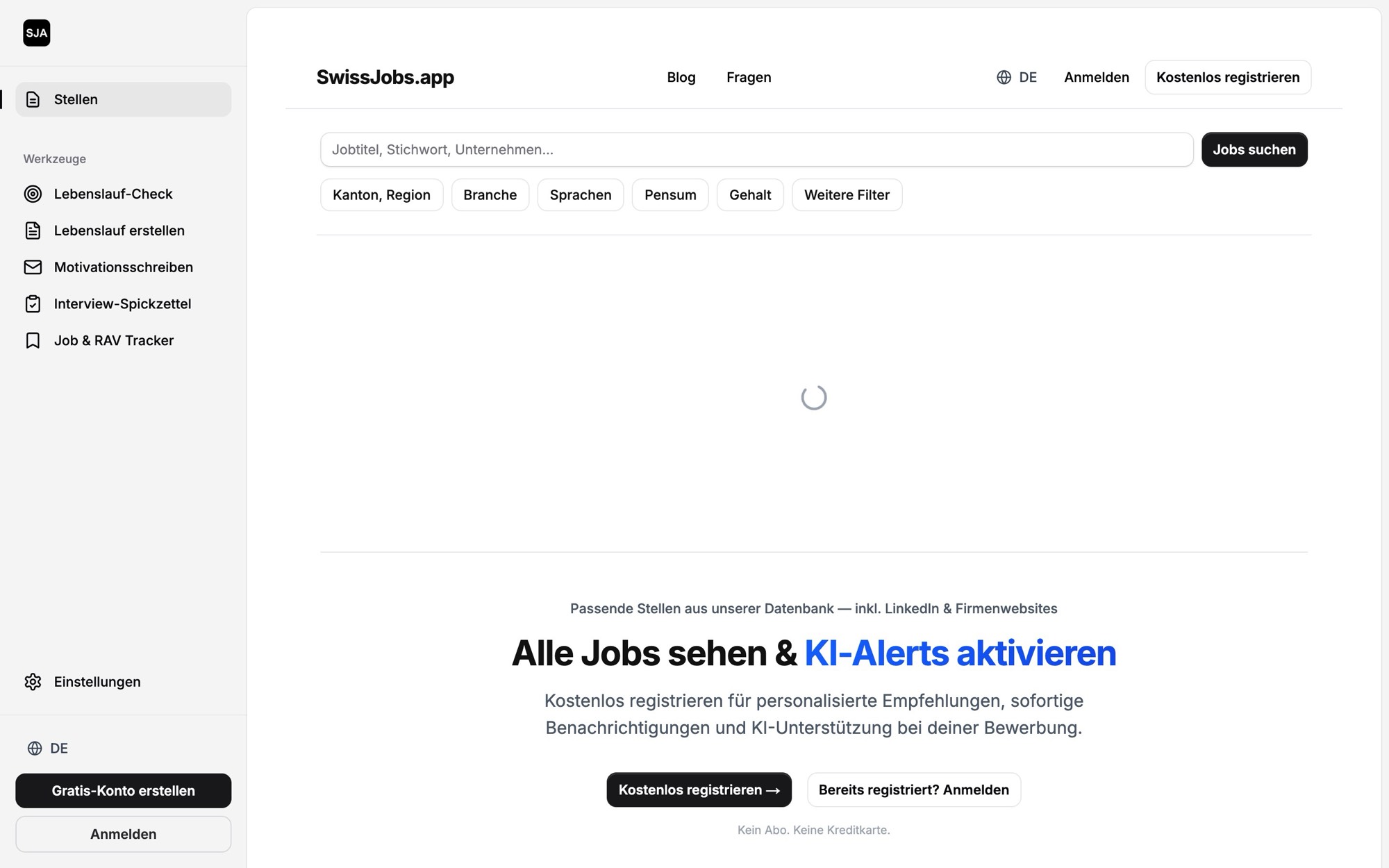
1. SwissJobs.appOur app
Over 21,000 open Swiss roles from ATS systems, company sites and LinkedIn in one place — and from any advert, straight into a CV, a motivation letter, a CV check and interview prep. The RAV job-search-efforts form fills itself from your application tracker. Free to use; the account is asked for at save.
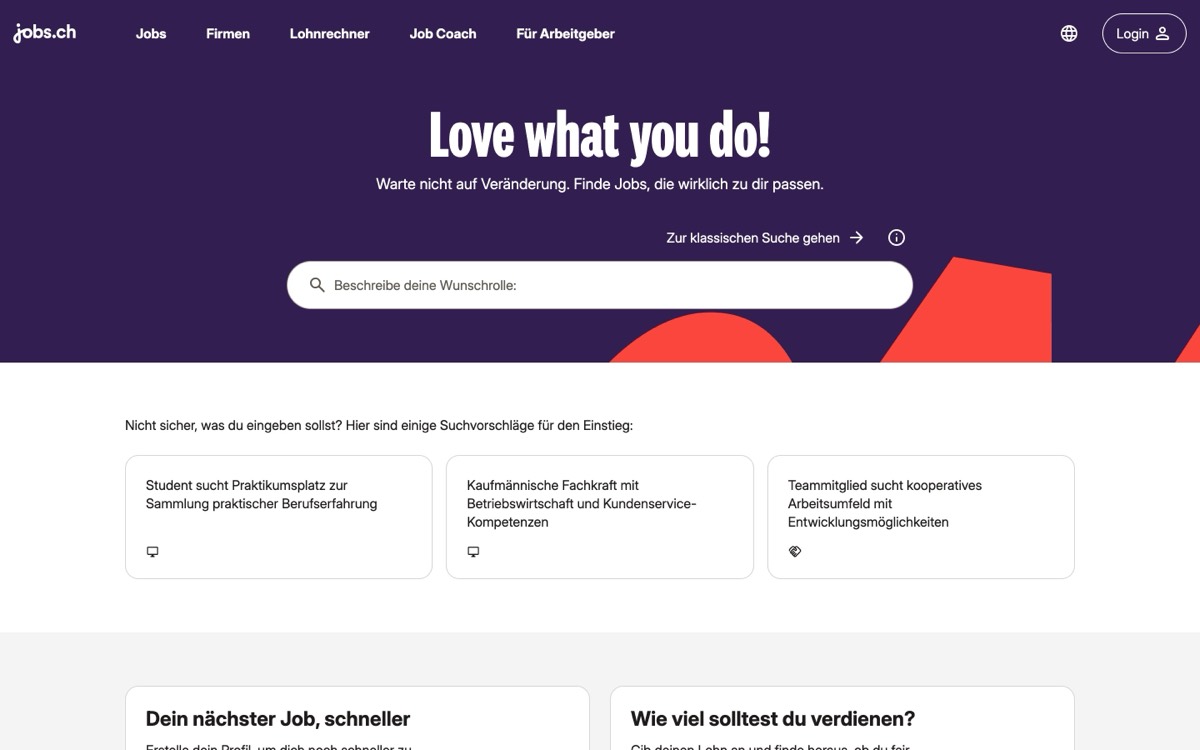
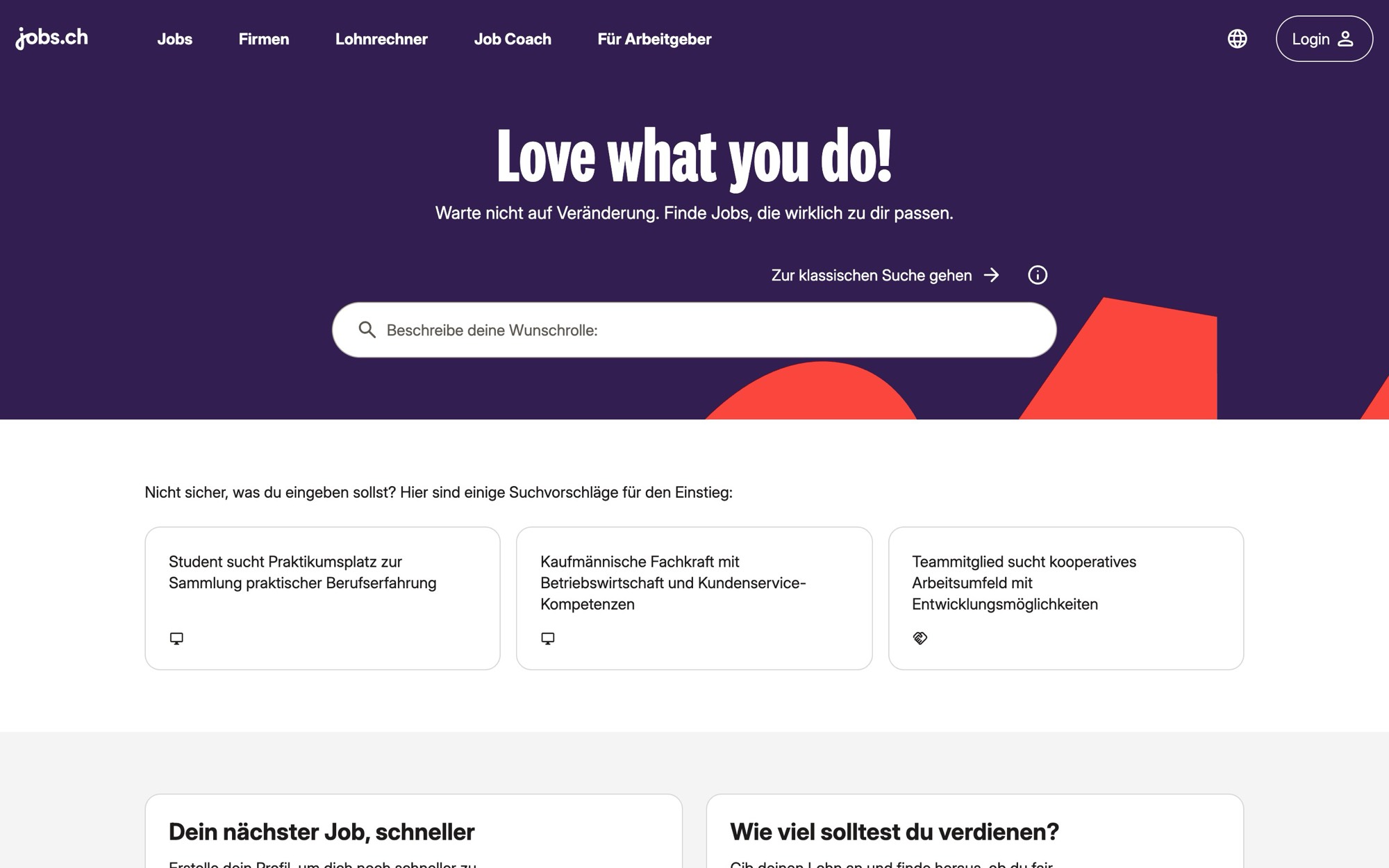
The best-known board in German-speaking Switzerland and the largest index in the country. Owned by JobCloud AG — as are jobup.ch and JobScout24.
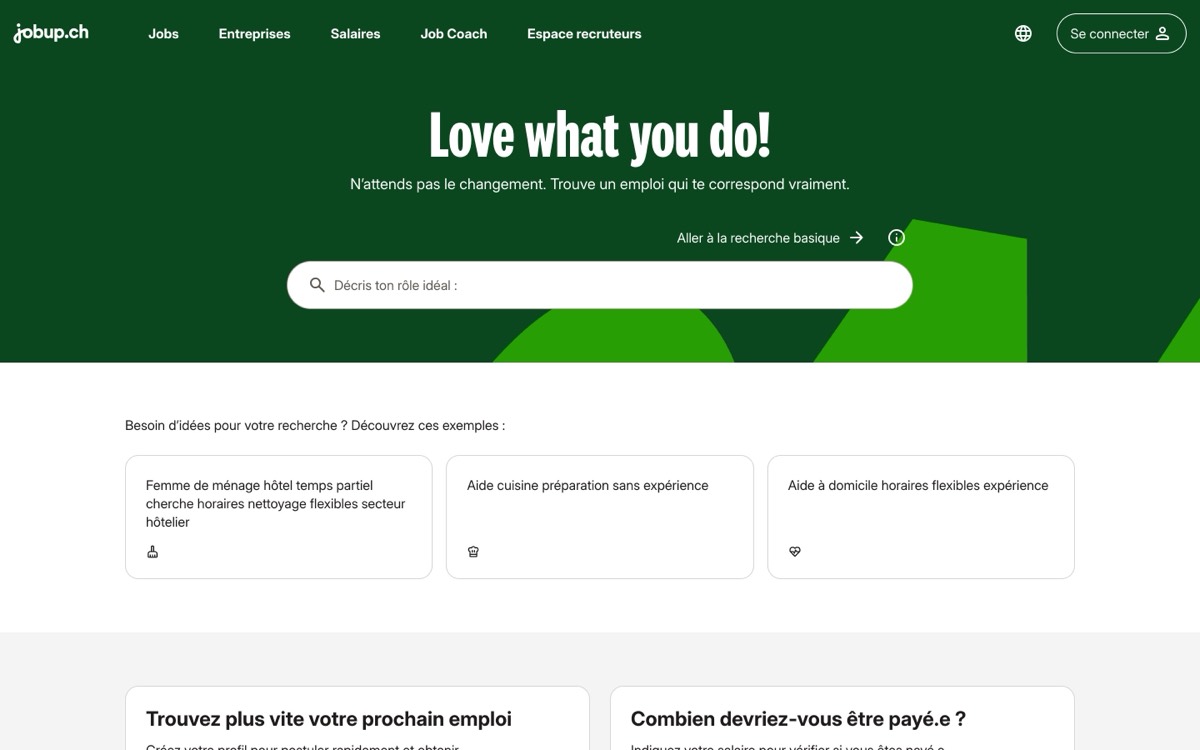
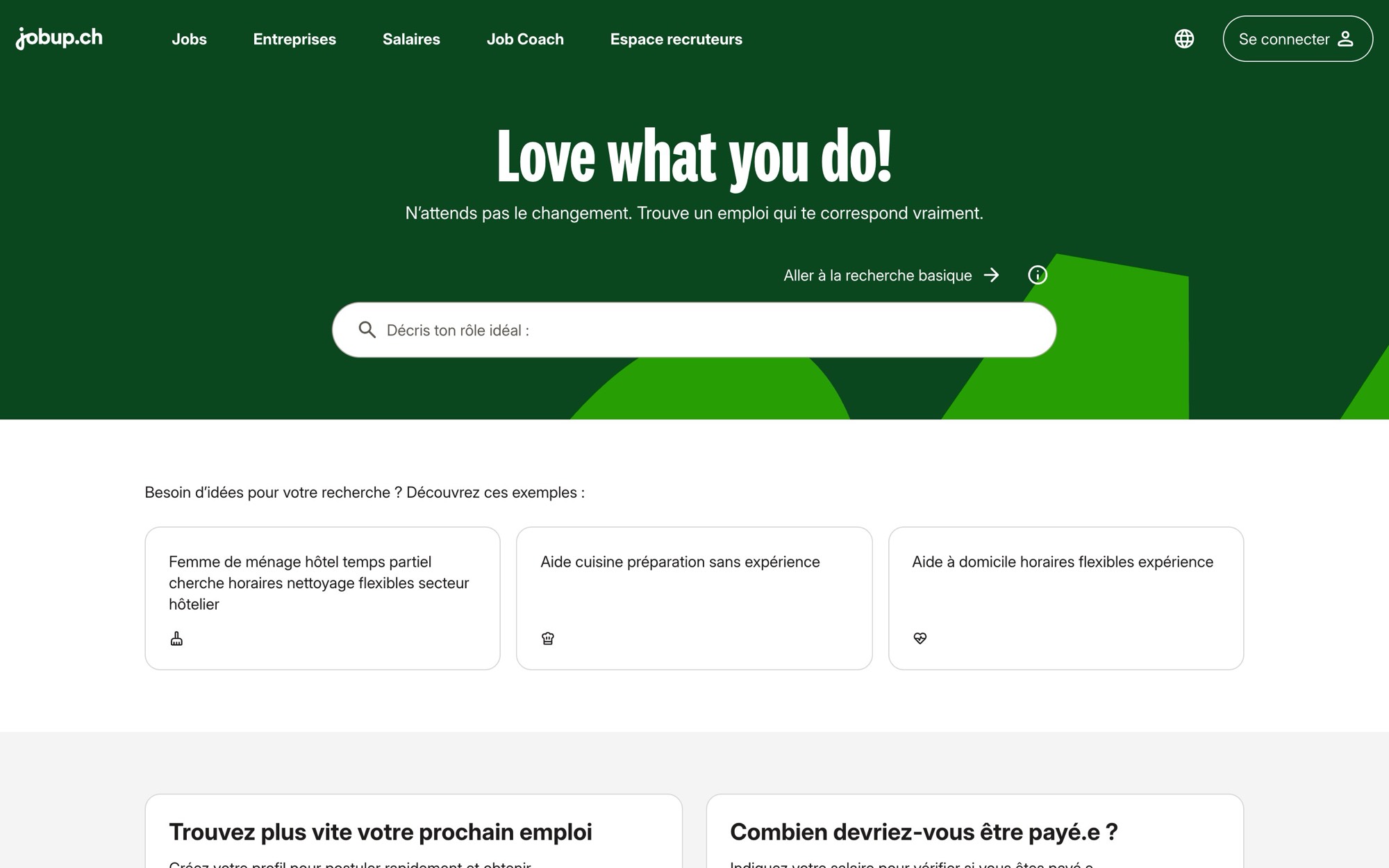
The standard in French-speaking Switzerland and the first place to look for the Romandie — but the same JobCloud AG as jobs.ch.
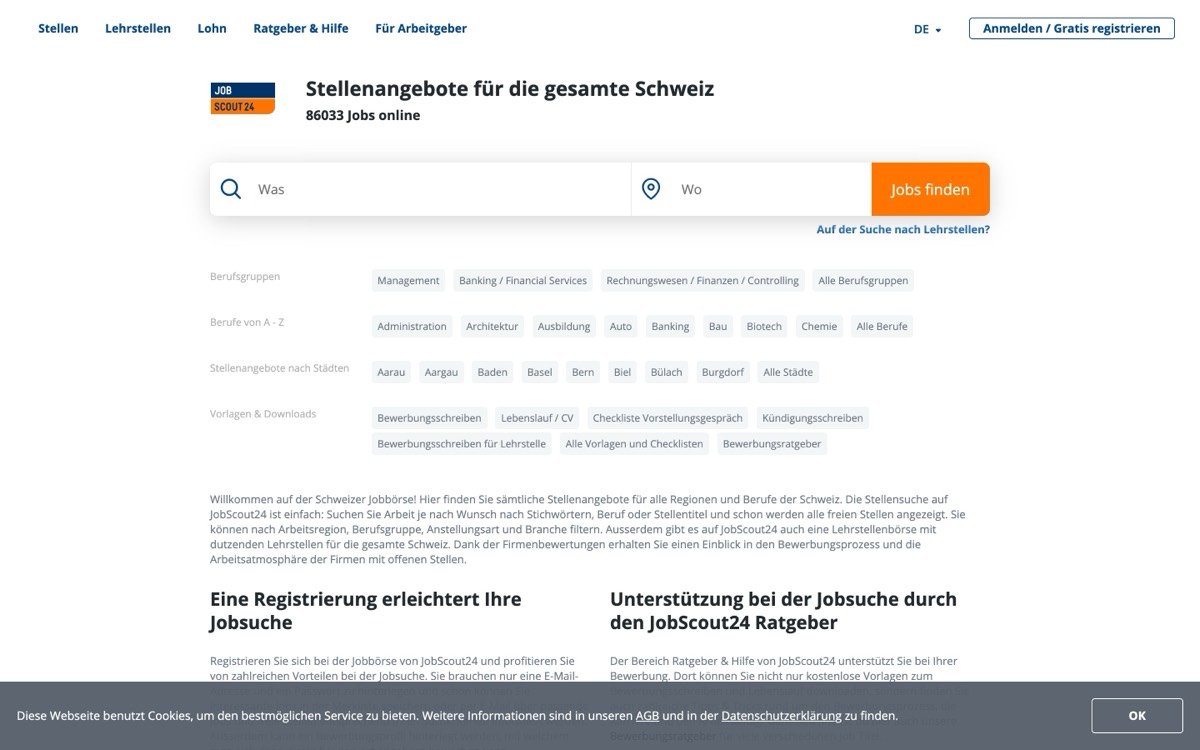
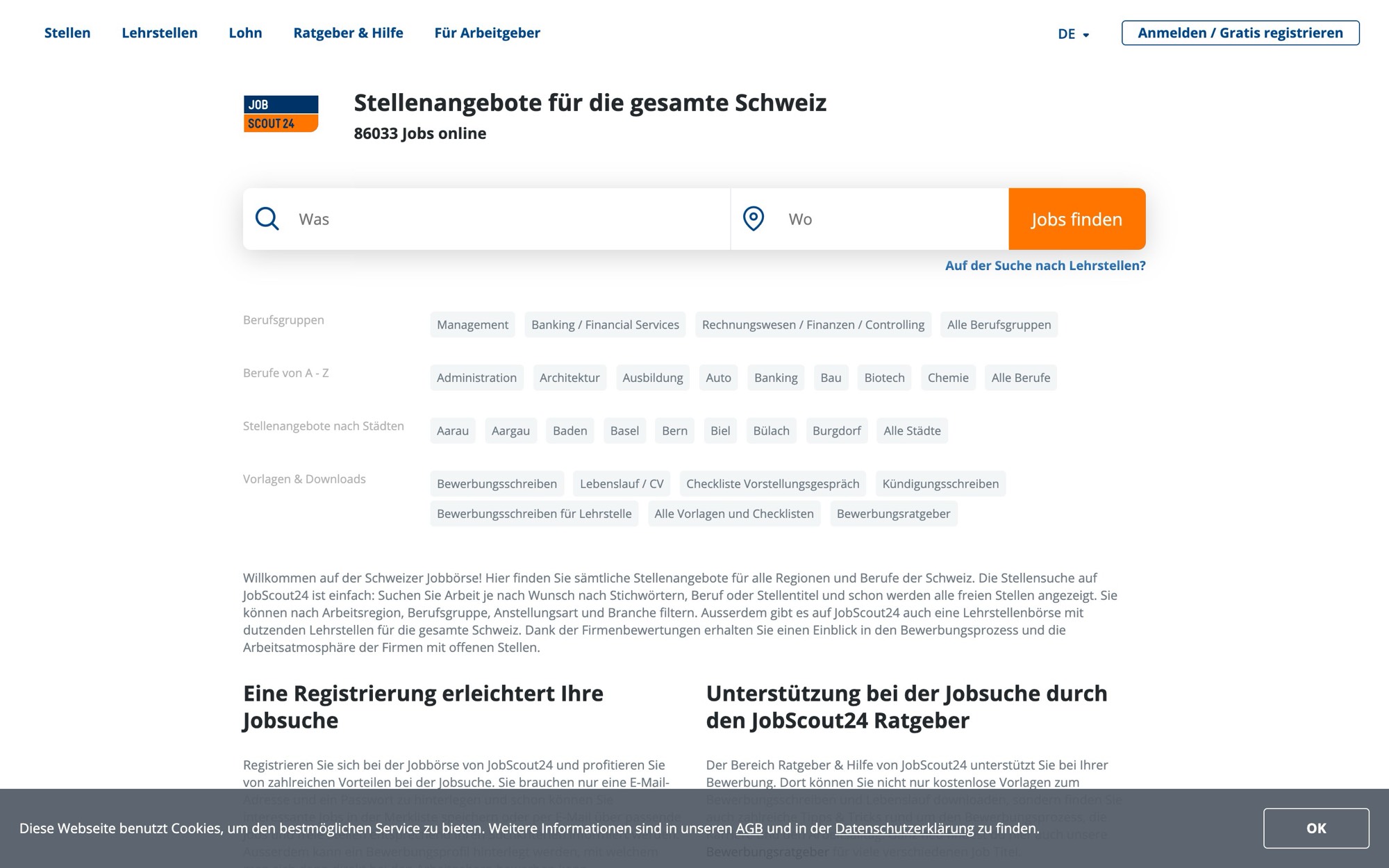
A third brand from the same company. Searching all three to widen your search means searching one provider three times.
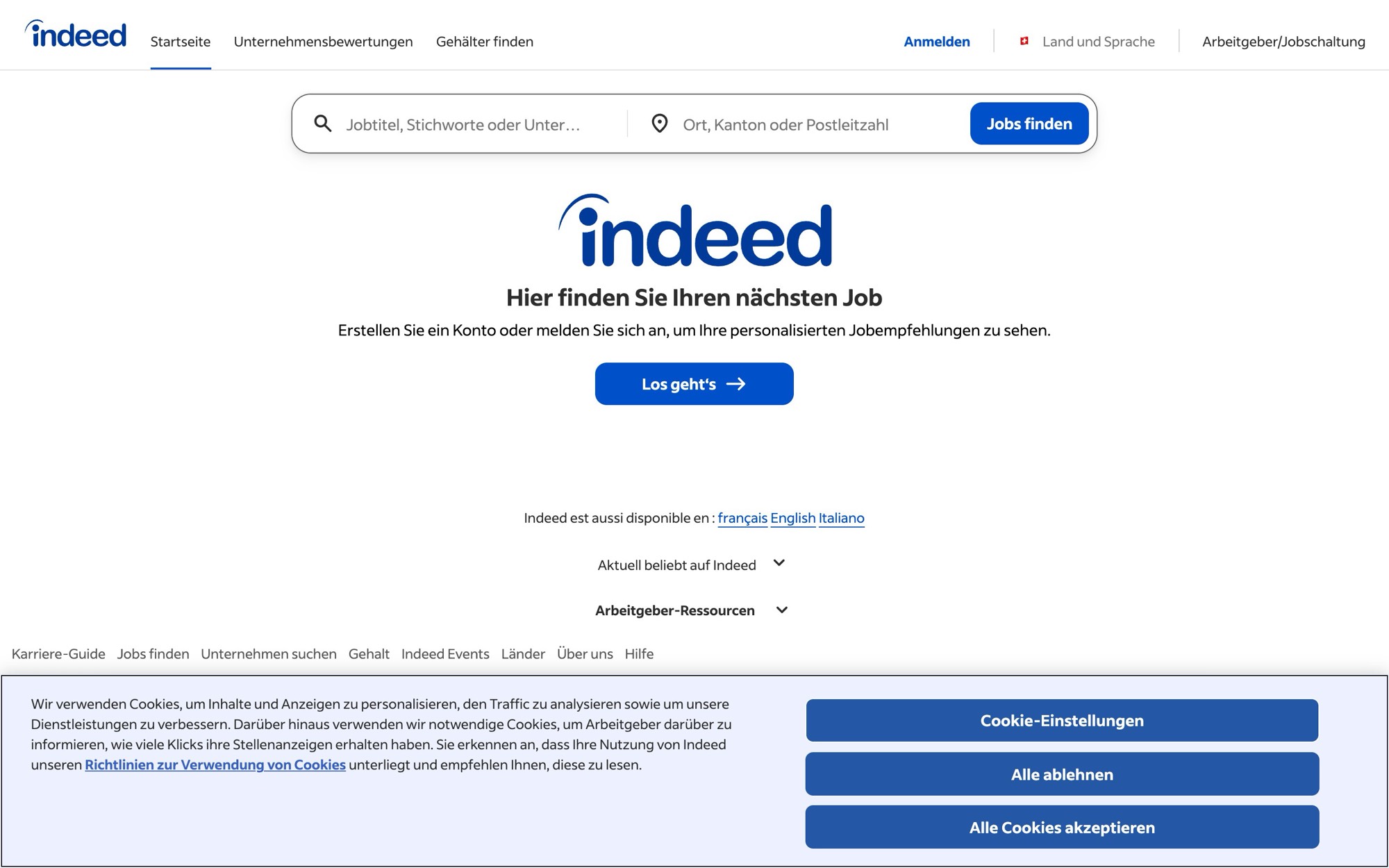
The broadest aggregation, because Indeed also collects from other boards — at the cost of many duplicates of the same advert.
The best reputation for English-speaking and international roles in Switzerland. Considerably thinner for trades, care and commercial roles.
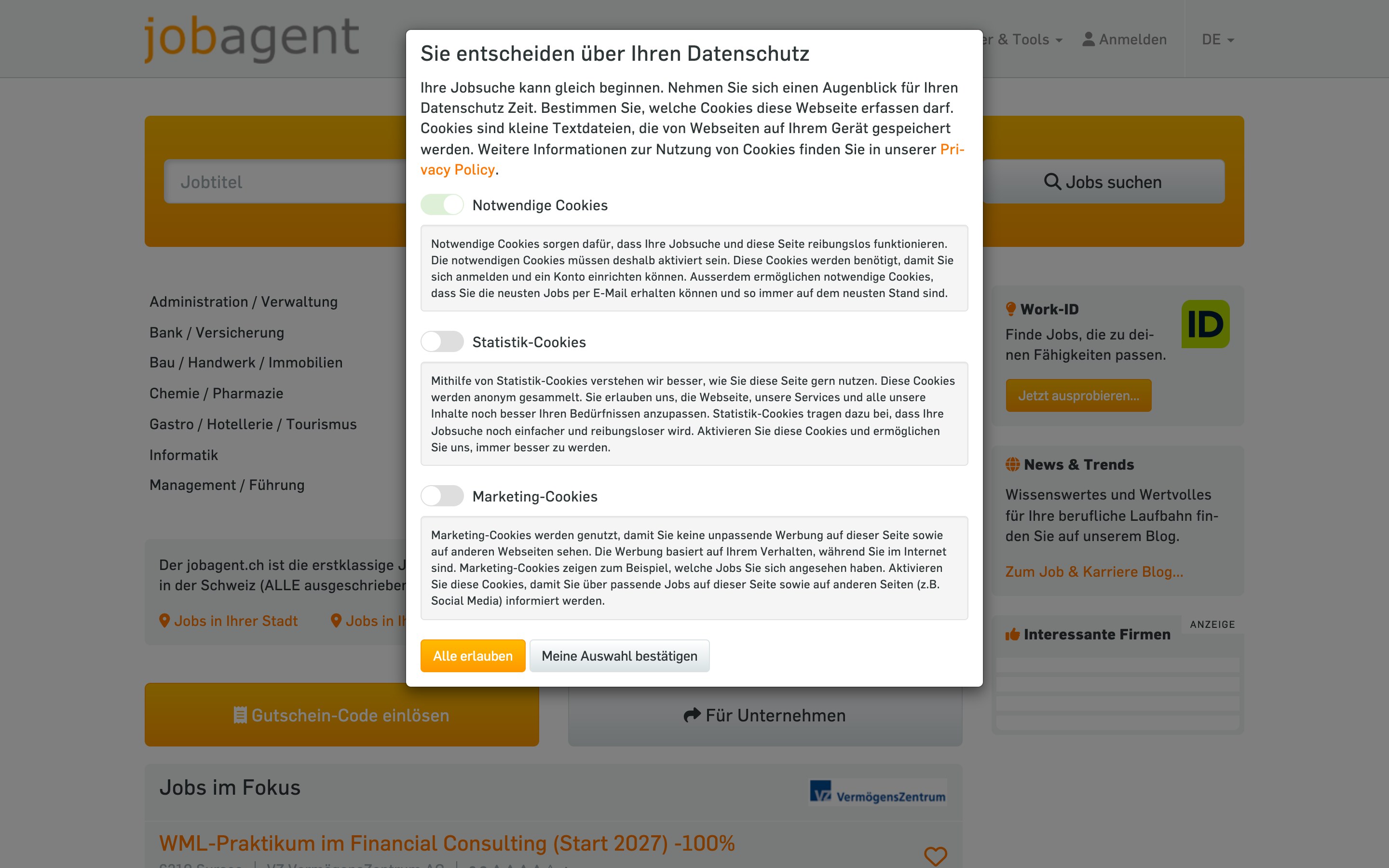
A meta-search across the Swiss job boards, "every job in Switzerland at a glance". Its strength is the Job-Abo: a saved search that mails you new adverts from every portal it covers. Salary calculator and application guides alongside.
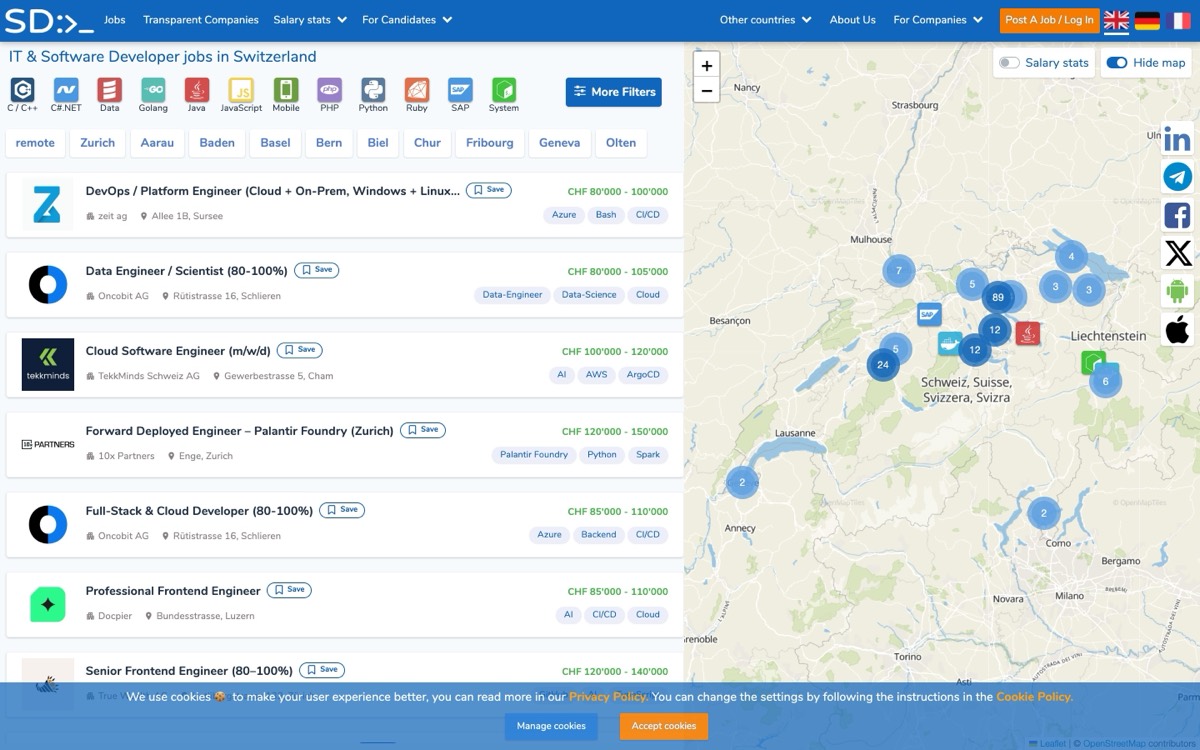
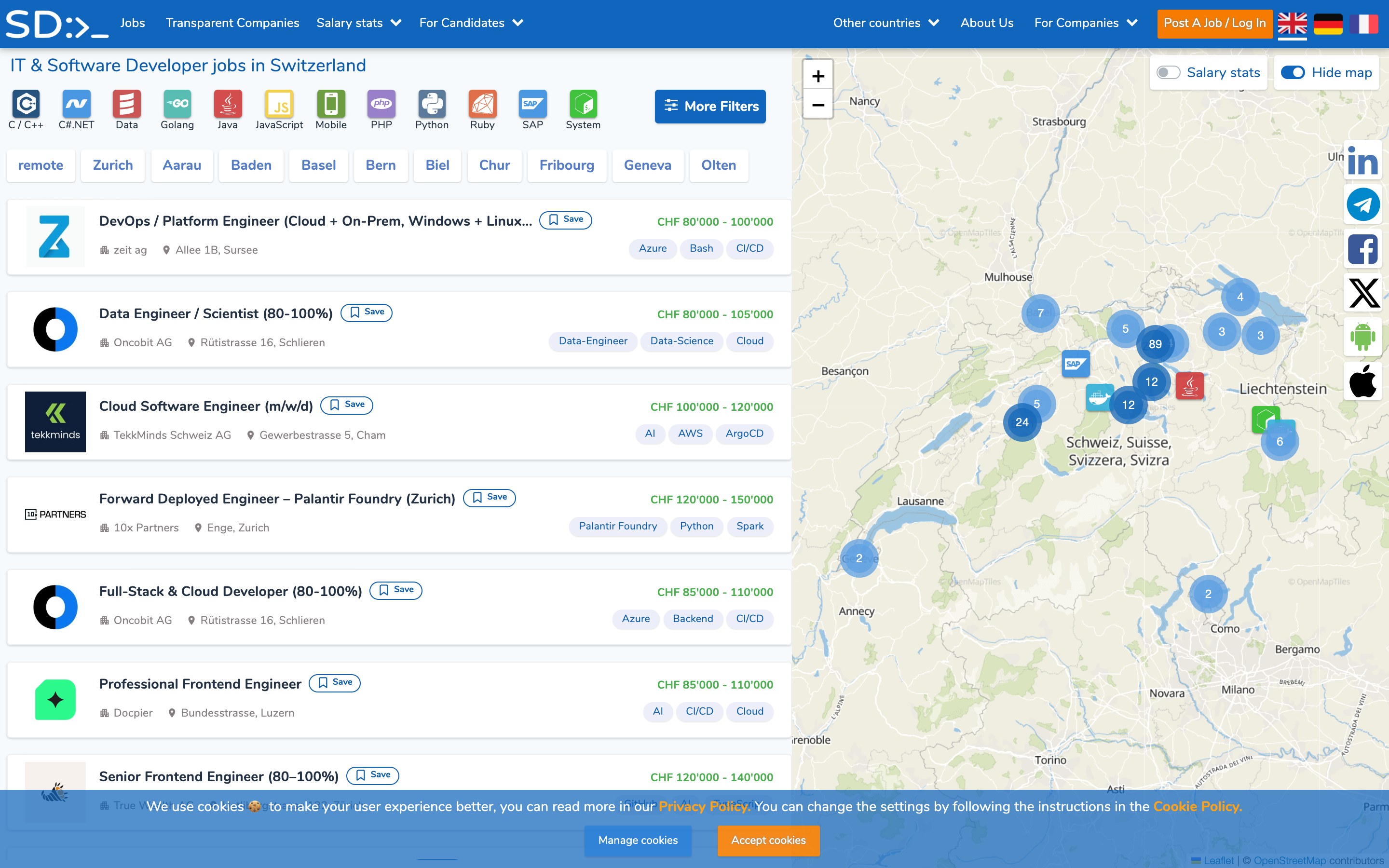
IT and software only, and thorough about it: "183 IT & Software developer jobs in Switzerland", filtered by technology (C#, Java, Python, DevOps, ML) rather than by industry. Publishes salary statistics and lists the companies that disclose their ranges. The site itself is in English.
Jobs by profession, city or language
Type a profession, a city or a language, the page shows the adverts currently open for it.
By profession
- Consultant
- Project Manager
- Retail Sales
- Nurse
- Nursing & Care
- Administrative Assistant
- Account Manager
- Software Engineer
- Public Administration
- Architect
- Insurance
- Chef
71 more — narrow the search
By work type
This guide runs through seven steps. The first three are search technique: building the word list this market is actually labelled with, reading the title as a rank, and setting a search rhythm that matches when adverts appear. Only then come permits, the internship route, registering with the public employment service and the dossier itself. The order matters — polishing a CV before the search terms are right improves a document that never reaches the right adverts.
The figures come from our own count of the titles, publication dates and contract fields of every advert open in our index on 5 September 2026. They say nothing about whether you are good enough. They describe how this job market is labelled and how fast it turns over, which are the two things that most reliably send a graduate search off course.
One note if you are reading this from outside Switzerland, which a large share of English-language readers are: a Swiss application is not a resume with different spelling. Two pages is the norm, a photo is conventional rather than frowned upon, language skills are stated as CEFR levels rather than as "fluent", the workload appears as a percentage — a Pensum — and employer references, the Arbeitszeugnisse, are part of the dossier.
Our own count of Swiss adverts open on 5 September 2026 with a detected advert language; apprenticeship posts excluded on the title. Counting "Manager" as well raises every figure: 41.4 English, 18.8 French, 12.6 German, 5.2 Italian.
- In short: the words graduates search with barely exist here. "Graduate" or its local equivalents appear in 0.3 per cent of open Swiss job titles, "Trainee" in 0.3 per cent, "Junior" in 1.0 per cent, and "entry level" in 0.0 per cent.
- In short: the market is labelled with job names instead. English-language titles are dominated by function and rank words — Senior 17.0 per cent, Manager 17.0, Engineer 16.3, Specialist 7.6, Lead 6.2, Director 3.7, Head 3.0.
- A rank word sits in 14.6 per cent of all open adverts: 28.8 per cent of English-language ones, 16.1 per cent of French, 8.2 per cent of German and 2.3 per cent of Italian.
- English-language adverts also move slowest: 14.6 per cent are under a week old and the median is close to forty-four days, against 28.6 per cent and thirty days for German-language adverts. Checking the English list daily is wasted effort.
- The market keeps office hours: 90.4 per cent of adverts published in the last three months carry a weekday date, peaking on Wednesday at 21.6 per cent, with Sunday at 2.9 per cent.
- Old is not the same as gone: 23.0 per cent of what is open today was published in the last seven days, and half of the stock is more than a month old. Looking only at "new today" hides three quarters of the market.
- The internship route is narrow: 2.9 per cent of titles name an internship and 0.3 per cent a trainee programme. It works as a second channel, not as the plan.
- Non-EU/EFTA graduates of a Swiss university have an explicit statutory exception: the Foreign Nationals and Integration Act admits them for six months after completing their education or continuing education in order to find corresponding work.
1. Write the word list this market is actually labelled with
Before opening any job site, write down about twelve search terms — the names of the work you would actually be doing on a Monday morning, not the name of your status. The reason is measurable. Across the open adverts, 0.3 per cent of titles carry "graduate" or a local equivalent, 1.0 per cent carry "Junior", 0.3 per cent "Trainee", and "entry level" and its German and French equivalents appear in 0.0 per cent. A search built on those words shows you about one per cent of what is open.
What the titles do carry is the name of the job. In German-language adverts, "Mitarbeiter" appears in 3.4 per cent of titles and "Sachbearbeiter" in 1.6, alongside Verkäufer, Projektleiter, Pflegefachperson and Kundenberater. In English-language adverts the vocabulary is different again: Engineer 16.3 per cent, Specialist 7.6, Sales 4.4, Product 3.9, Software 3.7, Data 3.6, Consultant 3.6, Associate 3.4. Note which words carry the junior end here: "Associate" appears in 3.4 per cent of English-language titles and "Analyst" in 2.0, against 1.0 per cent for "Junior".
Build the list as three or four job families that fit your degree, each with three title variants: the English one, the German or French one, and the Swiss administrative one where it exists — Sachbearbeiter, Fachspezialist, Kundenberater, gestionnaire. Save each as an alert. Your degree belongs in the application, not in the search box.
2. Read the title as a rank, and sort before you read
Swiss advert titles are short and almost always carry a rank. A rank word — Senior, Sr., Lead, Head, Leiter, Leitung, Chef, Responsable, Director — appears in 14.6 per cent of all open adverts, and 21.0 per cent once "Manager" is counted, a word that in Switzerland often names a function rather than a management level. In the first weeks of a search you can skip those without reading them: the title has already said that a track record is expected.
The share depends heavily on the language the advert is written in, and this is the single most useful filter in this guide. Rank words sit in 8.2 per cent of German-language titles, 16.1 per cent of French, 28.8 per cent of English and 2.3 per cent of Italian. English-language adverts feel like the accessible part of the Swiss market to an international graduate; they are in fact where the senior roles concentrate, because they are written by employers recruiting internationally for people who can deliver immediately.
So if you can work in German or French, search there first, even if your degree was taught in English. And treat a qualification in the title as a hard condition: EFZ appears in 4.0 per cent of German-language titles and CFC in 3.7 per cent of French ones. Those adverts are written for people holding the Swiss vocational certificate, which a university degree does not substitute for.
3. Set the rhythm to two working days a week
This market keeps office hours. Of the adverts published in the last three months, 90.4 per cent carry a weekday publication date: Wednesday 21.6 per cent, Thursday 20.0, Tuesday 18.7, Friday 15.4, Monday 14.7. Saturday accounts for 6.9 per cent and Sunday for 2.9. The Sunday-evening search round that many people keep as a weekly ritual sees almost exactly the list that existed on Friday.
The second half of the rhythm is how long adverts stay up. Only 23.0 per cent of what is open today was published within the last seven days, 47.2 per cent within thirty days, and the median advert is thirty-one days old. Two fixed slots midweek are therefore enough, and an older advert is not a filled one — filtering to "new today" removes three quarters of the market from view.
Renewal also differs by advert language, which matters for how you spend the two slots. German-language adverts are the freshest: 28.6 per cent are under a week old, median thirty days. English-language adverts are the slowest: 14.6 per cent under a week, median close to forty-four days. French sits at 17.3 per cent and Italian at 24.6. If your search is English-only, a daily check produces almost nothing new — that time is better spent on applications.
4. Settle the permit question before you invest weeks
For EU and EFTA nationals this step is one line in the dossier: free movement applies, there is no permit procedure for the employer to run. For everyone else it decides the whole strategy. The State Secretariat for Migration states that nationals of non-EU/EFTA states may only work in Switzerland if they are highly qualified — managers, specialists or other skilled professionals — which "means, essentially, that you should have a degree from a university or an institution of higher education, as well as a number of years of professional work experience". For someone who has just graduated, that experience requirement is precisely the obstacle.
There is an explicit statutory exception, and it is why a Swiss degree is worth more here than a foreign one. The Foreign Nationals and Integration Act says in Article 21 paragraph 1 that a foreign national may only be admitted to work if no suitable person can be found in Switzerland or in a state with a free-movement agreement. Paragraph 3 exempts holders of a Swiss university degree whose work is of high scientific or economic interest, and provides that they are admitted for a period of six months after completing their education or continuing education in Switzerland in order to find such work. That window runs from graduation and closes on its own schedule, whatever stage your search has reached.
What follows for the dossier is one line, placed near the top: where you live, with the canton, and whether an employer would have to run a procedure for you. A recruiter who cannot tell in a few seconds what your paperwork means for them files you as a maybe, and maybes get skipped. Give the town and canton rather than a country — for smaller employers, being local is an argument in itself.
5. Treat internships and trainee programmes as a second channel
The route most graduates think of first is the narrowest one. An internship is named in 2.9 per cent of open titles and a trainee programme in 0.3 per cent. By contract type, 75.7 per cent of adverts are full-time and 5.4 per cent part-time, while internships, fixed-term posts and contract work together account for roughly two and a half per cent. A search made only of internship adverts is working on a thirtieth of the market.
That is an argument against making it the whole plan, not against using it. Internships also concentrate somewhere other than most people assume: they appear in 4.7 per cent of French-language titles and 4.4 per cent of English-language ones, against 1.9 per cent in German. Searching German-speaking Switzerland for internships only means searching the thinnest part of the thinnest channel.
The workable order is the reverse of the instinctive one: regular adverts from your word list as the main flow, with one internship and trainee pass a week alongside. And where a programme requires a degree obtained recently, put that application at the start of your search rather than the end — that channel closes by itself over time, while ordinary adverts stay open.
6. Sign on with the RAV and take the five-day head start
Signing on as a jobseeker with a Regional Employment Centre — the RAV, ORP in French-speaking Switzerland, URC in Ticino — is not the same thing as claiming unemployment benefit, and the first part is worth doing even when you expect no payment. arbeit.swiss states that the services tied to registration are available exclusively to people already signed on as jobseekers with an RAV, and that by registering you can see vacancies covered by the job-registration requirement "five business days before they are published elsewhere, giving you a head start".
The order is fixed and frequently reversed: sign on at the RAV first, then create the portal account. Registering through the unemployment insurance identity system needs an AGOV login, your AHV number and an eight-digit personal number that comes from the RAV. Without signing on there is no such number, and without the number there is no access.
Whether any benefit is due to you is a separate question that only your RAV can answer, and it turns on contribution periods among other things. What this guide is after is the placement side: an extra source of adverts with a time advantage, a caseworker who knows the regional market, and the labour-market measures that can add practical experience if the search runs long.
7. Write against the advert that is open in front of you
One question is left at this stage: does your dossier answer this particular advert? In practice that means borrowing the advert’s own technical terms, working through its requirements in the order it lists them, and putting your internships, student jobs and thesis work exactly where it asks for them. Write what came out of the work rather than what you were assigned — "responsible for the institute’s communications" says nothing, "wrote and sent the monthly newsletter to some four hundred subscribers" says something.
Then the Swiss formalities, which apply to every dossier: two pages as the norm, a photo as convention, language levels as A1 to C2 rather than "fluent", the workload as a percentage, and everything in a single PDF whose file name carries your surname. If you are applying from abroad, expect to add employer references — the Arbeitszeugnis is a document Swiss employers read closely and most other markets do not produce.
This is the point where our own tools are relevant, and the reason is the workload: writing per advert is the right method and costs time that a graduate search does not have thirty times over. On our jobs list you open an advert, and the CV and the letter are built from its requirements — the advert sets the structure, not your study plan; you can try it without an account. The first step is still the one from section one — the word list that gets you into the right adverts in the first place.
What people report
Advisers writing for applicants from outside the EU repeat one correction of the order of operations: the first step is not the visa, it is the offer — the Swiss employer files the permit application, the candidate cannot. The same posts warn against paid intermediaries promising a Swiss work permit for a fee, on the grounds that no Swiss employer charges a candidate for being hired.
A recurring pattern in public LinkedIn posts addressed to non-EU applicants, taken from our collection of Swiss labour-market posts and summarised rather than quoted. The sequence matches how the State Secretariat for Migration describes the procedure.
Every share here comes from our own count of the titles, publication dates and contract fields of all Swiss adverts open in our continuously updated index on 5 September 2026. Apprenticeship and training posts are excluded on the title (4.6 per cent of the stock); internships and trainee posts are kept in and reported as their own share. Figures by advert language cover the 75.2 per cent of adverts whose language was detected. Counting is per advert, not per mention, and a word appearing only in the body text is not counted — so every share is a lower bound.
Sources
- Foreign Nationals and Integration Act (AIG/LEI), Art. 21 — priority; para. 3: six months for holders of a Swiss university degree (Fedlex, German text)
- Same provision in French — «Il est admis pendant six mois à compter de la fin de sa formation» (Fedlex)
- State Secretariat for Migration — admission of non-EU/EFTA nationals to the labour market
- arbeit.swiss — registration for jobseekers: requirements and the five-business-day head start
Related questions
What our job index says about the Swiss market
Computed live from our own index, not quoted from a study. Shares only, as of today.
Language the advert is written in
- Deutsch
- 60%
- English
- 23%
- Français
- 13%
- Italiano
- 3%
Of adverts that state a language requirement, the share asking for
- Deutsch
- 70%
- English
- 43%
- Français
- 21%
- Italiano
- 3%
19% posted in the last 7 days · Largest markets: Zürich 18% · Bern 10% · Genève 5% · Basel 5%