How do I find a part-time job in Switzerland?
Updated:
In short
About one Swiss advert in twenty is explicitly posted as part-time. What matters more is where: the highest shares are not in Zurich or Geneva but in Solothurn, Baden, Winterthur and Bern, where depending on the town roughly nine to twelve percent of roles are part-time. In Zurich it is only about four and a half percent, in Geneva not even four.
The Swiss job portals at a glance
Click an image for the full-size view. What each portal actually is stands beside it.
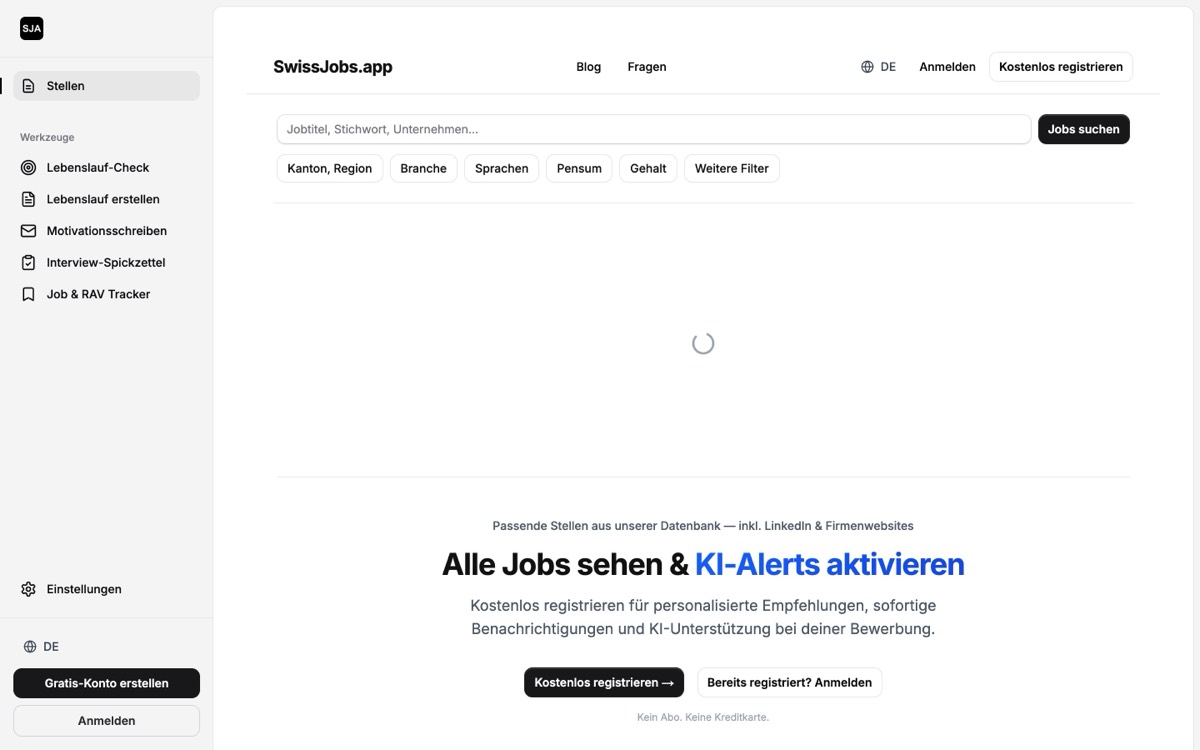
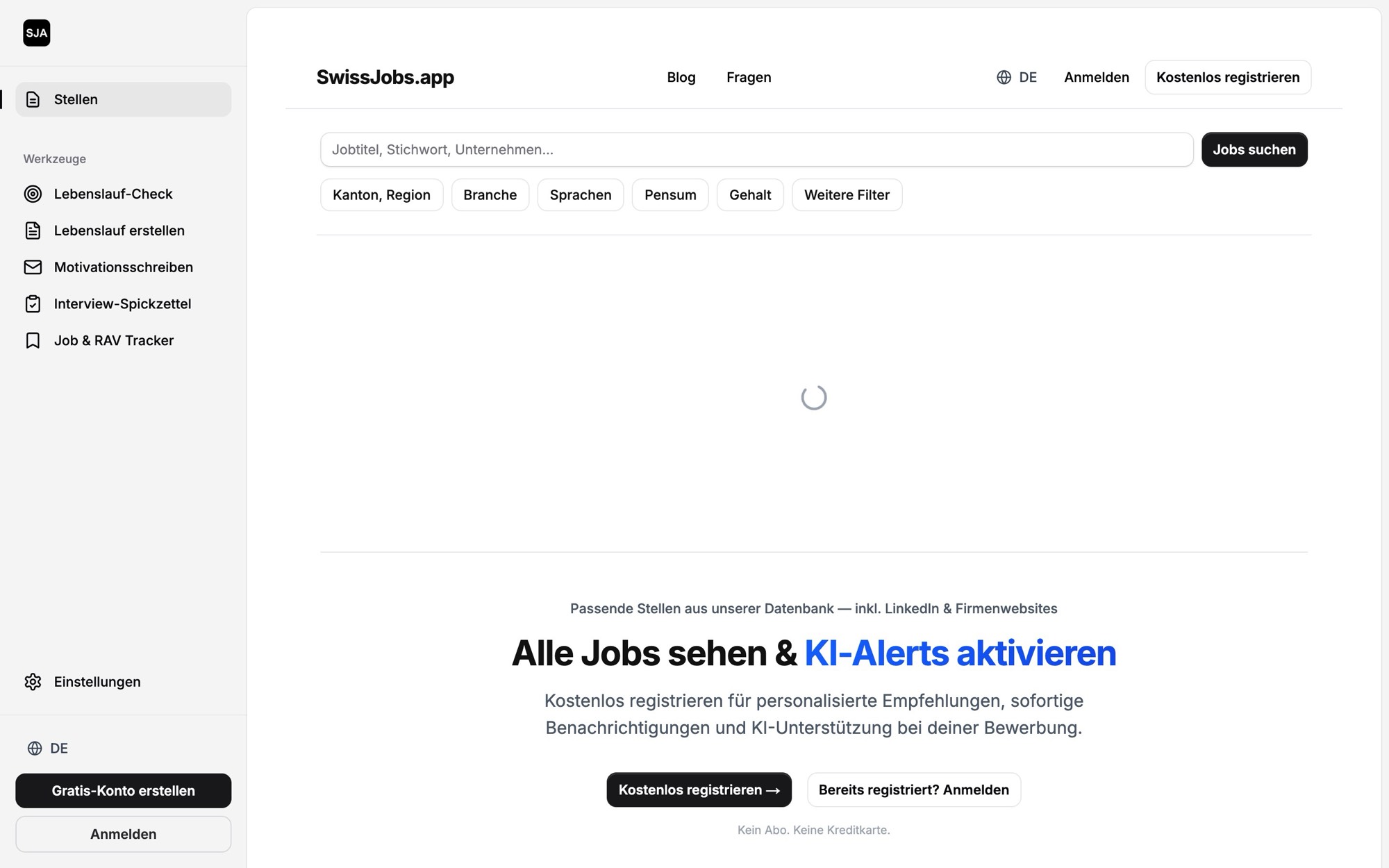
1. SwissJobs.appOur app
Over 21,000 open Swiss roles from ATS systems, company sites and LinkedIn in one place — and from any advert, straight into a CV, a motivation letter, a CV check and interview prep. The RAV job-search-efforts form fills itself from your application tracker. Free to use; the account is asked for at save.
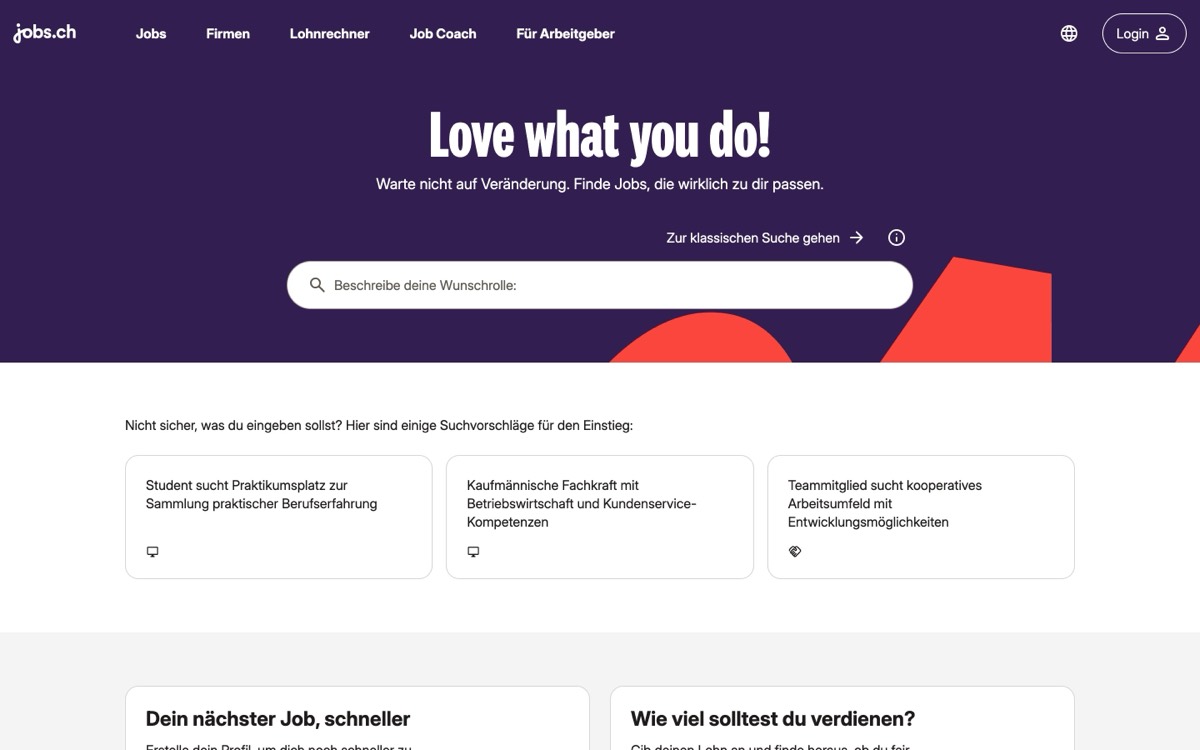
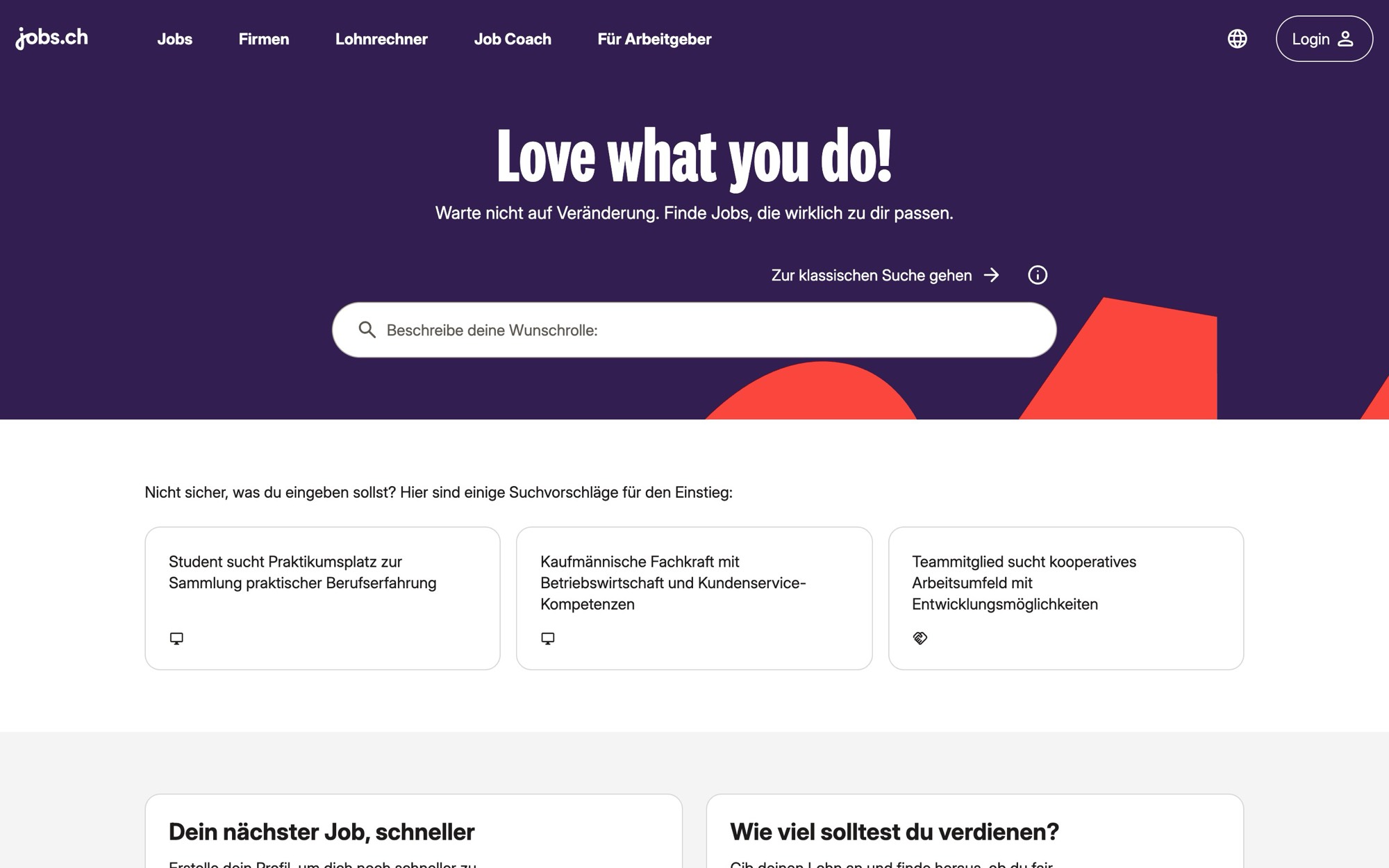
The best-known board in German-speaking Switzerland and the largest index in the country. Owned by JobCloud AG — as are jobup.ch and JobScout24.
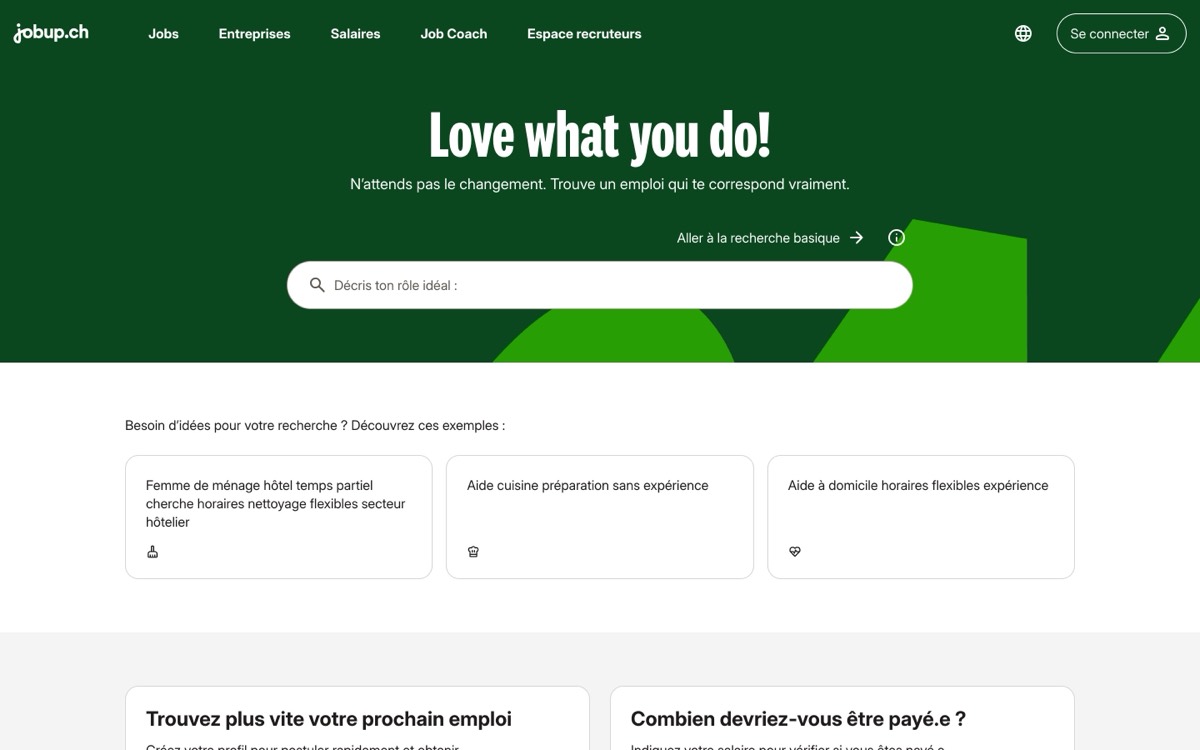
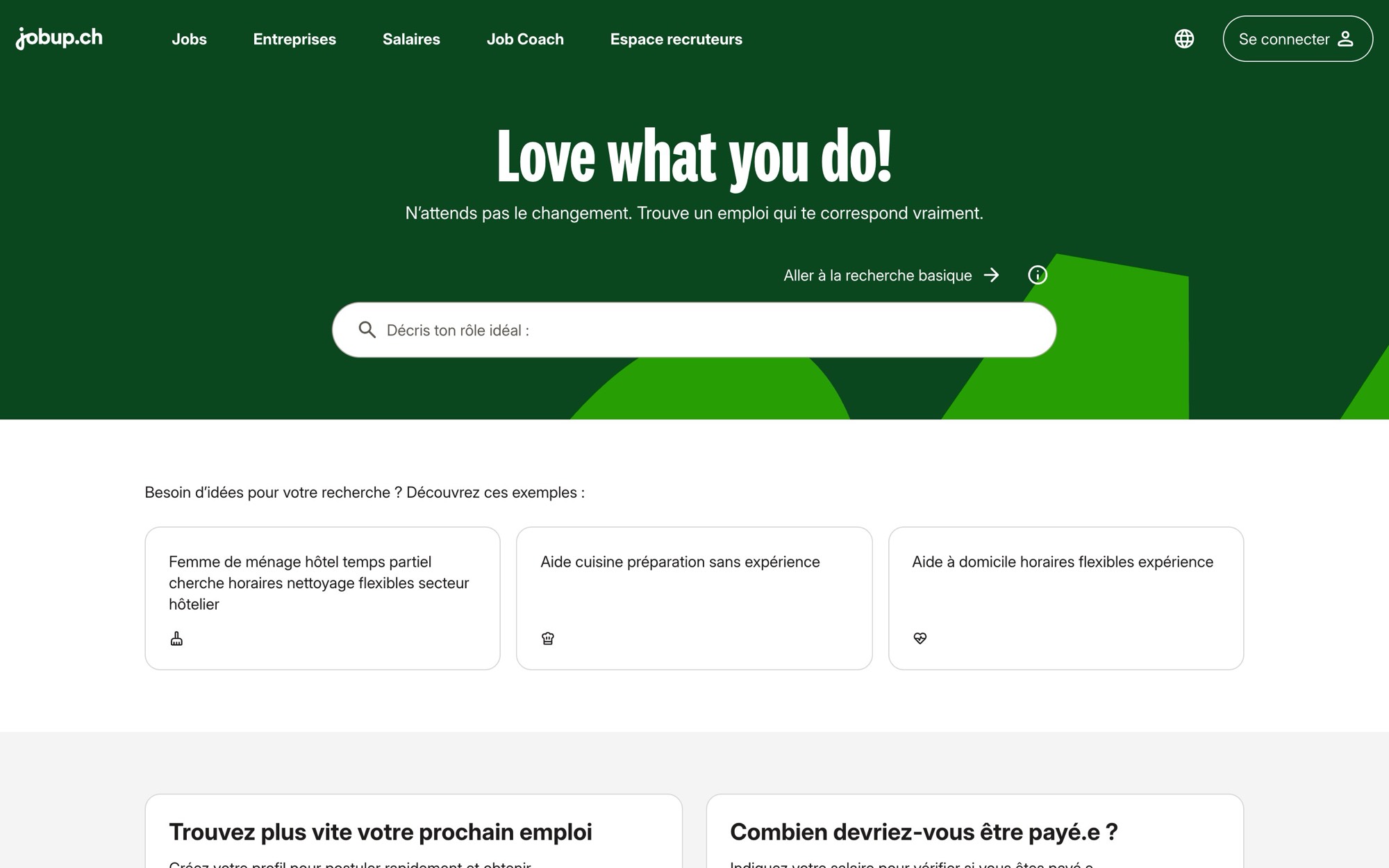
The standard in French-speaking Switzerland and the first place to look for the Romandie — but the same JobCloud AG as jobs.ch.
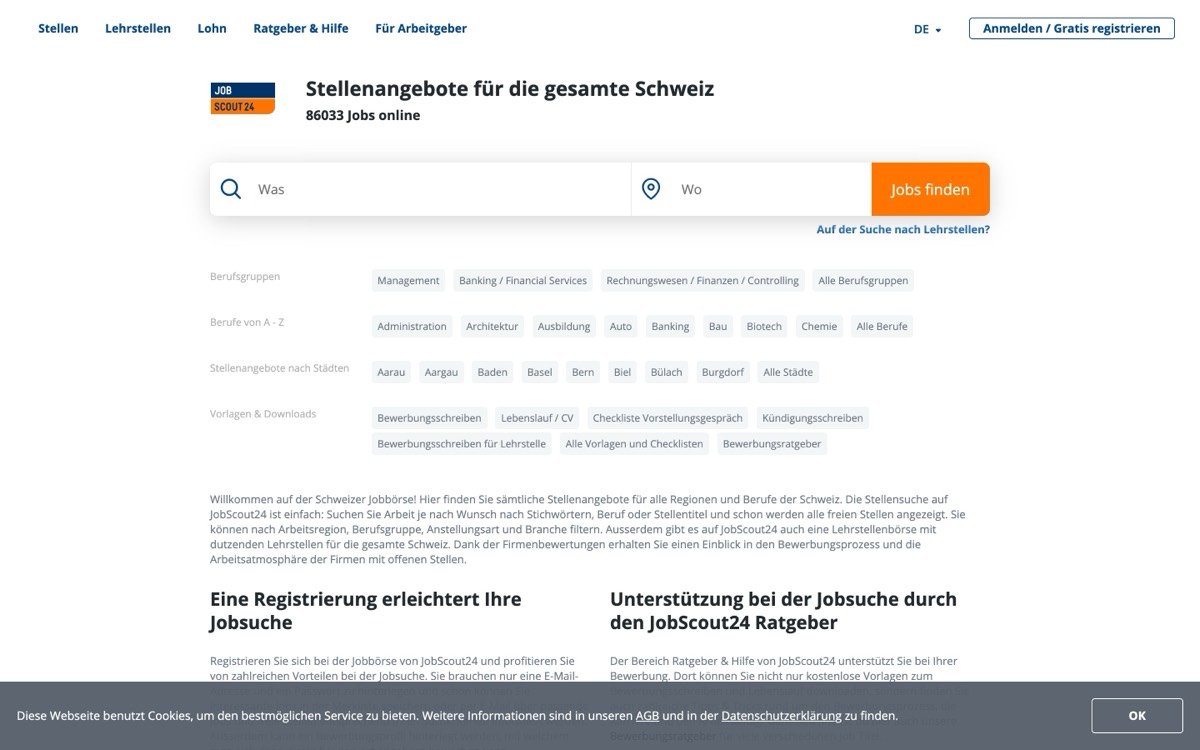
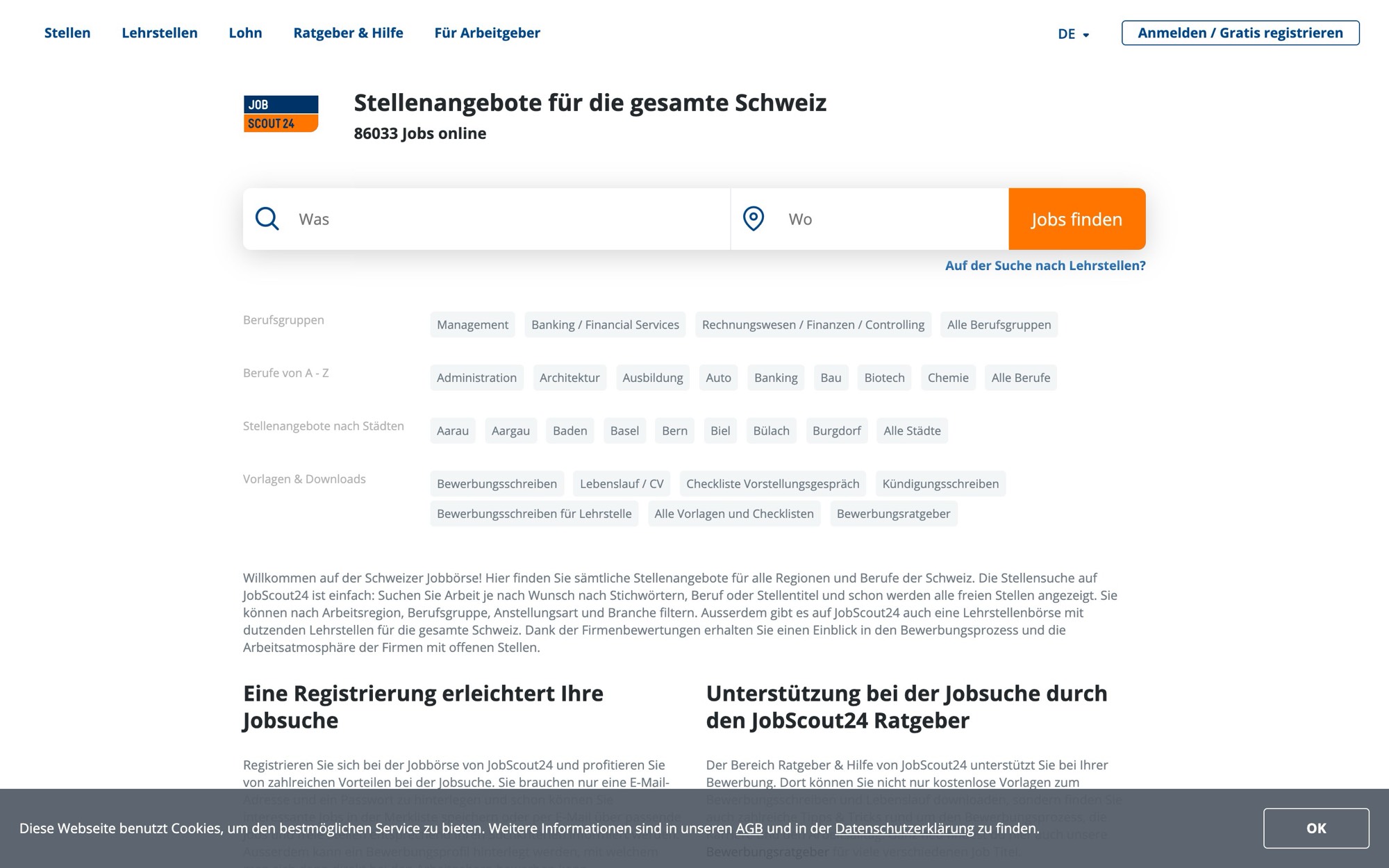
A third brand from the same company. Searching all three to widen your search means searching one provider three times.
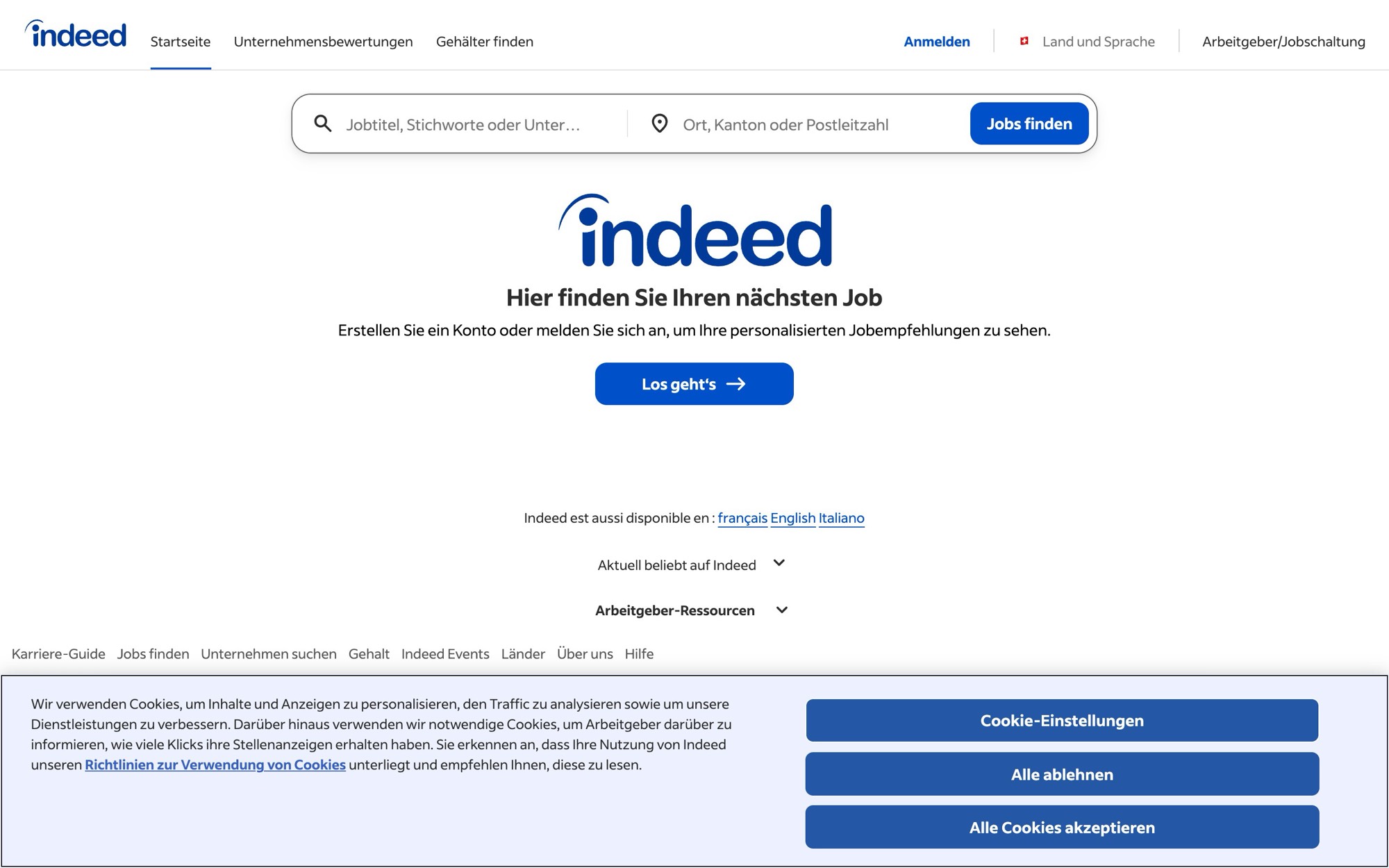
The broadest aggregation, because Indeed also collects from other boards — at the cost of many duplicates of the same advert.
The best reputation for English-speaking and international roles in Switzerland. Considerably thinner for trades, care and commercial roles.
A meta-search across the Swiss job boards, "every job in Switzerland at a glance". Its strength is the Job-Abo: a saved search that mails you new adverts from every portal it covers. Salary calculator and application guides alongside.
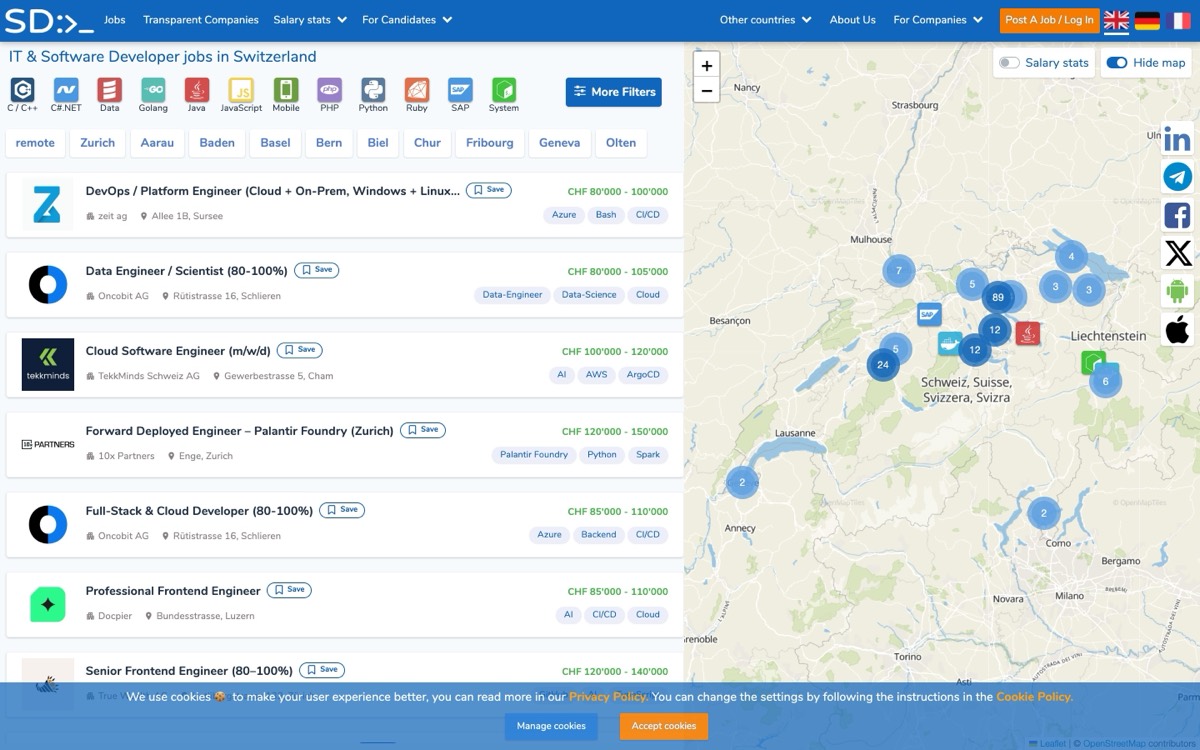
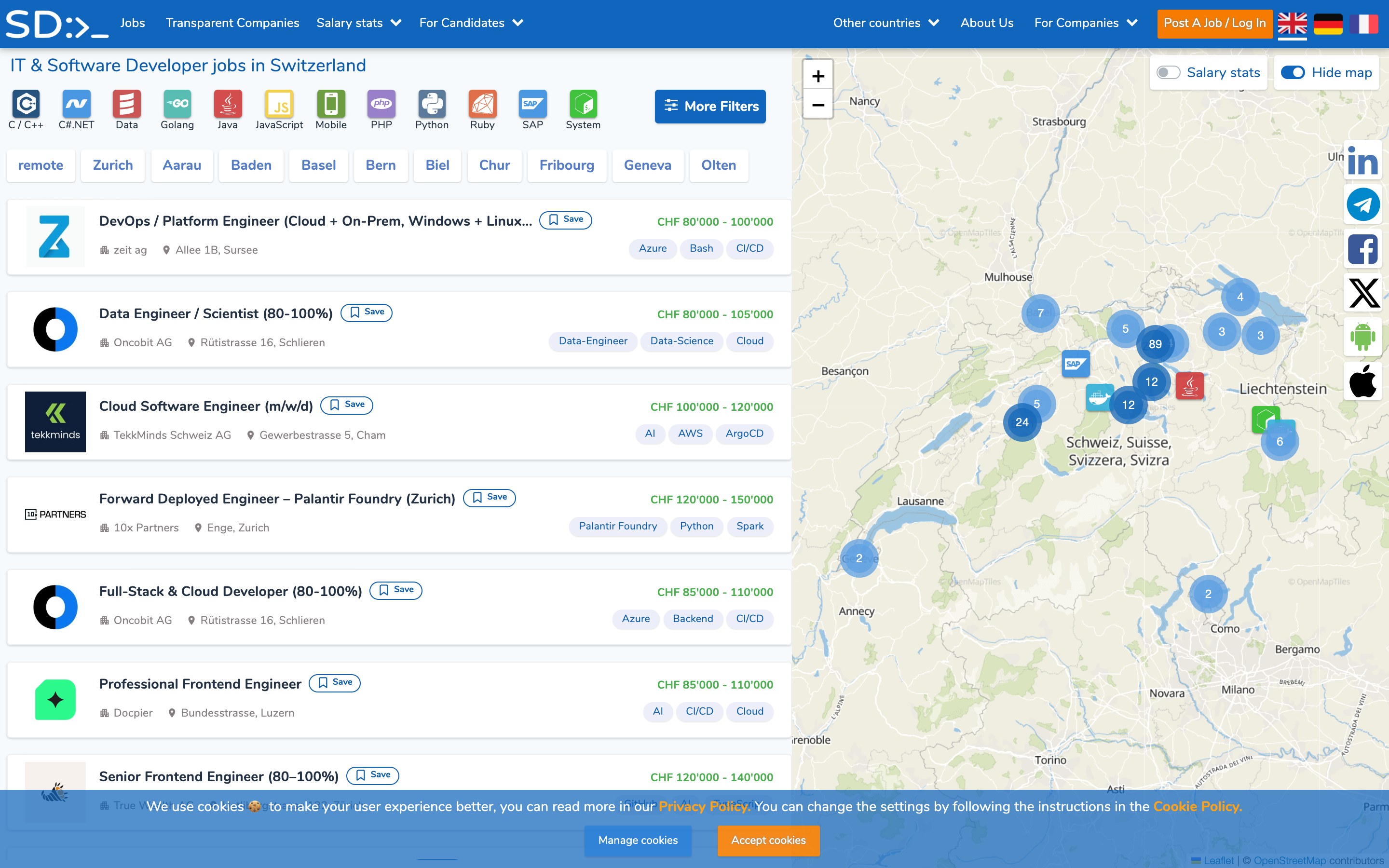
IT and software only, and thorough about it: "183 IT & Software developer jobs in Switzerland", filtered by technology (C#, Java, Python, DevOps, ML) rather than by industry. Publishes salary statistics and lists the companies that disclose their ranges. The site itself is in English.
Jobs by profession, city or language
Type a profession, a city or a language, the page shows the adverts currently open for it.
By profession
- Consultant
- Project Manager
- Retail Sales
- Nurse
- Nursing & Care
- Administrative Assistant
- Account Manager
- Software Engineer
- Public Administration
- Architect
- Insurance
- Chef
71 more — narrow the search
By work type
That inverts the usual search strategy. People looking for part-time work instinctively go where there are the most jobs — and land precisely in the cities with the lowest part-time rate. Zurich has many part-time roles in absolute terms, but as a share of everything advertised there it is among the lowest in the country.
The second and bigger finding: a substantial part of part-time work never appears in an advert as such. Only around five percent of all job titles mention a workload percentage at all. In Switzerland part-time is negotiated more often than it is advertised — which is exactly why you cannot find it by filtering for it.
Share of postings in each location advertised as part-time. Ongoing analysis, as of August 2026.
- About five and a half percent of all tracked adverts are explicitly posted as part-time.
- Only around five percent of job titles contain a workload percentage — searching for "80%" in the title misses most of it.
- Roughly two thirds of advertised part-time roles require German; English appears in only about one in six.
- Among roles requiring English only, the part-time share is around one and a half percent — a fraction of the market average.
- Healthcare, retail, insurance and the public sector account for most advertised part-time roles.
Where part-time work is actually advertised
| Canton | Part-time share | Adverts counted |
|---|---|---|
| Aargau | 36.0% | 419 |
| Lucerne | 34.5% | 551 |
| Bern | 30.8% | 626 |
| Zurich | 21.0% | 1,822 |
| Vaud | 14.0% | 677 |
| Basel-Stadt | 13.6% | 463 |
| Fribourg | 12.8% | 423 |
| Geneva | 5.8% | 669 |
Counted 7 September 2026 over 22,518 adverts. Note: the employment-type field reports only 5.1% part time, while 20.0% carry a workload below 100% — we count both signals. The Romandie figures are also pushed down by measurement: only 12.7% of adverts there state the workload in the title at all, against 23.0% nationally. This shows where part-time work is VISIBLY advertised, not where it exists.
Why the big cities are the wrong address
The figures contradict intuition sharply. In Solothurn and Baden roughly one advertised role in nine is part-time; in Winterthur and Bern about one in eleven. In Zurich it is only about one in twenty-two, and in Geneva rarer still.
The reason lies in the composition of the local economy. Zurich's and Geneva's advertising landscape is dominated by corporate functions, financial services, consulting and technology — fields where full-time is the norm and a reduced workload tends to be negotiated internally rather than advertised. Solothurn, Baden, Winterthur and Bern have a higher share of hospitals, care homes, public administration, retail and schools, and there part-time is a natural part of staff planning.
That yields a concrete recommendation. If you depend on reduced hours and live in the greater Zurich area, widen the radius to Winterthur, Baden and the Aargau and Solothurn centres before you give up on the workload. The commute is often shorter than the extra months spent searching in a market with a low part-time rate.
The same holds in western Switzerland: Geneva's share is the lowest among the major cities. If you are searching around Lake Geneva, the cantonal capitals with a strong public sector and strong healthcare offer proportionally more.
Most part-time work is not in the title
This is the practically most important point in this answer. Only about five percent of job titles carry a workload percentage, even though writing "80–100%" is a settled convention in Swiss adverts. Typing "80%" into the search box, or relying solely on the part-time filter, therefore shows you a small and arbitrarily bounded slice.
Two different cases sit behind this. In the first, the workload appears in the body of the advert but not the title — the filter catches it, a title search does not. In the second, the role is advertised as full-time but the company would be willing to split or reduce it and simply does not say so. The second case is common in Switzerland, particularly in commercial functions, public administration and healthcare.
The resulting strategy is uncomfortable but effective: search for the function you want to perform, not for the workload, and raise the workload yourself. Applying to a full-time posting with one clear sentence about the workload you want is not a mistake — in many organisations it is the usual way part-time roles come into existence at all.
State the workload as a range, not a condition. "I am looking for 60 to 80 percent" leaves HR room to shape the role. "60 percent only" forces a yes-or-no decision, which in case of doubt is no.
Where part-time is actually advertised
Advertised part-time roles concentrate in a few clearly recognisable areas. Healthcare is by far the strongest: hospital groups, cantonal hospitals, clinic groups and care and nursing services account for a substantial share. The most frequent job titles confirm it — registered nurses, healthcare specialists, medical practice assistants.
The second block is retail, where part-time is fundamental to shift planning and is therefore advertised as a matter of course. Third come insurers and health insurance funds, and fourth the public sector — cantons, municipalities and cantonal enterprises state workloads explicitly far more often than private companies do.
If your occupation sits in none of these areas, that is not disqualifying, but it explains why filtered searches return so little for you. In that case, going via the function and negotiating the workload afterwards is not the second-best route but the only realistic one.
One middle path many people overlook: fixed-term roles and maternity or sickness cover. They appear strikingly often in part-time job titles, attract less competition, and in sectors with staff shortages — healthcare and education above all — regularly lead to a permanent contract.
Without German it gets very tight
Roughly two thirds of advertised part-time roles require German. English appears in only about one in six, French in about one in seven. That is a markedly different picture from the market overall, and there is a concrete reason: part-time concentrates in nursing, sales, care and administration — that is, in work with direct contact with patients, customers and the public.
Viewed from the other side it is sharper still. Among roles requiring English only, just around one and a half percent are part-time, against roughly five and a half percent market-wide. Searching for reduced hours without a national language means searching in the narrowest segment of the entire market.
In practice this combination disproportionately affects accompanying partners who moved to Switzerland with someone else and want to take up part-time work here. For that situation, German — or French in the Romandie — is the lever with the greatest effect, well ahead of any CV optimisation.
As an intermediate step, healthcare and care work often become accessible at conversational level earlier than other sectors, because staff shortages are acute and the language keeps growing through the work itself. That is not a detour; in many careers it has been the way in.
How to go about it
Set the location filter wider than your home address suggests, and deliberately include the mid-sized centres with high part-time rates. The difference between a market with four percent and one with twelve percent part-time is larger than any difference a better application could make.
Search by function rather than workload, and read full-time adverts too. Check the body text for a stated range, and assume an unstated workload may be negotiable as long as the job is divisible.
State your workload at first contact, but as a range and with reasoning that fits the role. Describe what you will deliver at the workload you want, not what you cannot do — the question on your counterpart's mind is coverage of the job, not your calendar.
And set up a standing search for your function and region rather than searching manually. Part-time roles are rare enough that the odds of happening to see one on the right day are low — and appear often enough that an automatic alert pays for itself.
Shares from our ongoing analysis of the Swiss job adverts we track, as of August 2026. "Part-time" means adverts explicitly posted as part-time; workloads mentioned in body text without that designation are not included. We publish shares, not absolute inventory figures.
Sources
Related questions
What our job index says about the Swiss market
Computed live from our own index, not quoted from a study. Shares only, as of today.
Language the advert is written in
- Deutsch
- 60%
- English
- 23%
- Français
- 13%
- Italiano
- 3%
Of adverts that state a language requirement, the share asking for
- Deutsch
- 70%
- English
- 43%
- Français
- 21%
- Italiano
- 3%
19% posted in the last 7 days · Largest markets: Zürich 18% · Bern 10% · Genève 5% · Basel 5%