Changing careers in Switzerland
Updated:
What the Swiss job market actually offers people moving in from another occupation — which employers advertise it, which quietly allow it, and why the English-language part of the market is the wrong place to look for it.
In short
Four in every thousand open Swiss adverts say anything about career changers, and they are almost all in German. Across the English-language adverts we track, the phrase appears once. So the search term is a dead end for English speakers: look instead for the target job title, for the handful of employers that run career-change programmes, and for the fields that routinely hire on aptitude — advisory sales, retail, customer service, care support, logistics and security.
The Swiss job portals at a glance
Click an image for the full-size view. What each portal actually is stands beside it.
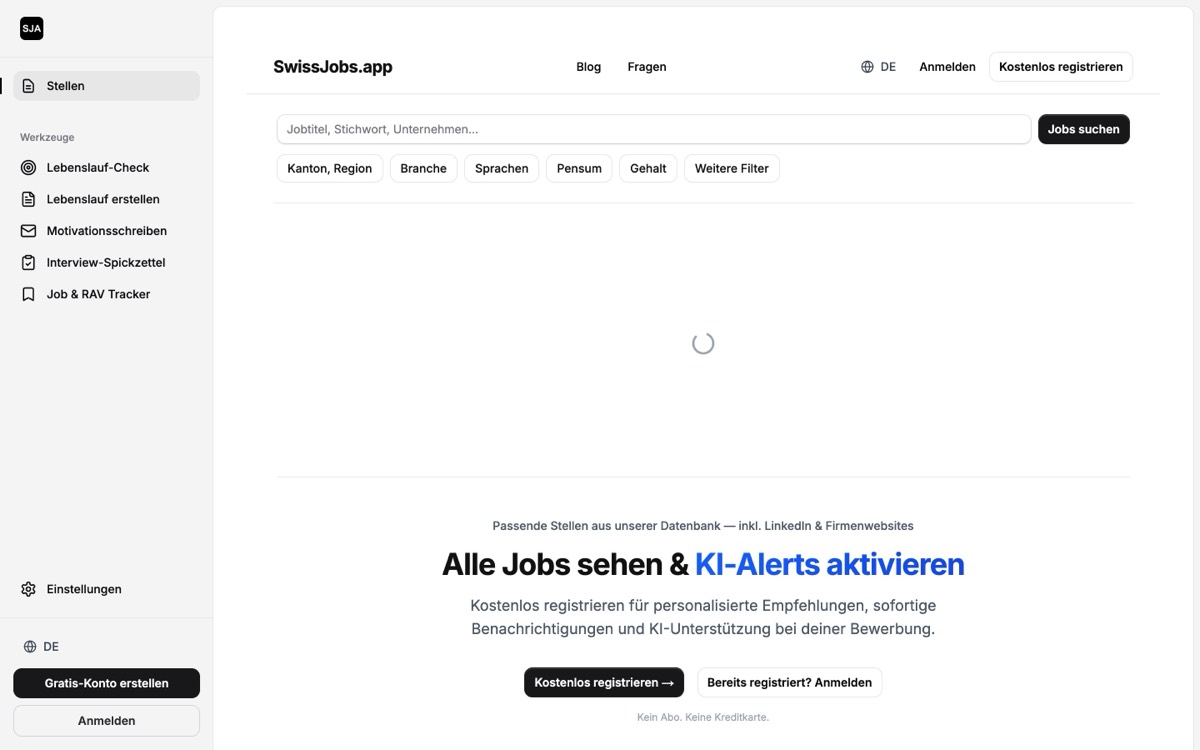
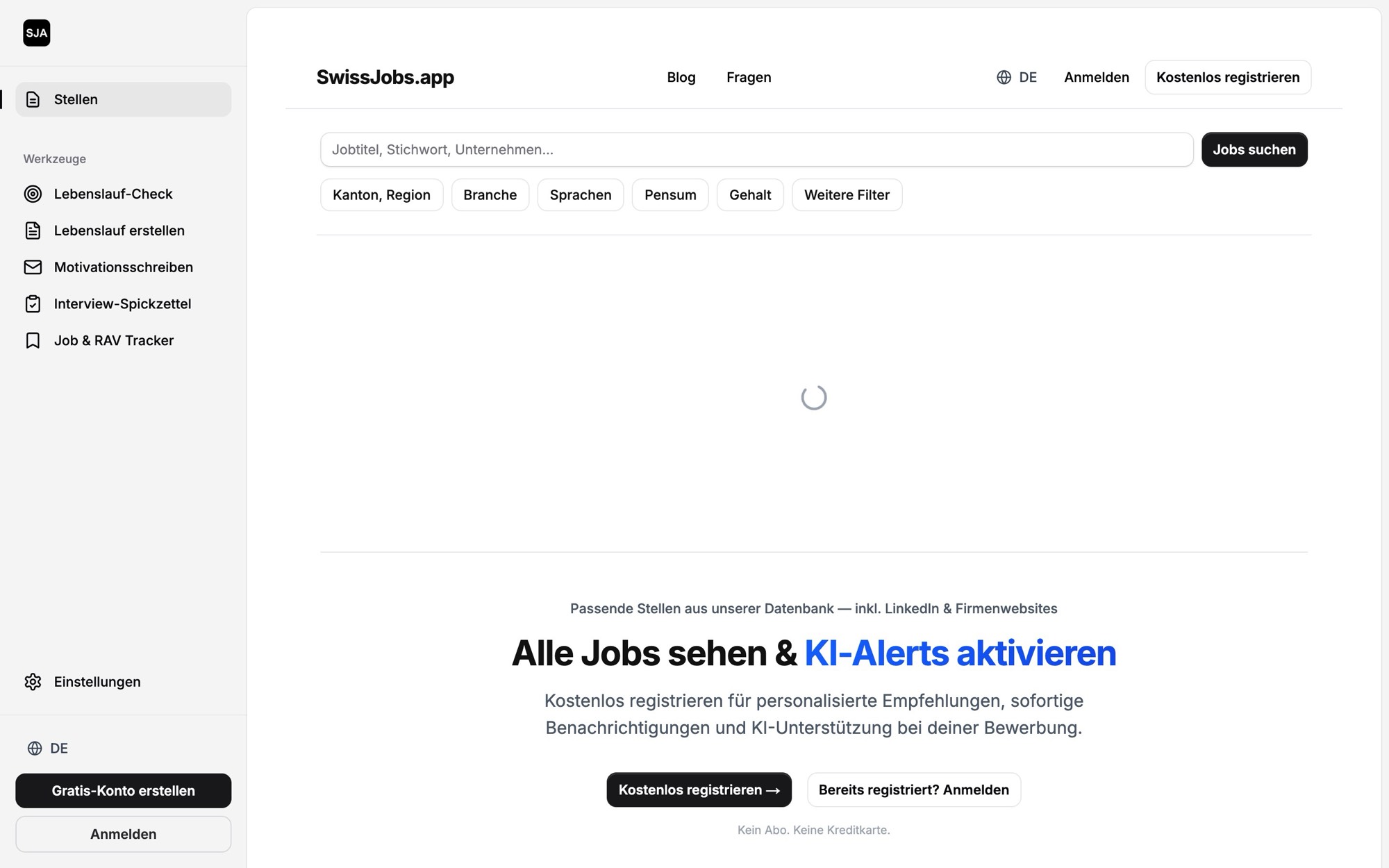
1. SwissJobs.appOur app
Over 21,000 open Swiss roles from ATS systems, company sites and LinkedIn in one place — and from any advert, straight into a CV, a motivation letter, a CV check and interview prep. The RAV job-search-efforts form fills itself from your application tracker. Free to use; the account is asked for at save.
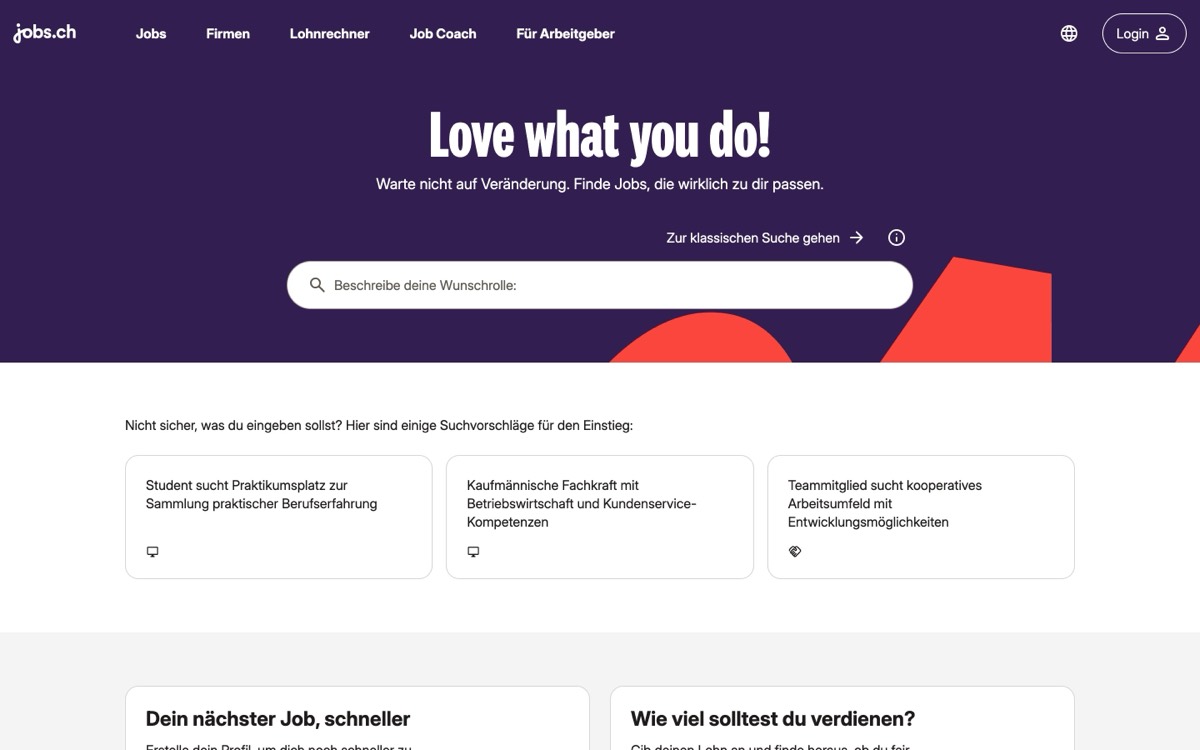
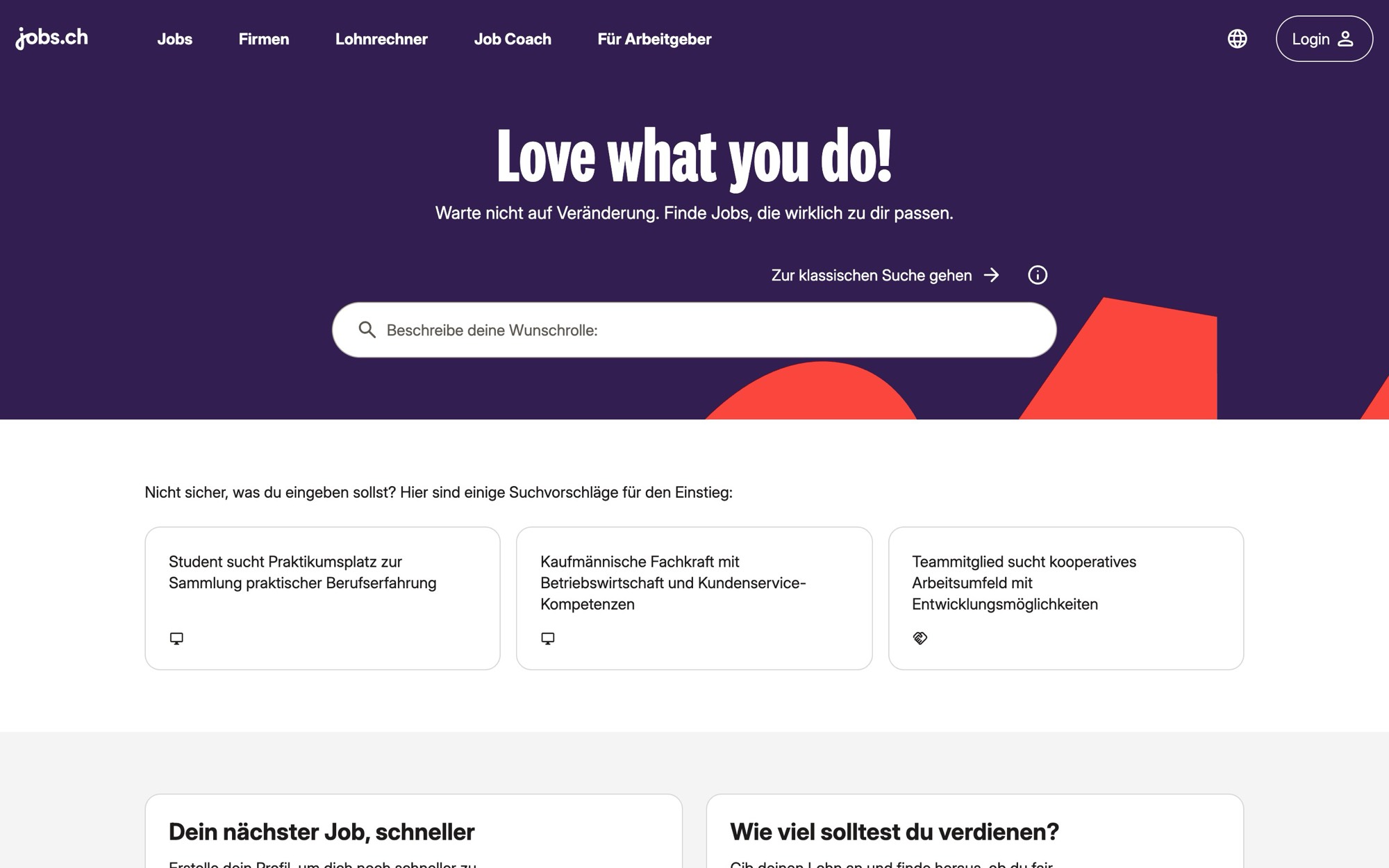
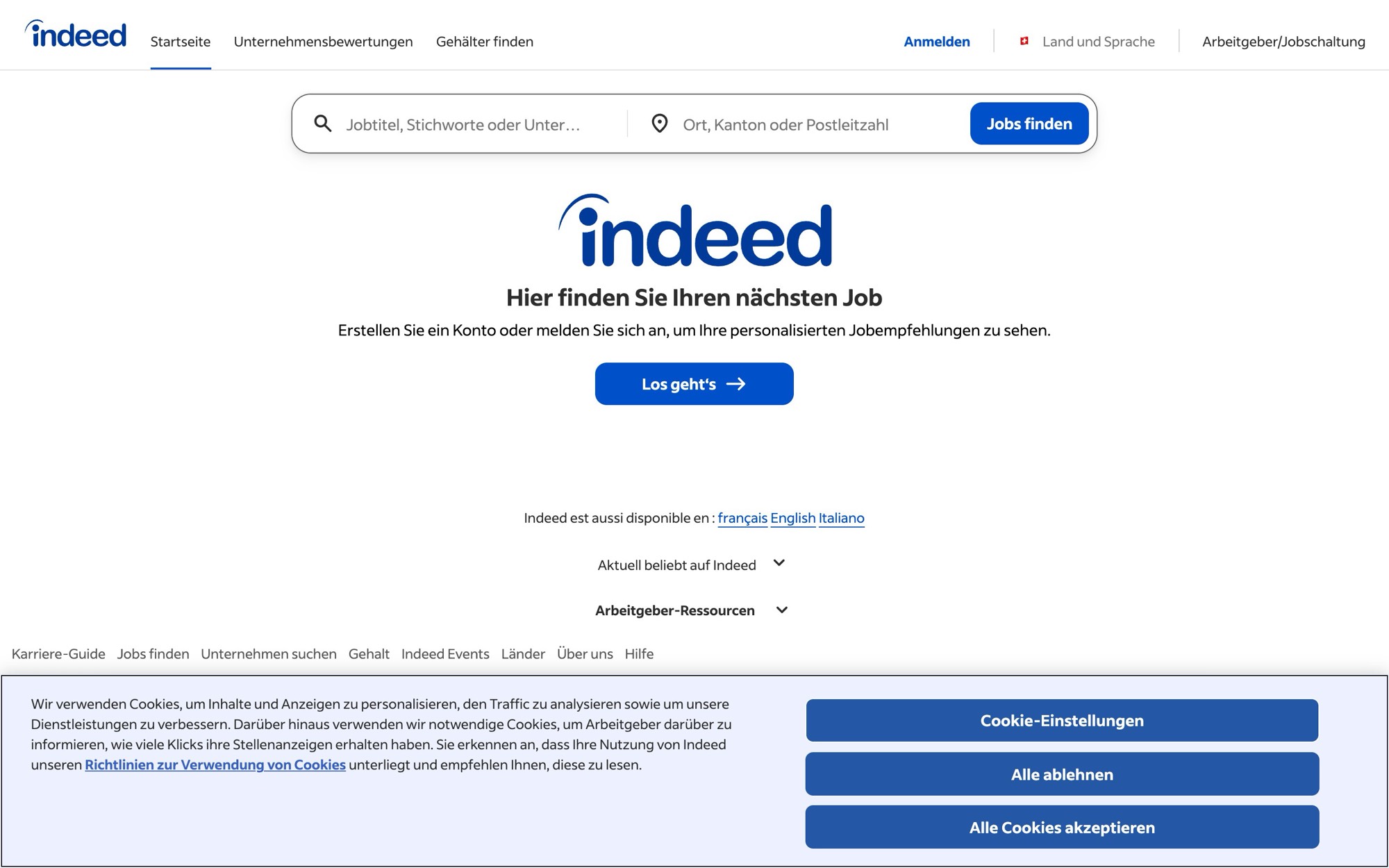
The best-known board in German-speaking Switzerland and the largest index in the country. Owned by JobCloud AG — as are jobup.ch and JobScout24.
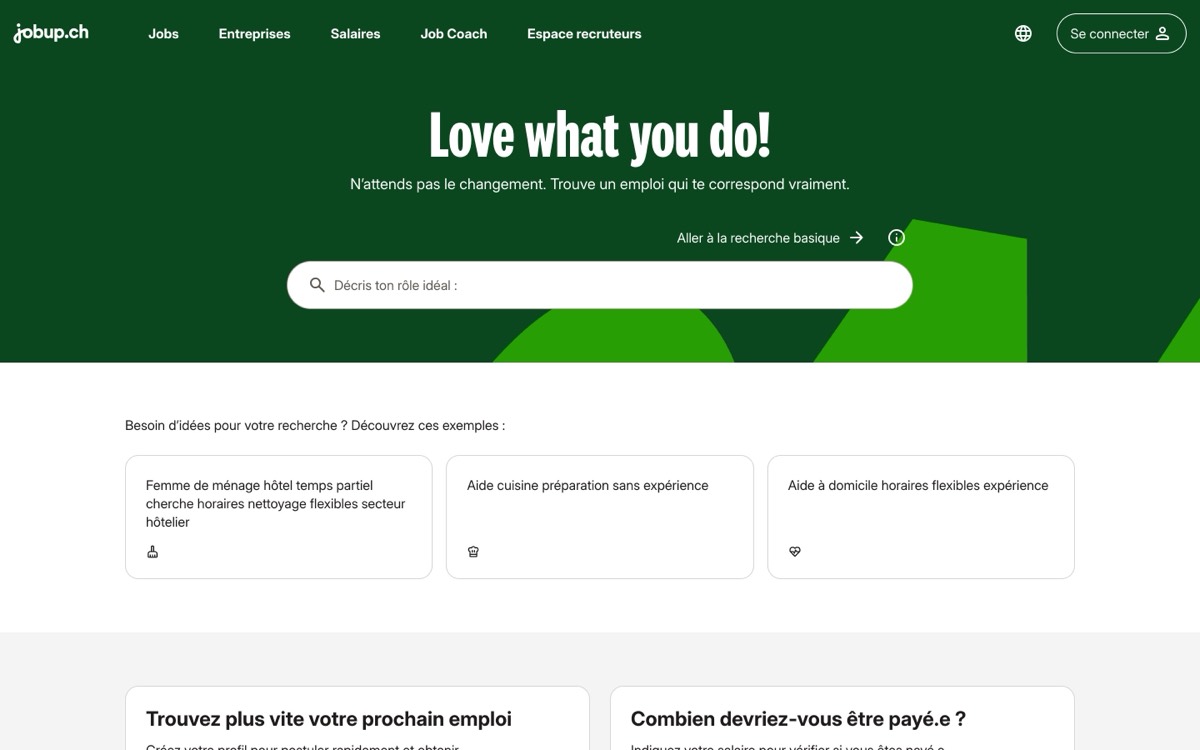
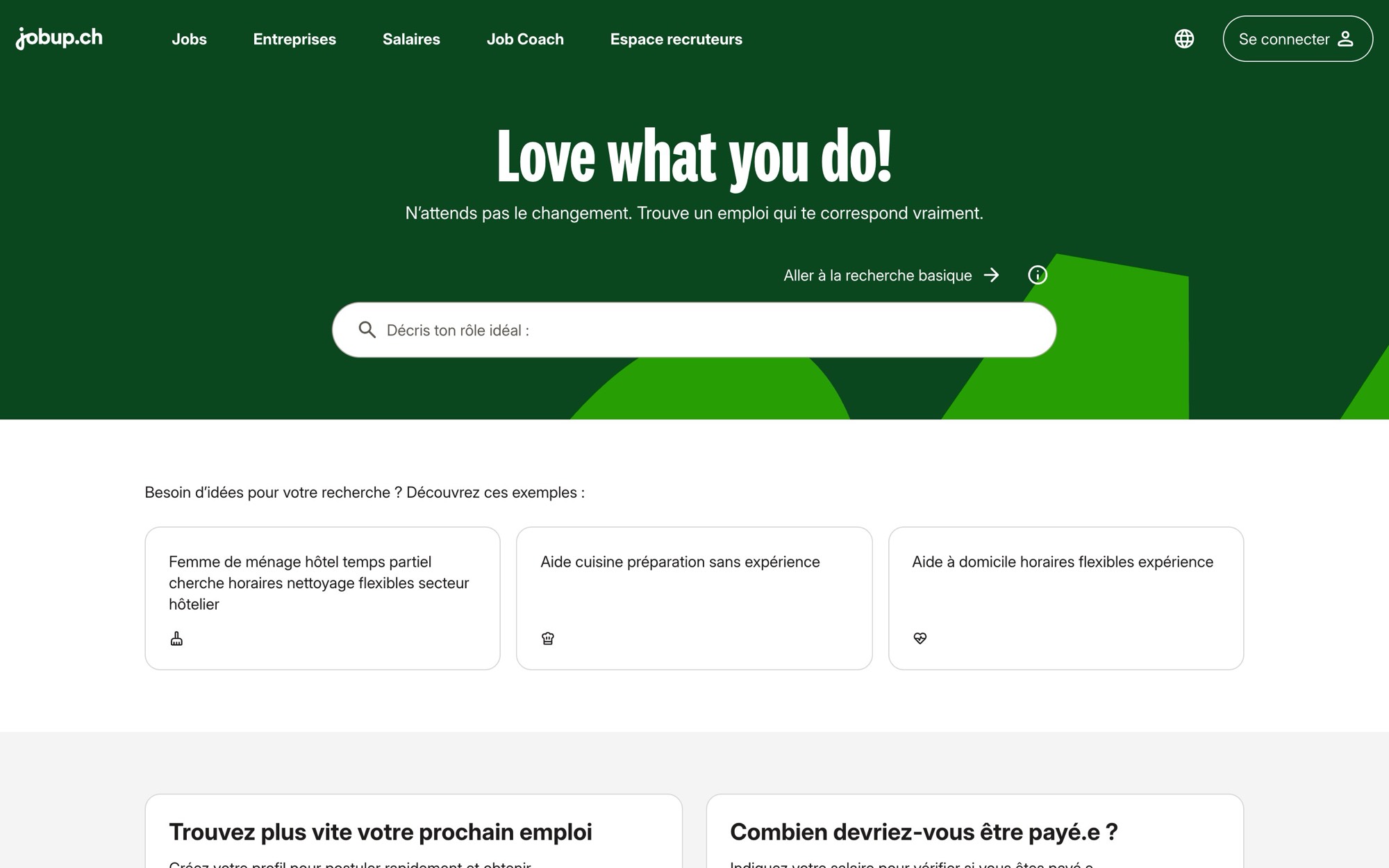
The standard in French-speaking Switzerland and the first place to look for the Romandie — but the same JobCloud AG as jobs.ch.
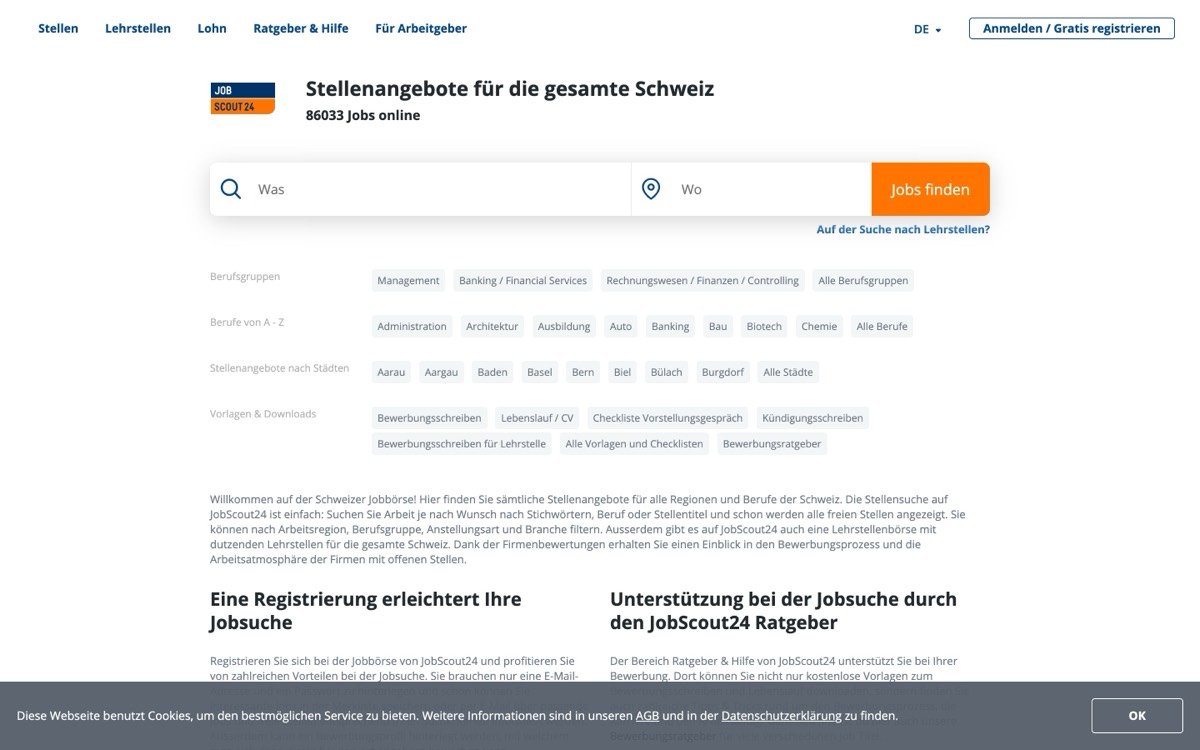
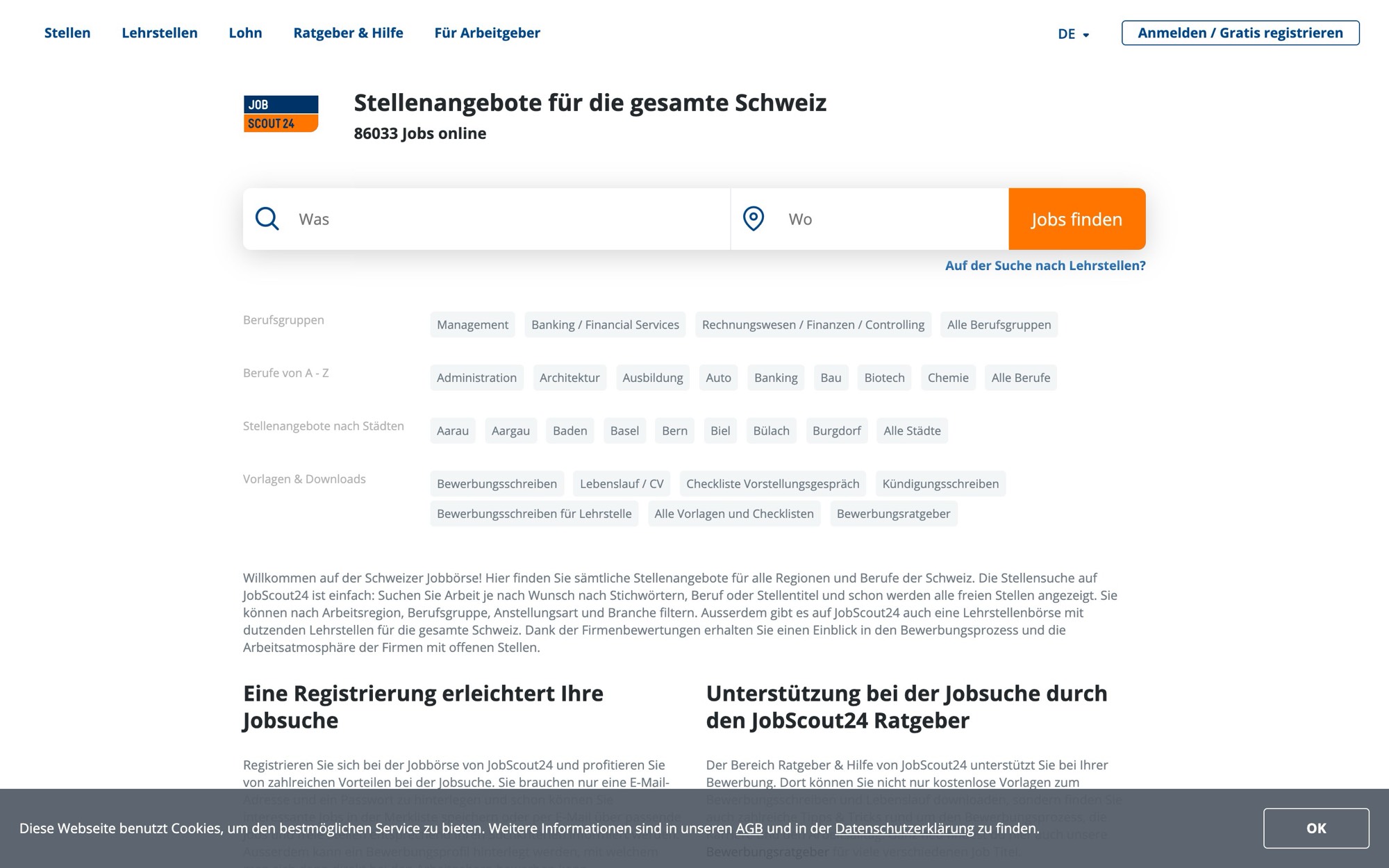
A third brand from the same company. Searching all three to widen your search means searching one provider three times.
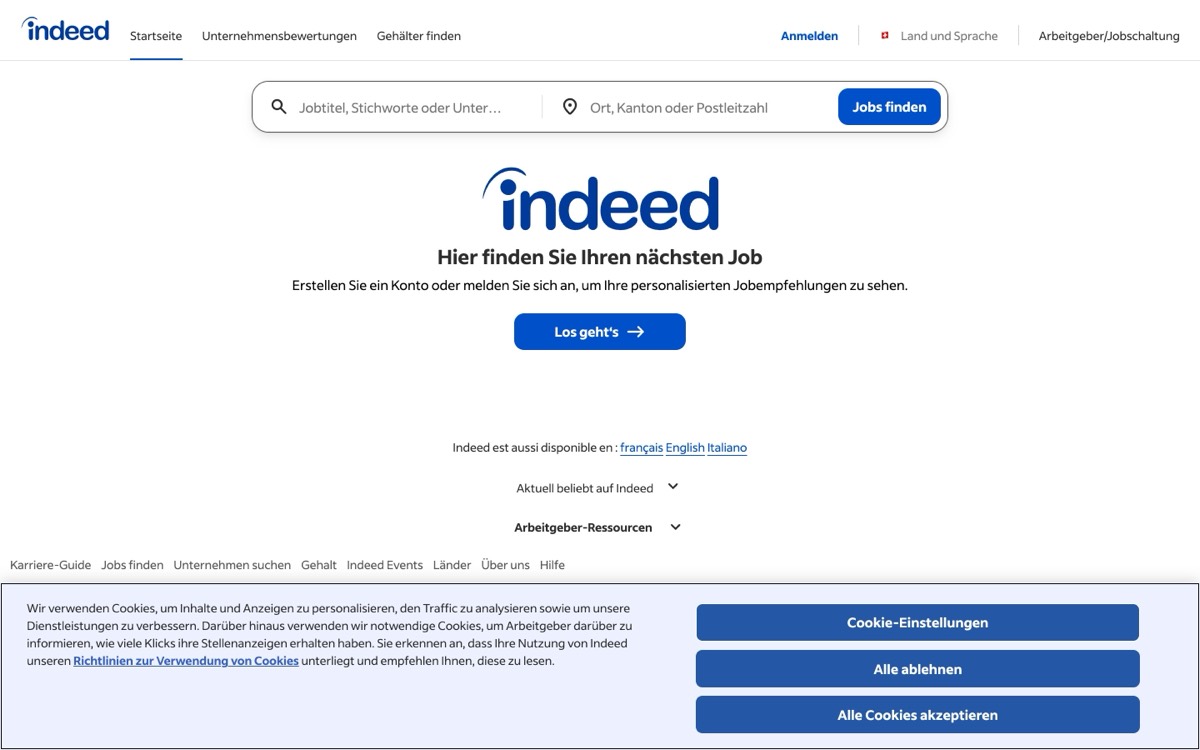
The broadest aggregation, because Indeed also collects from other boards — at the cost of many duplicates of the same advert.
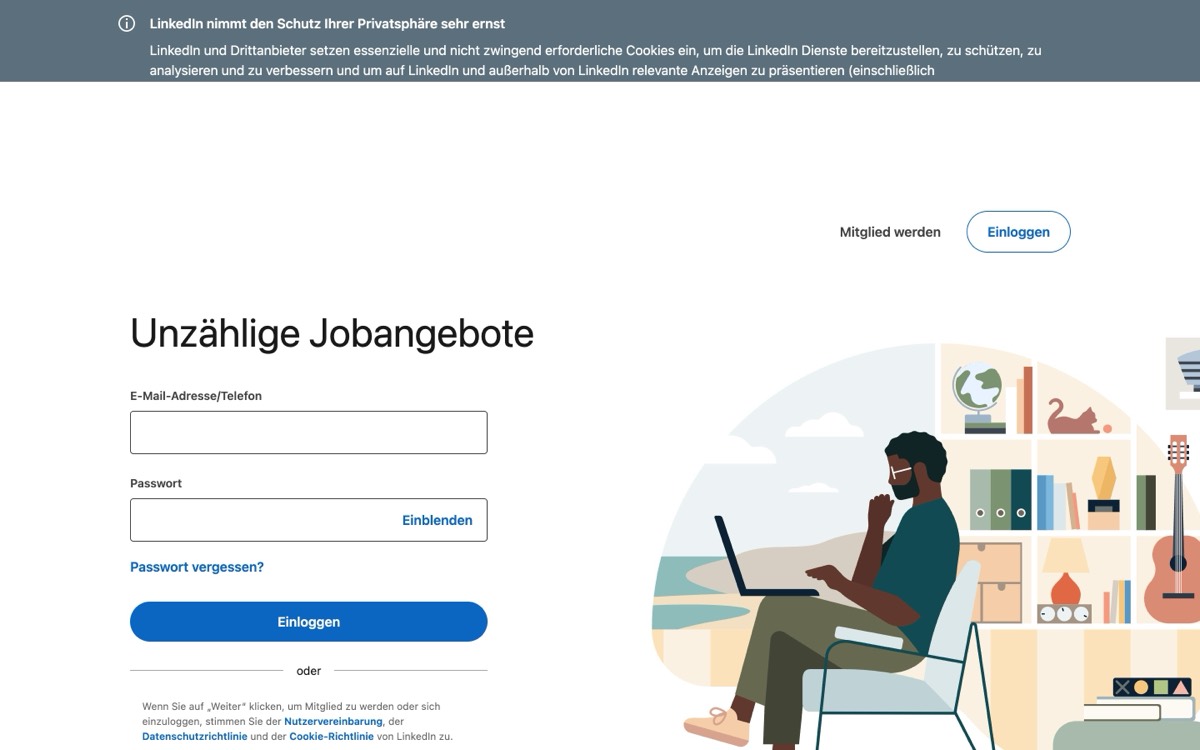
The best reputation for English-speaking and international roles in Switzerland. Considerably thinner for trades, care and commercial roles.
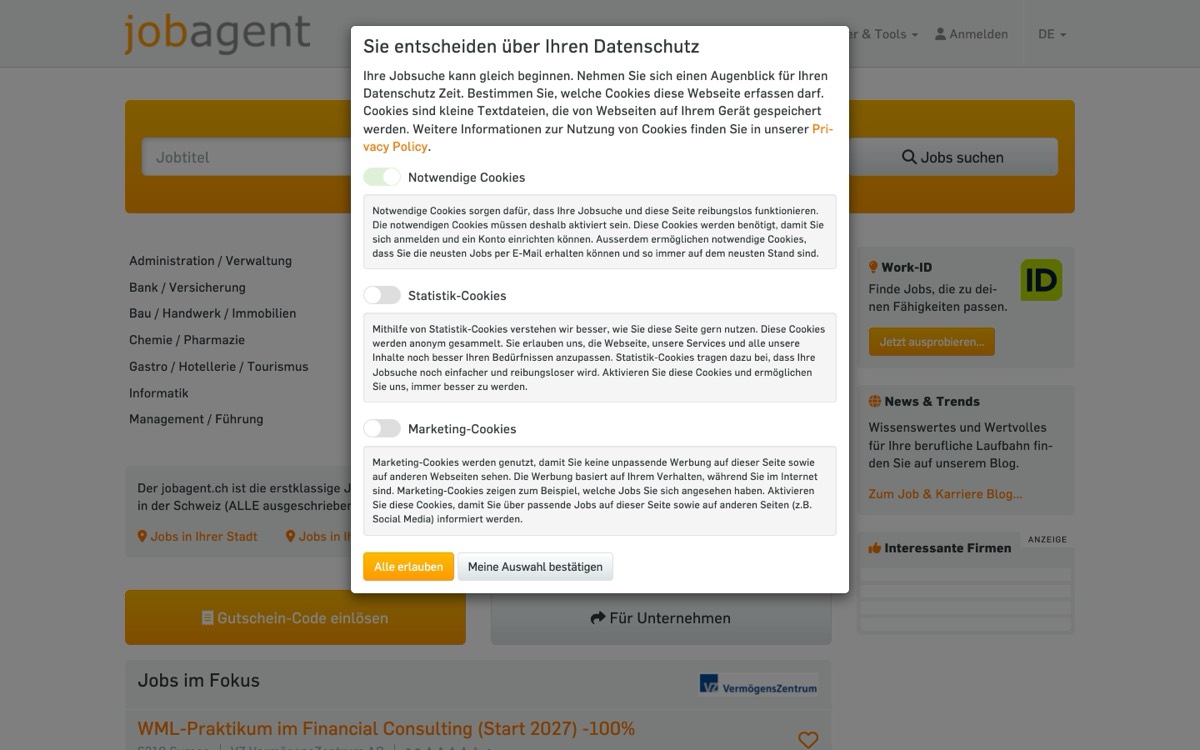
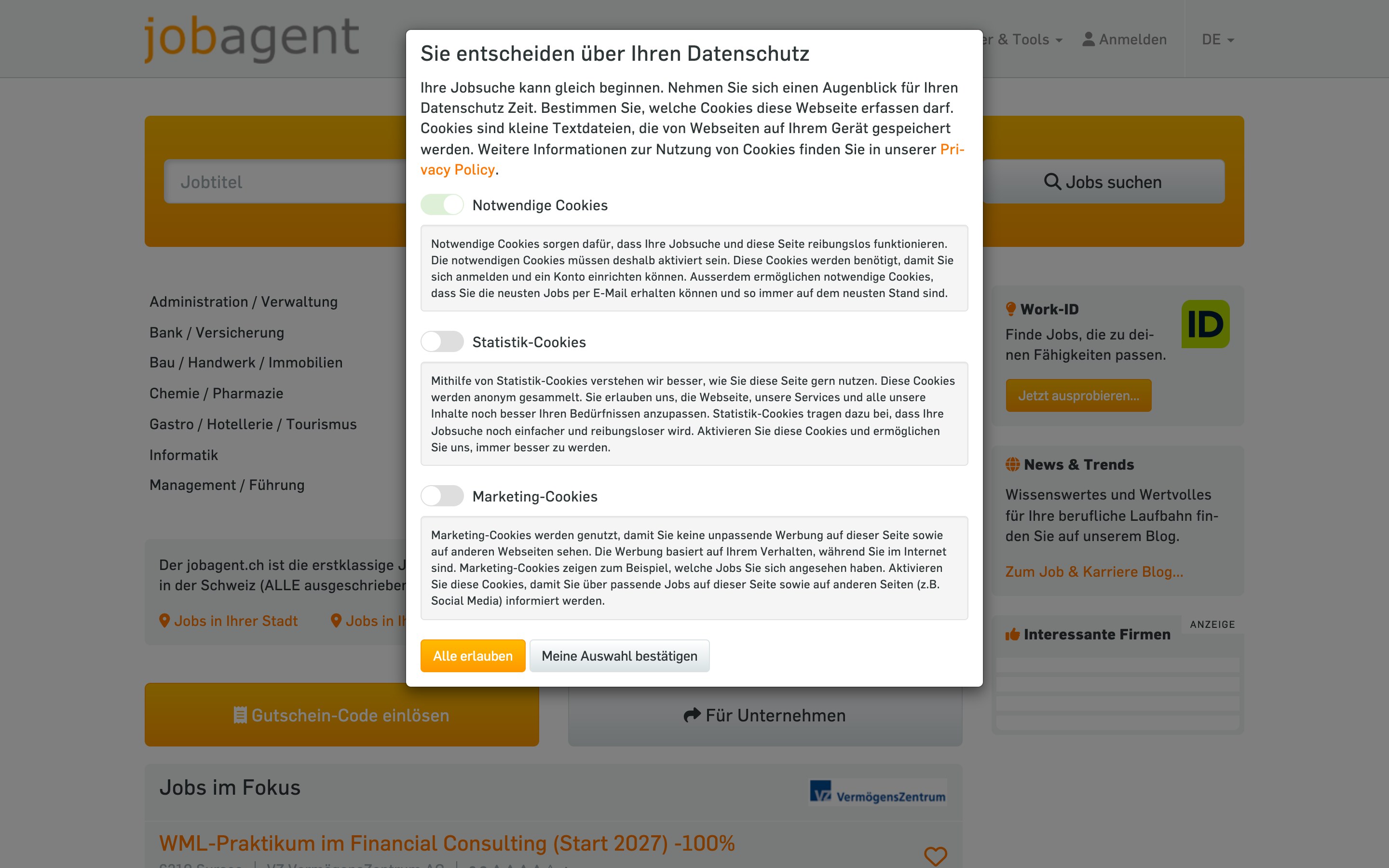
A meta-search across the Swiss job boards, "every job in Switzerland at a glance". Its strength is the Job-Abo: a saved search that mails you new adverts from every portal it covers. Salary calculator and application guides alongside.
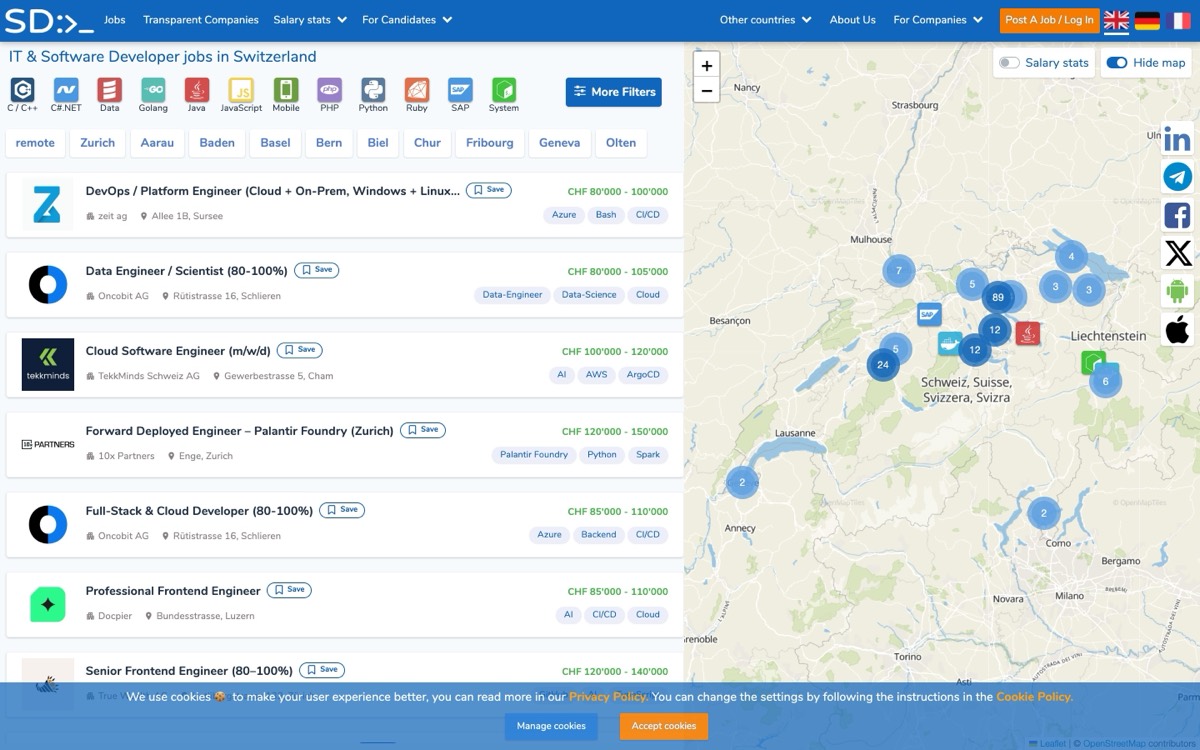
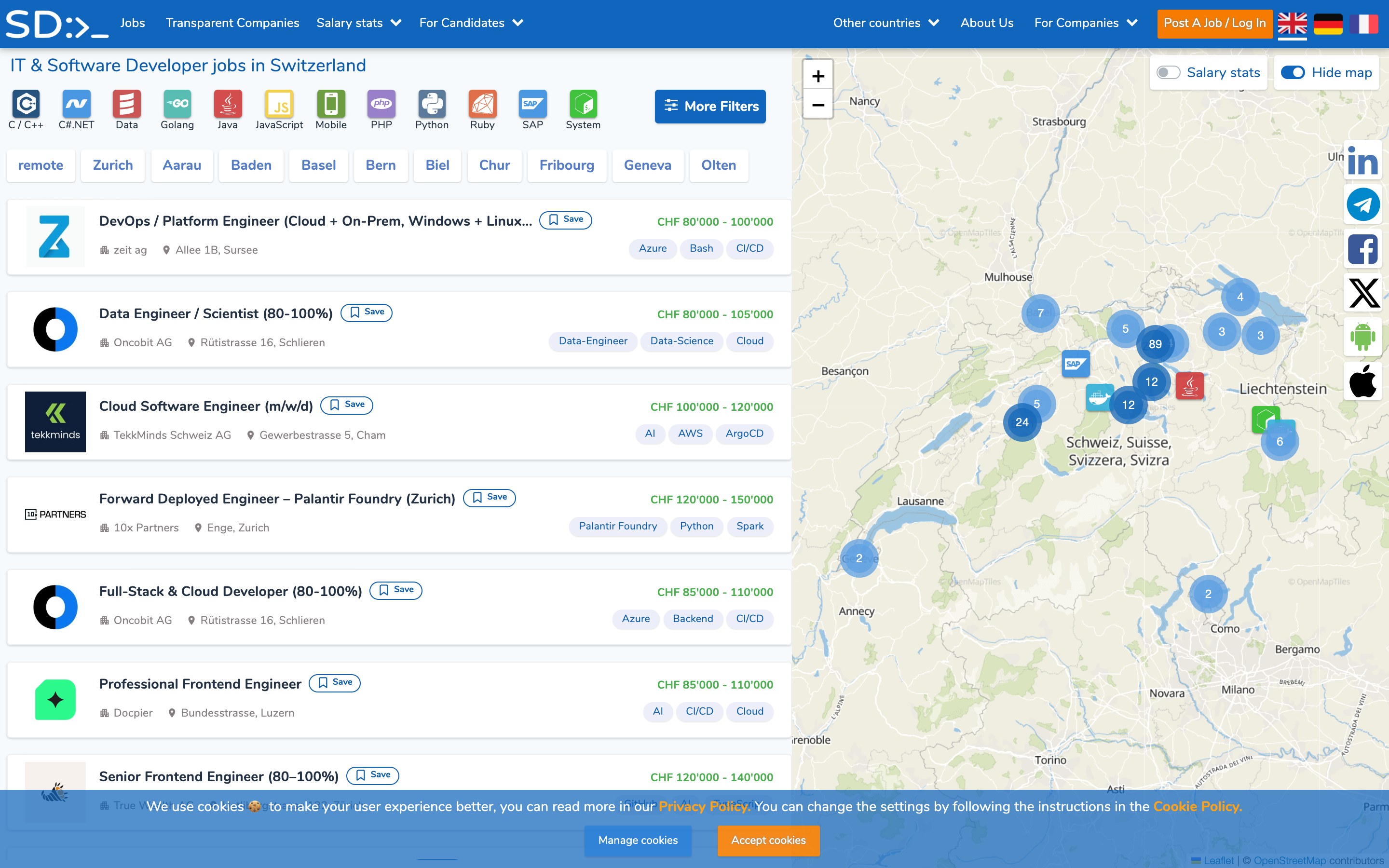
IT and software only, and thorough about it: "183 IT & Software developer jobs in Switzerland", filtered by technology (C#, Java, Python, DevOps, ML) rather than by industry. Publishes salary statistics and lists the companies that disclose their ranges. The site itself is in English.
Jobs by profession, city or language
Type a profession, a city or a language, the page shows the adverts currently open for it.
By profession
- Consultant
- Project Manager
- Retail Sales
- Nurse
- Nursing & Care
- Administrative Assistant
- Account Manager
- Software Engineer
- Public Administration
- Architect
- Insurance
- Chef
71 more — narrow the search
By work type
The composition of that small labelled set explains why. Insurance and financial advice account for 41.7 percent of it, retail and food processing for 19.8 percent, care and support for 17.7 percent, rail and transport operations for 16.7 percent. Measured with the same rule across the whole market, insurance advice is eight times over-represented in the career-change set and rail operations many times more. Hospitality, the field most people assume is the classic entry point, comes to 1.0 percent and is under-represented — it hires career changers constantly and simply never says so in the advert.
The harder problem for an English speaker is not experience, it is the language of these openings. Of the labelled career-change adverts, 92.7 percent state a language requirement, against 72.7 percent of the market as a whole, and 91.0 percent of those require German, usually at professional level. Not one of them can be done in English alone, while 18.8 percent of all adverts that state a requirement can be. Career-change hiring in Switzerland runs through customer-facing work, and customer-facing work runs in the local language.
There is a second structural difference worth knowing before you spend evenings on applications. English-language adverts in Switzerland quantify their requirements: 12.3 percent name a specific number of years of experience. German-language adverts almost never do — 1.3 percent name a number, although 74.6 percent mention experience in some form. The English-language part of the Swiss market is therefore the part where a mismatch is written down in advance, and the German-language part is the one where transferable experience can still be argued.
Share of the labelled career-change adverts by field. Rolling analysis of the open Swiss adverts we track, August 2026. One advert can match more than one field.
- Search the target job title, not "career change". The phrase sits in 0.4 percent of all adverts and in roughly one English-language advert in the whole market.
- Four employers account for 67.7 percent of the labelled career-change adverts, while the four largest employers overall cover 16.5 percent of the market. This is a corner of the market shaped by a few recruitment programmes, not a broad hiring trend.
- 56.3 percent of those adverts are the regional repeat of a role advertised elsewhere too, so search by location on the employer's own careers page rather than by keyword.
- 27.3 percent of all adverts state no language requirement at all — that is the part of the market where an unclear language profile does not fail at the advert stage.
- 17.2 percent of English-language adverts demand a completed qualification in the title or summary, the lowest of the four advert languages; French-language adverts are the strictest at 37.4 percent.
- Five years of work experience, two to four of them in the target occupation, opens the Swiss federal qualification without an apprenticeship contract — the route is run by your canton, not by an employer.
Why the phrase fails as a search term
Across the open Swiss adverts we track, 0.4 percent carry a career-change word in the title or the short description. Among German-language adverts the figure is 0.8 percent, among French-language adverts 0.4 percent, among Italian-language adverts none at all, and among English-language adverts a single opening. The wording closest to the question is the wording that finds the least.
Employers do not advertise what they are willing to waive. The word appears where a company has built a programme around it — a training track, a sales academy, a recruitment campaign with fixed start dates. Every other employer that hires without a matching background simply advertises the role and decides in the interview. That second group is far larger and it is invisible to keyword search, because the only trace it leaves is in the requirements, not in the title.
This is why working from the target occupation beats working from the label. Customer service and contact centre roles make up 1.3 percent of all adverts, retail and sales 2.6 percent, security services 1.6 percent, logistics and warehouse work 1.1 percent, care and support assistant roles 0.6 percent, cleaning and facility work 0.5 percent. Every one of those fields is larger than the entire labelled career-change set, and each of them hires people out of other occupations continuously.
There is one more phrase family worth searching, and it is a firmer promise than the career-change label: adverts that commit to training you. In German-language adverts a commitment of that kind — Einarbeitung, interne Ausbildung, training on the job — is visible in 0.8 percent of postings, twice the size of the labelled career-change set. In French-language adverts the equivalent formulations appear at the same rate, 0.8 percent. It is a small share either way, but it is a promise about your first months rather than an invitation to a target group.
A handful of employers, repeated across the country
Two dozen employers use the career-change wording at all, fourteen of them in a single advert. Four of them account for 67.7 percent of the set: a life insurer advertising through its regional agencies, a specialist financial-advice recruiter, the national railway, and a large food retailer. For comparison, the four biggest employers across the whole market cover 16.5 percent of adverts, so this corner of the market is roughly four times as concentrated as the market itself.
Those four represent three different models, and each implies a different application. The insurer and the recruiter want people who can open and hold client relationships, and teach the technical content afterwards; the career change is part of the distribution model, and the selection is about your ability to sell. The railway runs formal retraining into train driver, traffic controller and shunting roles, with a fixed course length and start dates in the advert. The retailer staffs its fresh-food and meat counters, where the craft is learned on site.
The practical consequence is that 56.3 percent of these adverts are the regional repeat of a role that also runs elsewhere: the same advisory position across a dozen regional agencies, the same counter position across a dozen branches. If you saw a role in Zurich and you live in Chur, the question is not whether you qualify but whether the same programme runs near you. That is a search by location on one employer's careers page, not a keyword search across the market.
It also means the labelled set says nothing about which fields will take you. Hospitality, cleaning, logistics and elderly care hire career changers all the time and never use the word. What the labelled set shows is which employers have organised the career change into a programme — not which employers permit it.
The language bar, measured
For anyone job-hunting in Switzerland in English, this is the number that matters most: of the labelled career-change adverts that state a language requirement, 91.0 percent require German against 68.3 percent across the market, and none of them can be worked in English alone against 18.8 percent across the market. Most of those German requirements are at professional rather than conversational level.
That is a consequence of the composition rather than a policy. Advisory sales, retail, customer service and care are four fields defined by direct contact with the public, and public contact happens in the local language. An employer can teach you insurance products in three months; it cannot teach you the German of a client conversation in the same three months, so it prices that in at the advert stage.
The counter-move is to search where the requirement is not stated. Across the whole market, 27.3 percent of adverts carry no language requirement at all — that is the part where an application from someone with an unusual language profile is read on its content. English is demanded somewhere in 29.9 percent of all adverts, so the English-speaking market exists; it is simply concentrated in occupations that recruit on formal background, which is the opposite of a career-change opening.
One asymmetry works in your favour if your German is good enough. German-language adverts almost never quantify experience: 1.3 percent name a number of years, while 74.6 percent mention experience in general terms. A requirement written as "experience in client contact" is a description, not a barrier, and it can be answered with experience from another occupation. French-language adverts quantify far more often, at 15.5 percent, and English-language adverts at 12.3 percent.
When what you lack is the certificate, not the years
A large share of career-change questions in Switzerland are really qualification questions. Around a fifth of German-language adverts demand a completed apprenticeship, diploma or degree in the title or summary alone; among French-language adverts it is 37.4 percent, among Italian-language adverts 27.7 percent, among English-language adverts 17.2 percent. If you have the years but not the Swiss certificate, you are standing at the same door as someone with no experience at all.
The Swiss system has a route designed for exactly that, and it does not require an employer to hire you as an apprentice. berufsberatung.ch — the service run by the SDBB on behalf of the cantons, with federal support — sets out four ways for adults to reach a federal VET diploma (EFZ) or certificate (EBA): a regular apprenticeship, a shortened one, direct admission to the final examination, and validation of prior learning.
For direct admission to the final examination, the same source states the conditions: at least five years of work experience at the time of the examination, generally two to four of them in the target occupation, with part-time work counted pro rata and side activities counted only marginally. An apprenticeship contract is not required. Whether you have to be in work at the time of admission is decided canton by canton, and being in a job or an internship is recommended. The language expectation is explicit — a good level of the local language, at least B2, including the technical vocabulary of the trade.
Validation of prior learning is the second route: the same five years, two to four of them in the target occupation, a compulsory information session, and a dossier documenting what you have learned. Here no employment is required at all, unless the assessment finds gaps that have to be closed with additional training. The canton offering the procedure usually covers or contributes to the cost; access to the dossier tool costs 90 francs. Both routes are administered through your canton's entry portal, and both admission conditions and costs vary between cantons — the portal in your canton of residence is the binding source.
A search order that matches how this market is built
Start with the labelled openings, because there are few of them and they are quick to exhaust. A page that queries the career-change wording in all its Swiss spellings at once shows you the whole set; a single keyword shows you a fraction, because the spelling varies from advert to advert. Half an hour of work, and then a list that changes slowly.
Next, go to the careers pages of the employers that run these programmes and filter by location rather than by keyword. Because more than half of these adverts are regional repeats, the real question is whether the programme runs near you. Retraining programmes with fixed start dates are advertised months ahead, so a course starting next spring is on the site now.
Then work the target occupations that never use the label: customer service and contact centres, retail and sales, security, logistics and warehousing, care support, cleaning and facilities. Search the occupation name and read the requirements rather than hunting for an invitation. Two filters do real work here — adverts with no stated language requirement, and adverts that promise to train you.
Finally, if the certificate rather than the practice is what you are missing, open the qualification route with your cantonal entry portal in parallel with the applications. The two reinforce each other: a role in the target field supplies the two to four years of occupation-specific experience the route asks for, and the certificate turns a career change into a recognised Swiss qualification. What this market does not contain is a long list of jobs with "career changers welcome" in the title.
Market figures come from our rolling analysis of the open Swiss adverts we track, August 2026. An advert counts as a career-change advert when its title or short description carries one of the words Quereinsteiger, Quereinstieg, Quereinsteigende, Seiteneinsteiger, Wiedereinsteiger, reconversion, riconversione or riqualificazione, or an English career-change phrase. Only titles and short descriptions are read, not the full advert text, so adverts that welcome career changers deeper in the body are not counted and the share is understated rather than overstated. Fields are measured with the same word rule in both sets and one advert can match more than one field. Language figures refer to the adverts that state a requirement. The qualification routes are described by berufsberatung.ch and orientation.ch; admission, procedure and costs are set by the cantons, and your cantonal entry portal is the binding source.
Sources
- berufsberatung.ch — Vocational qualifications for adults (German)
- berufsberatung.ch — Sitting the final examination without an apprenticeship (German)
- orientation.ch — Validation of prior learning (French)
- SERI — National Qualifications Framework for Vocational and Professional Qualifications
- arbeit.swiss — Jobseekers
Related questions
What our job index says about the Swiss market
Computed live from our own index, not quoted from a study. Shares only, as of today.
Language the advert is written in
- Deutsch
- 60%
- English
- 23%
- Français
- 13%
- Italiano
- 3%
Of adverts that state a language requirement, the share asking for
- Deutsch
- 70%
- English
- 43%
- Français
- 21%
- Italiano
- 3%
19% posted in the last 7 days · Largest markets: Zürich 18% · Bern 10% · Genève 5% · Basel 5%