Where do I find engineering jobs in Switzerland — and why are two in three “Engineer” results software roles?
Updated:
In short
Engineering vacancies are about 4 percent of the open Swiss adverts we track, and the word that should find them mostly finds something else. 11.5 percent of all adverts carry an engineering word in the title, but only 35.5 percent of those are engineering outside IT. Search “Engineer” and 27.8 percent of your hits are engineering roles; the remainder are System, Security, Cloud and DevOps Engineers. Search the discipline instead: “mechanical” hits 72.7 percent, “civil engineer” essentially 100.
The Swiss job portals at a glance
Click an image for the full-size view. What each portal actually is stands beside it.
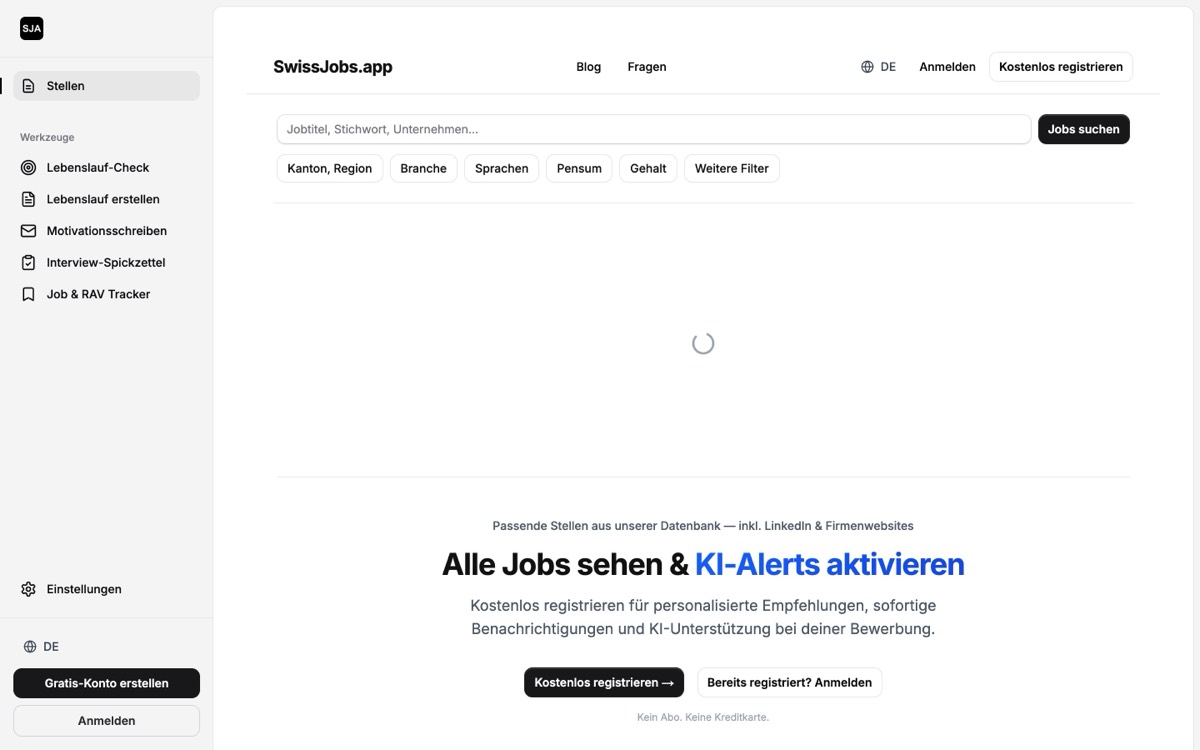
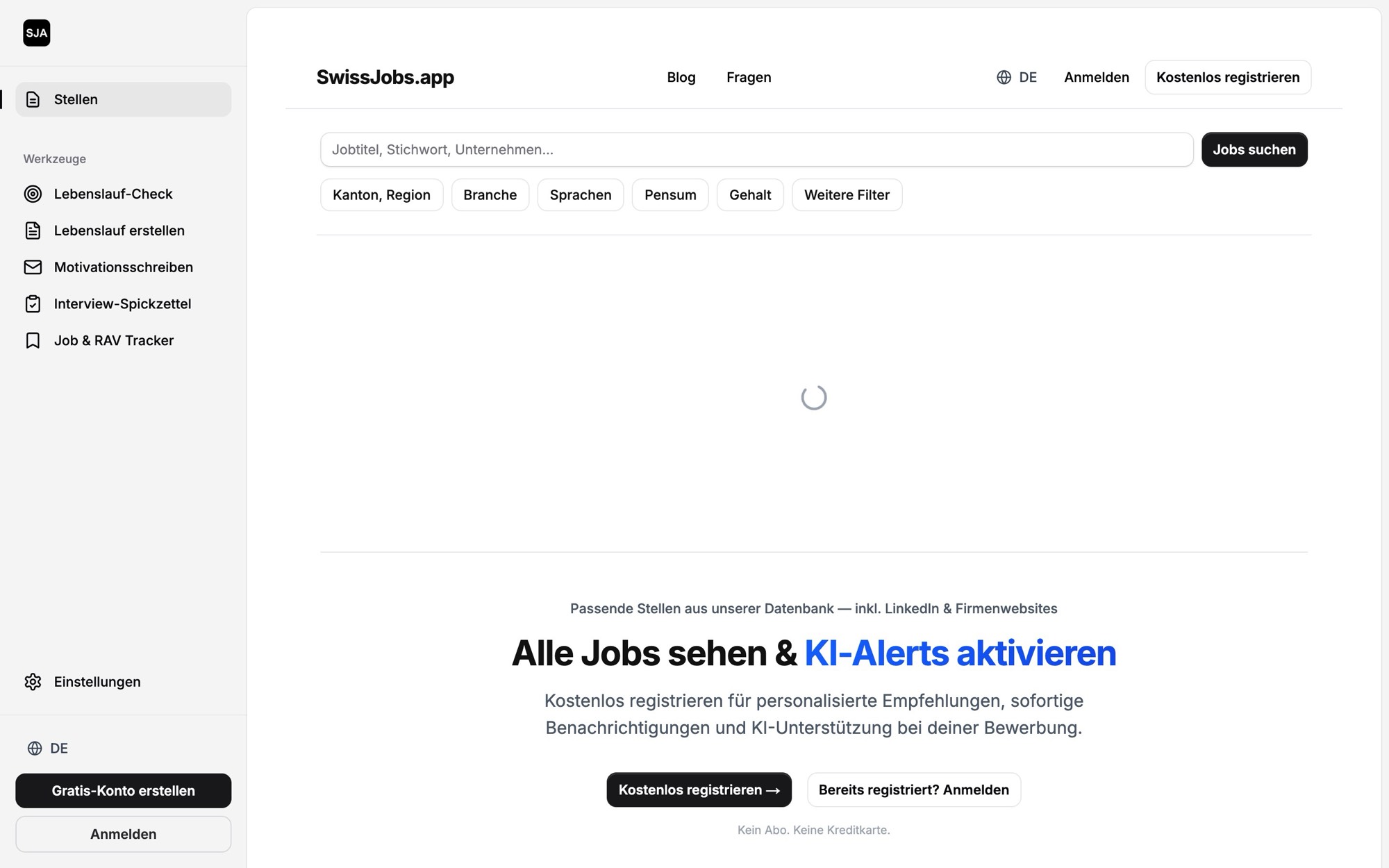
1. SwissJobs.appOur app
Over 21,000 open Swiss roles from ATS systems, company sites and LinkedIn in one place — and from any advert, straight into a CV, a motivation letter, a CV check and interview prep. The RAV job-search-efforts form fills itself from your application tracker. Free to use; the account is asked for at save.
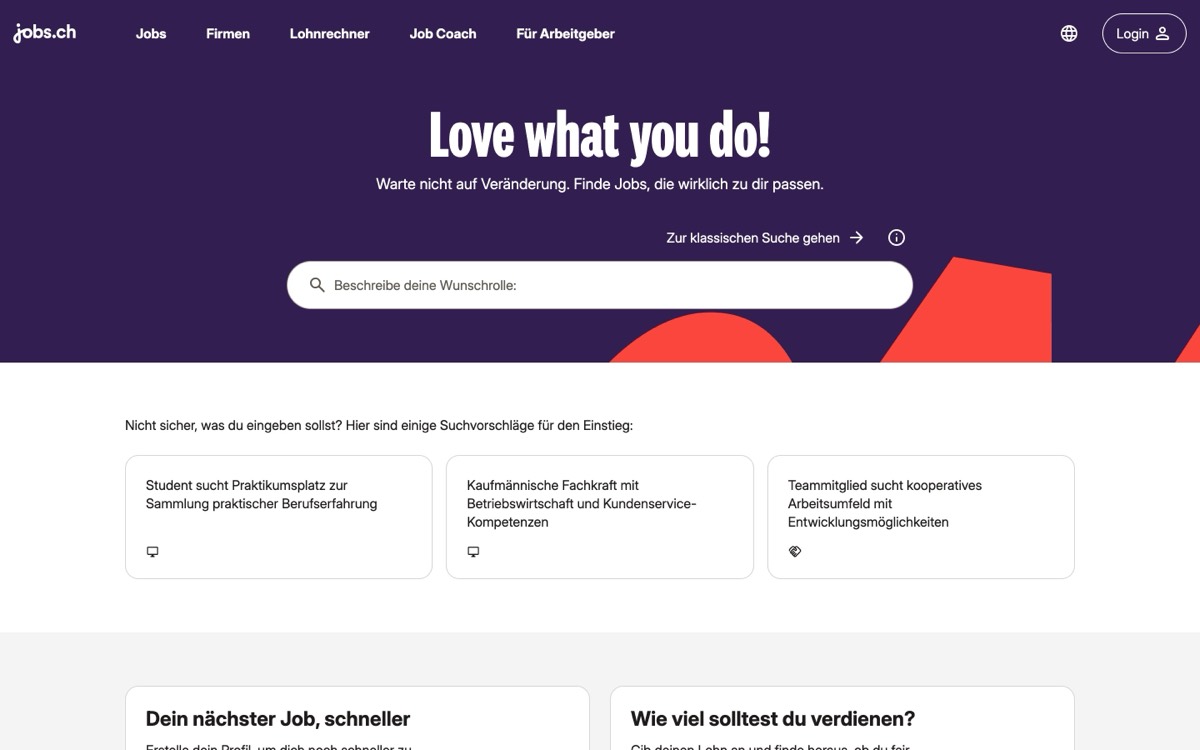
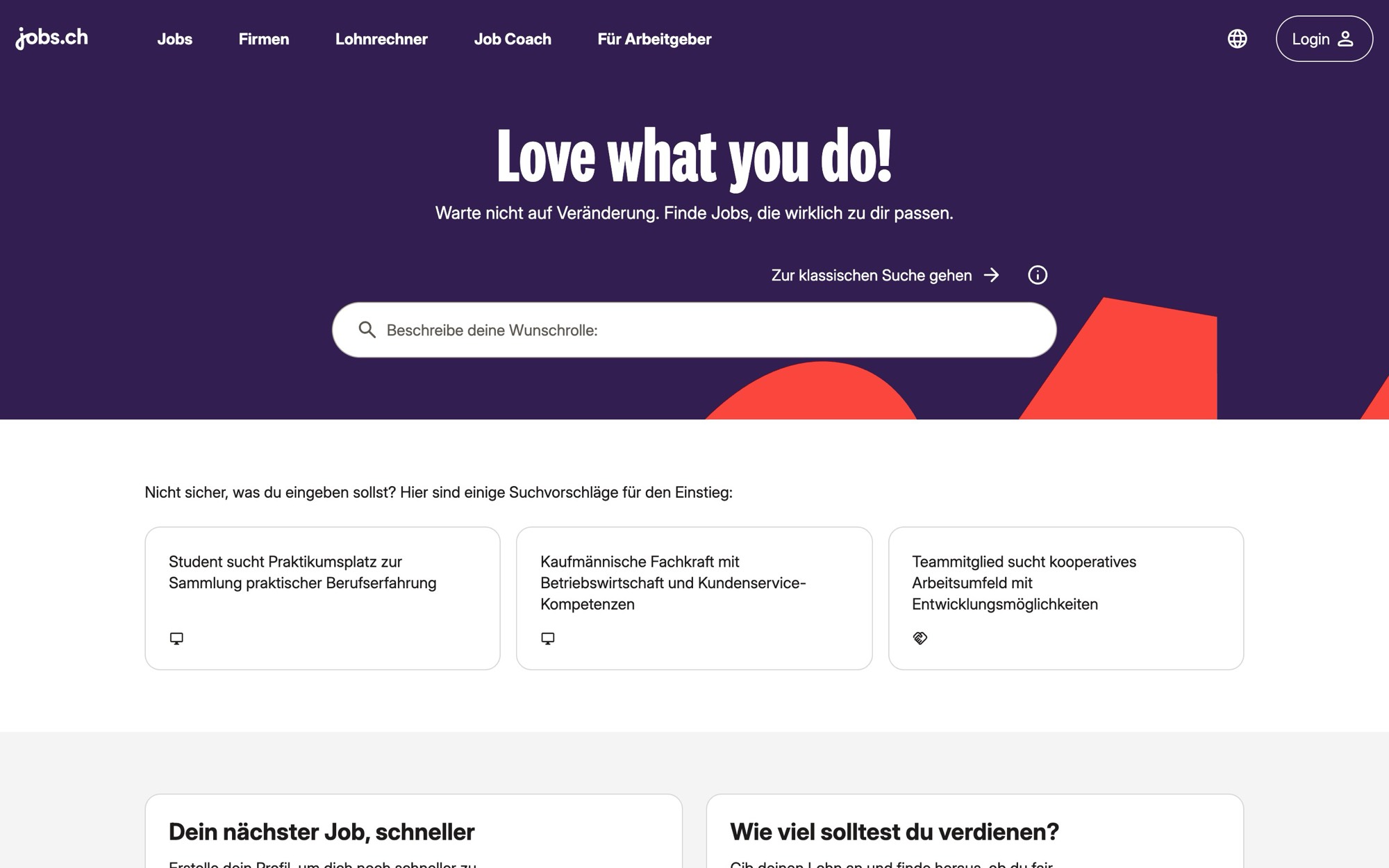
The best-known board in German-speaking Switzerland and the largest index in the country. Owned by JobCloud AG — as are jobup.ch and JobScout24.
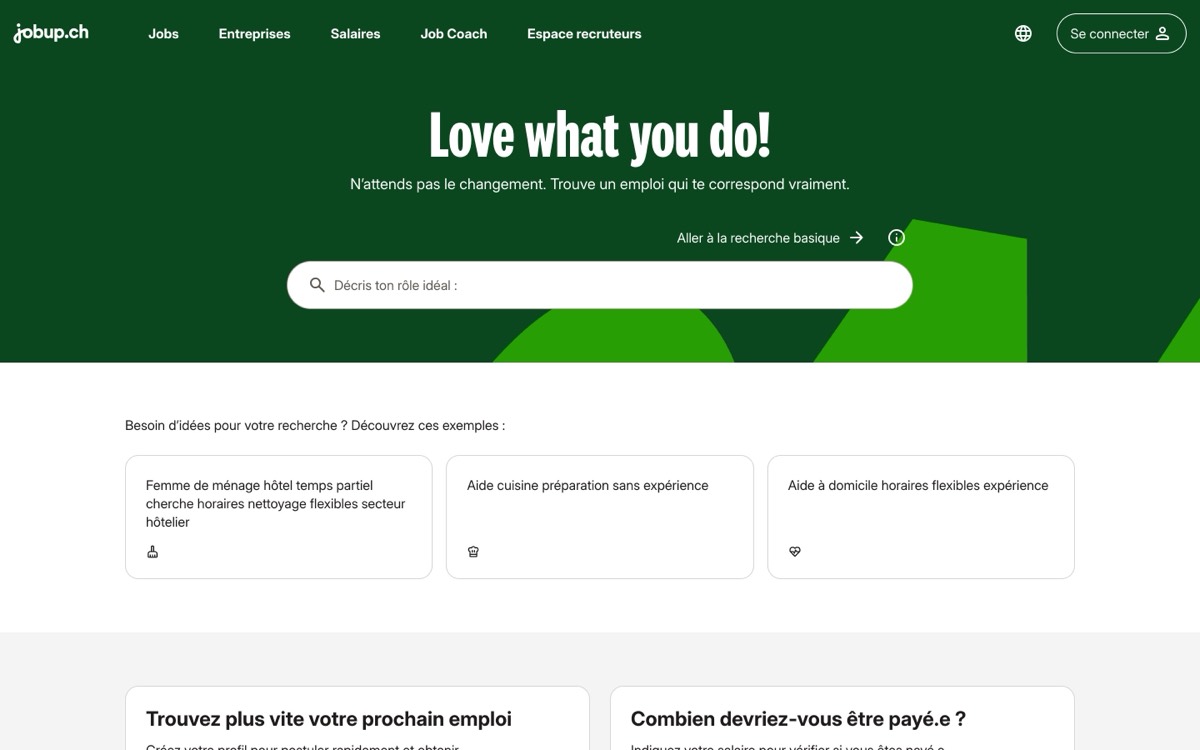
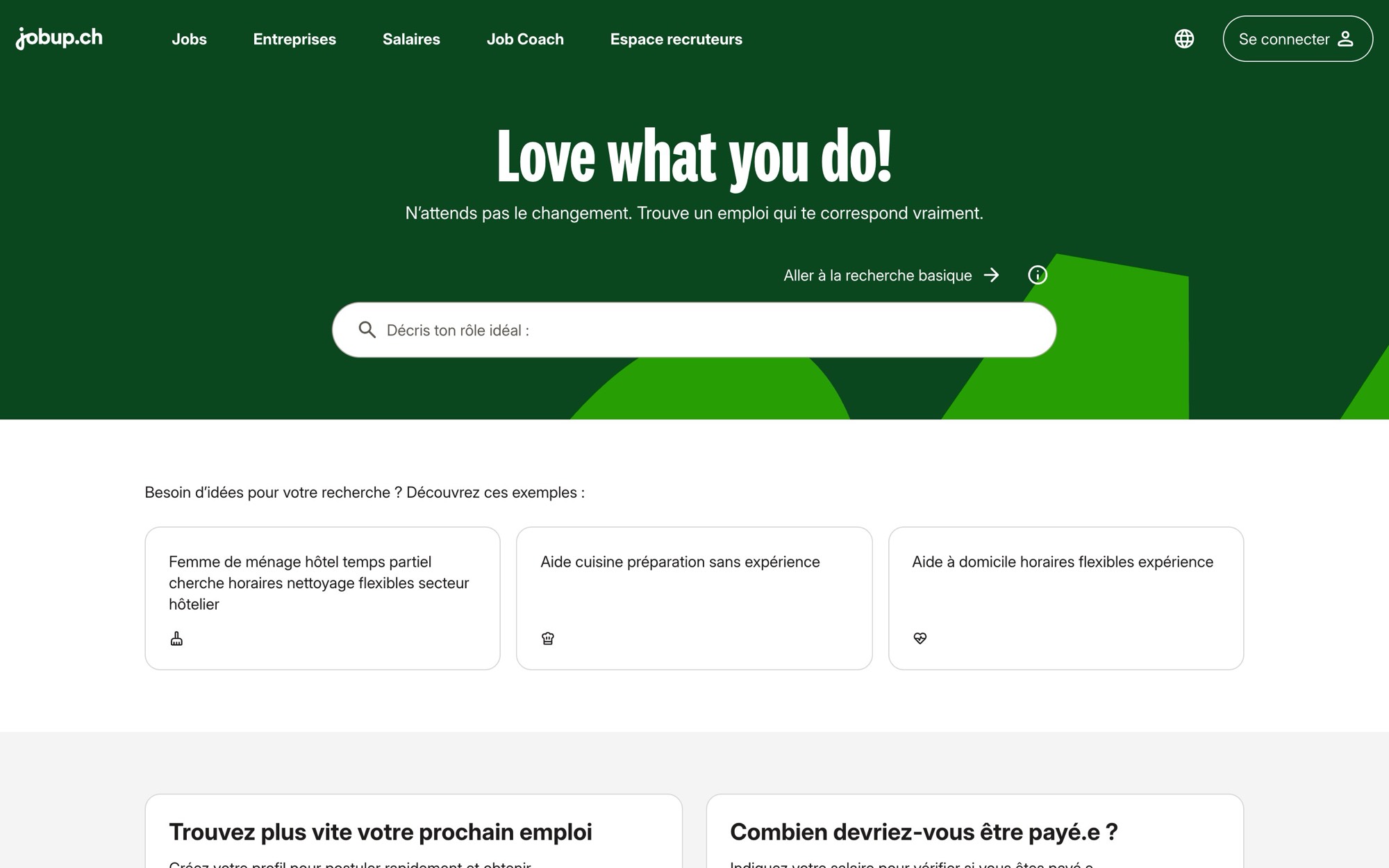
The standard in French-speaking Switzerland and the first place to look for the Romandie — but the same JobCloud AG as jobs.ch.
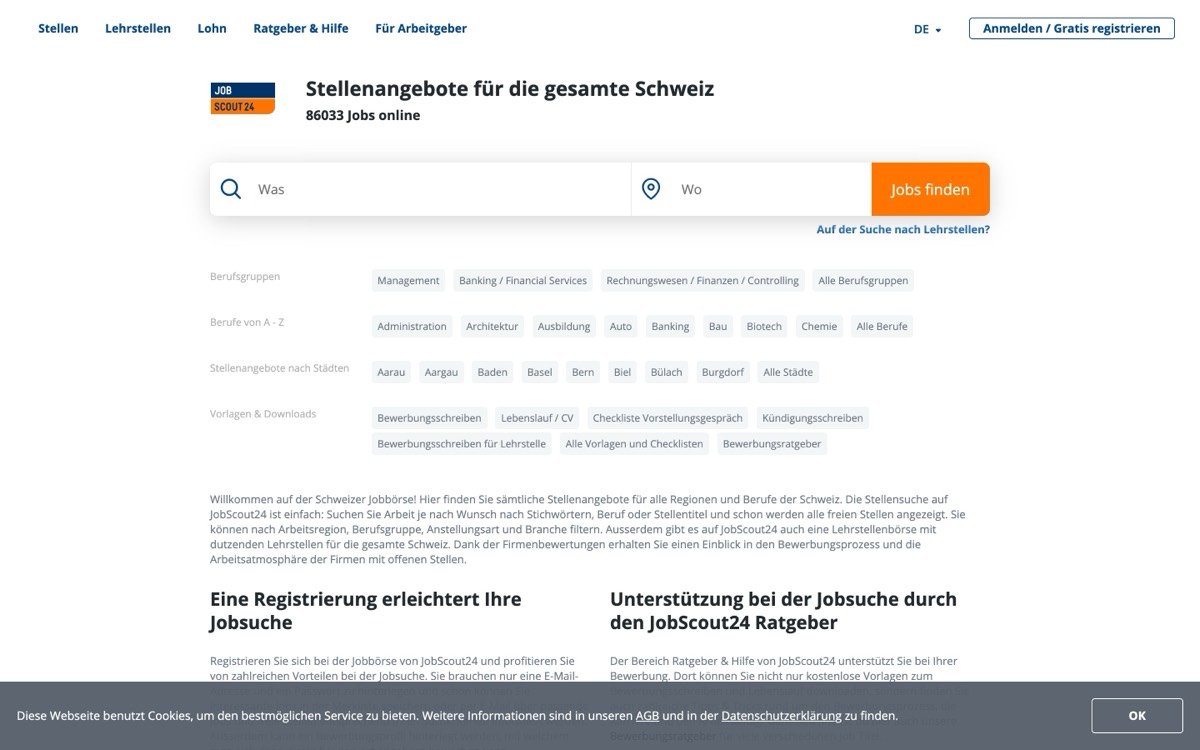
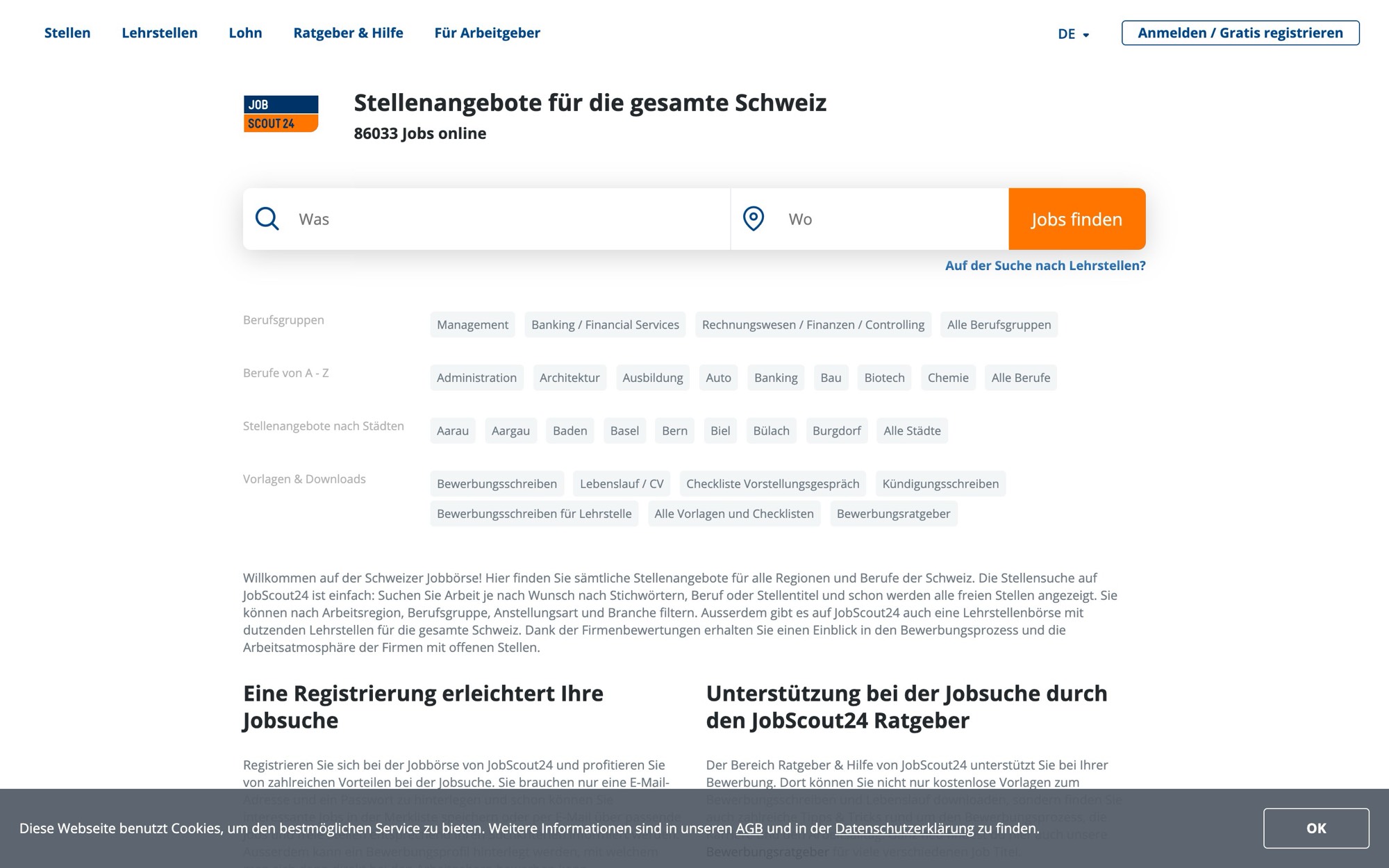
A third brand from the same company. Searching all three to widen your search means searching one provider three times.
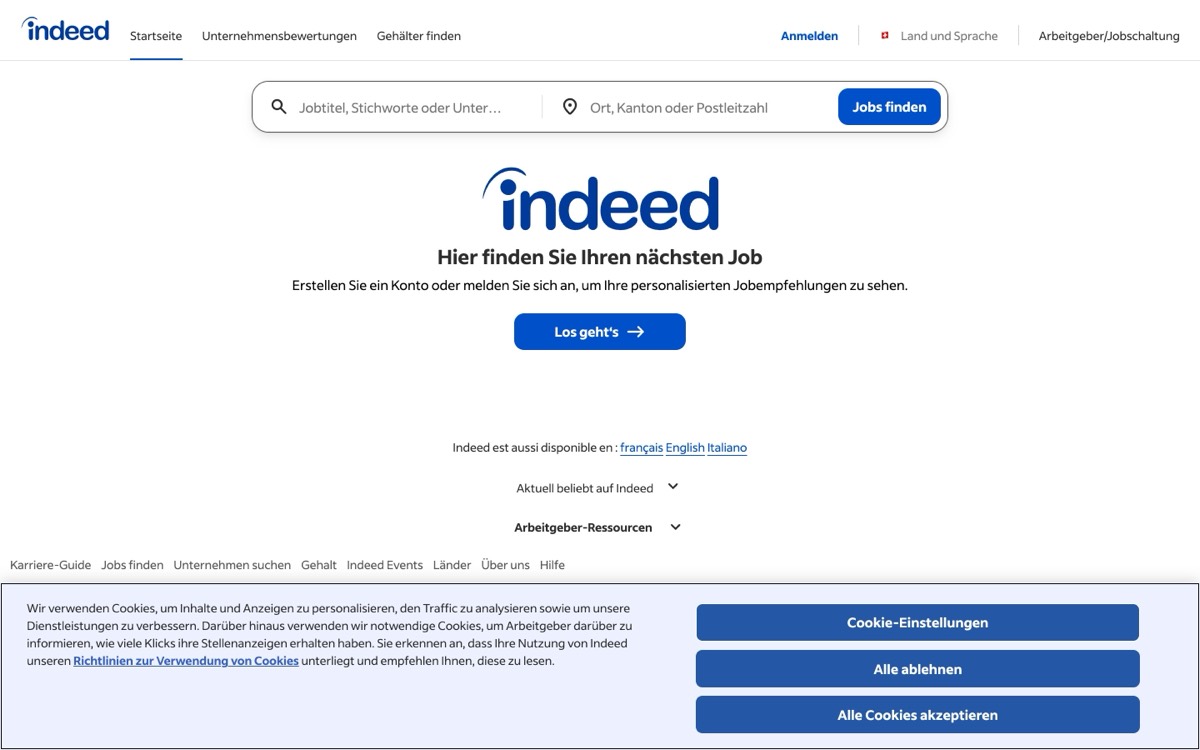
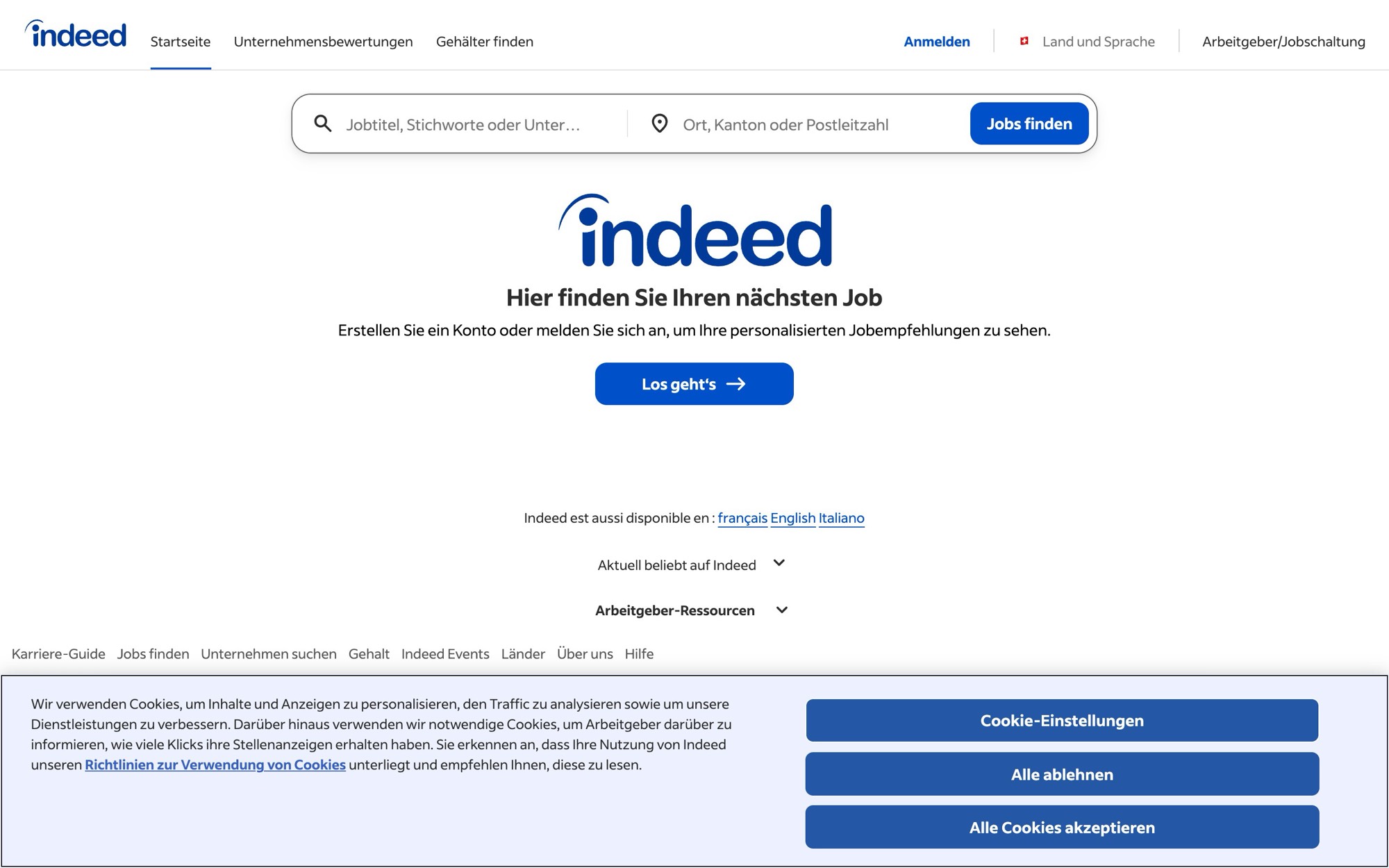
The broadest aggregation, because Indeed also collects from other boards — at the cost of many duplicates of the same advert.
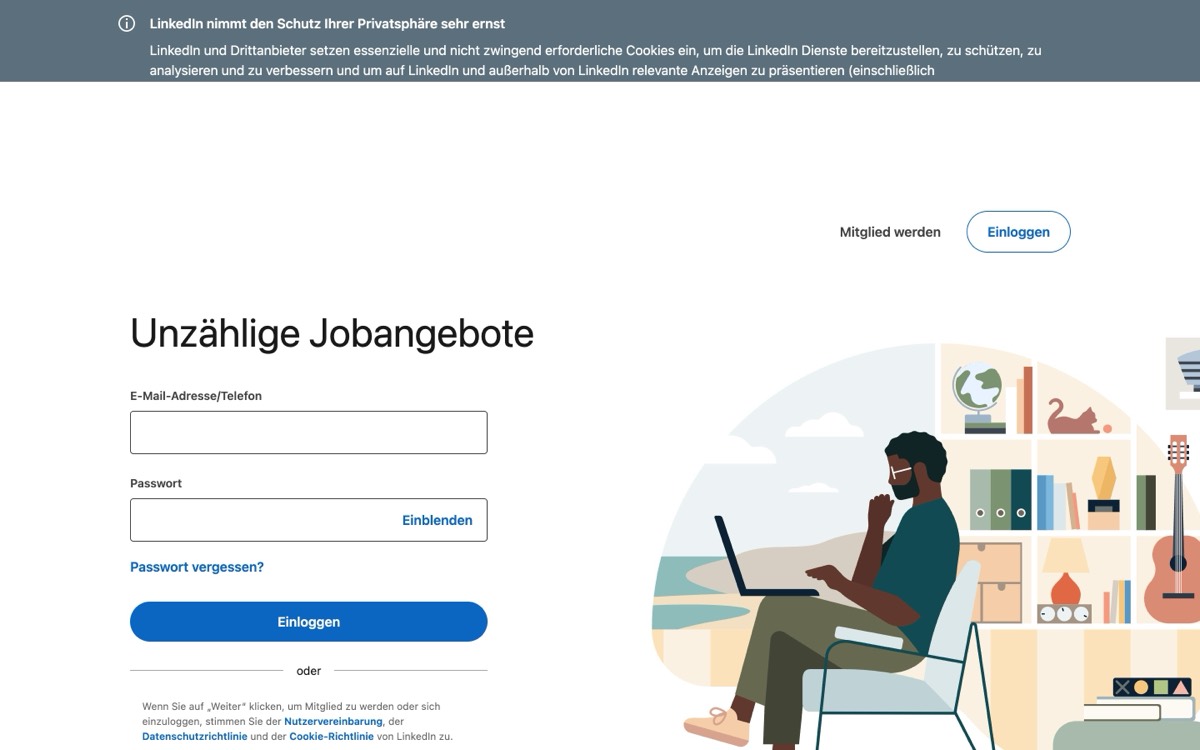
The best reputation for English-speaking and international roles in Switzerland. Considerably thinner for trades, care and commercial roles.
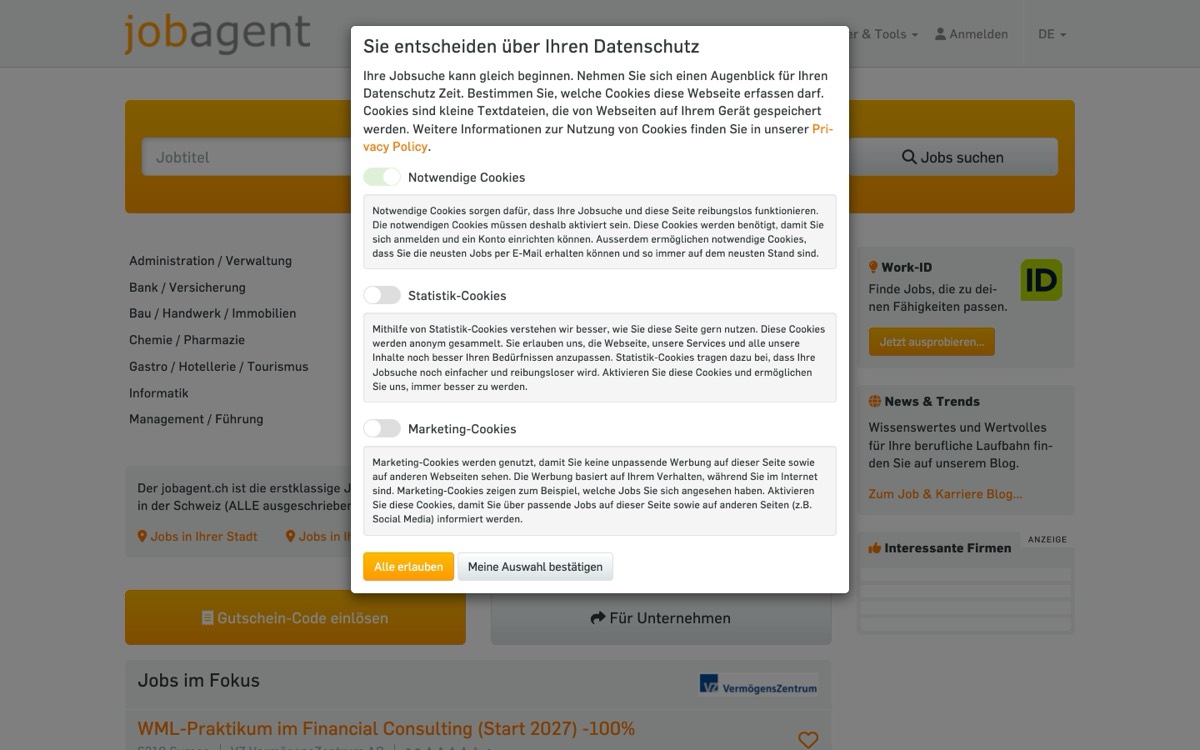
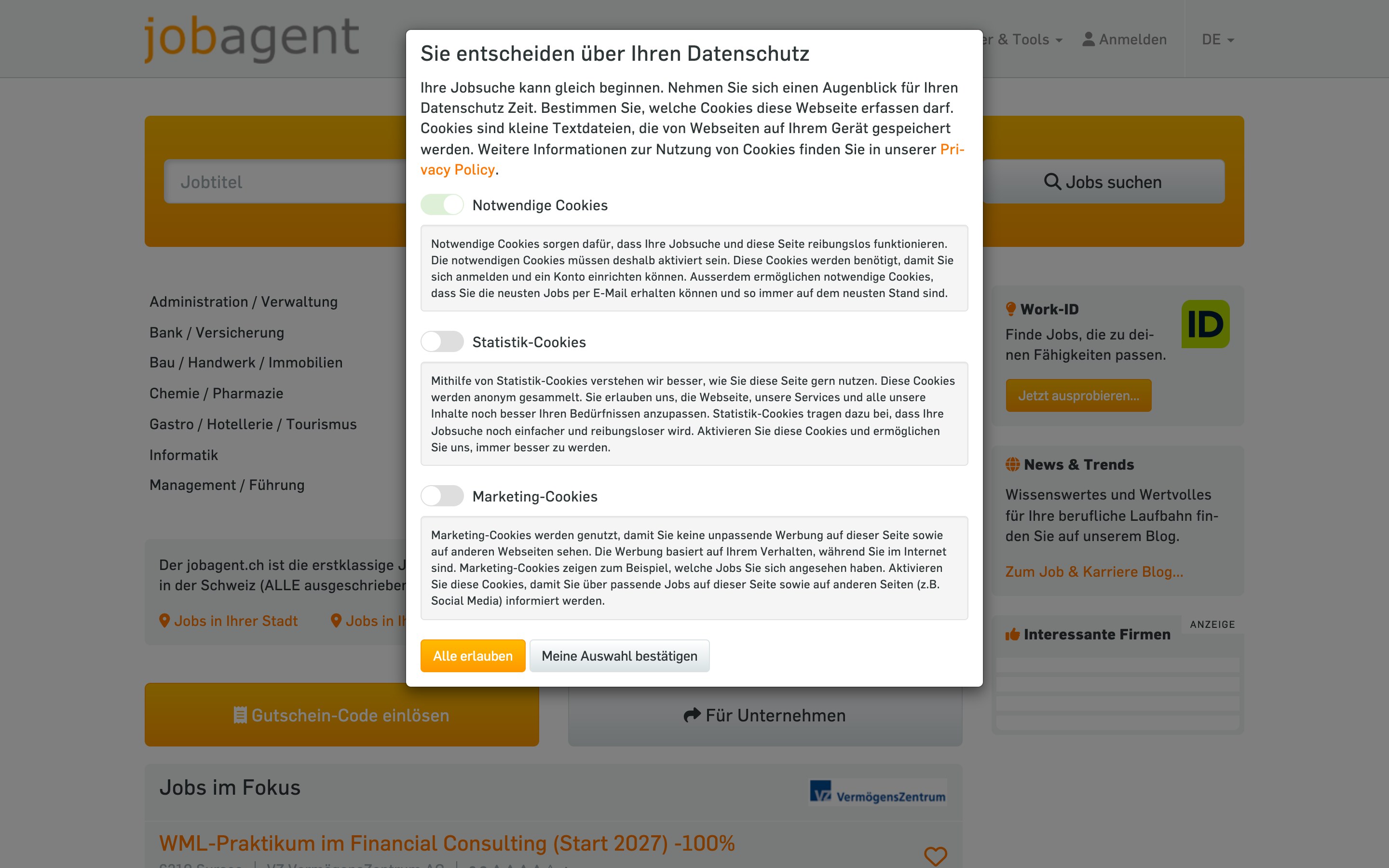
A meta-search across the Swiss job boards, "every job in Switzerland at a glance". Its strength is the Job-Abo: a saved search that mails you new adverts from every portal it covers. Salary calculator and application guides alongside.
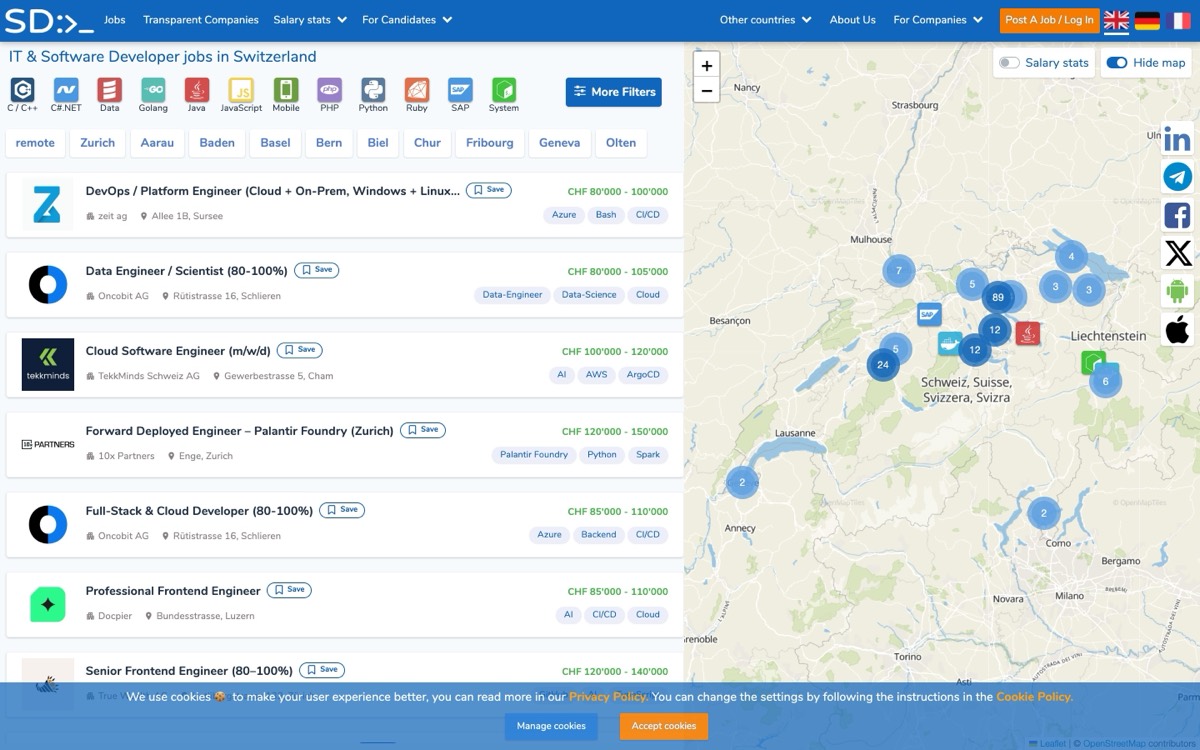
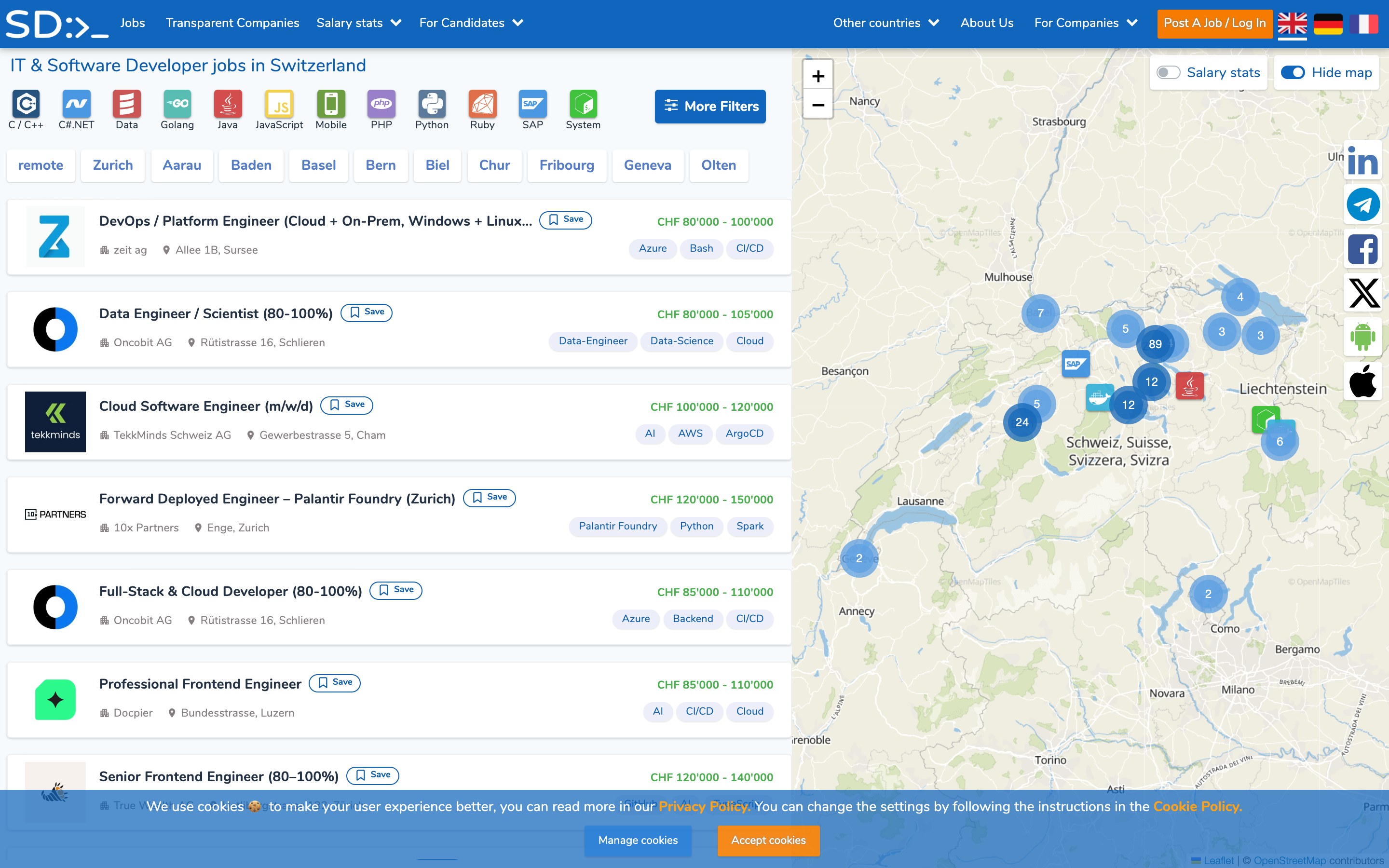
IT and software only, and thorough about it: "183 IT & Software developer jobs in Switzerland", filtered by technology (C#, Java, Python, DevOps, ML) rather than by industry. Publishes salary statistics and lists the companies that disclose their ranges. The site itself is in English.
Jobs by profession, city or language
Type a profession, a city or a language, the page shows the adverts currently open for it.
By profession
- Consultant
- Project Manager
- Retail Sales
- Nurse
- Nursing & Care
- Administrative Assistant
- Account Manager
- Software Engineer
- Public Administration
- Architect
- Insurance
- Chef
71 more — narrow the search
By work type
The good news for anyone arriving from abroad is the language. Of the engineering adverts whose language we can read, 43.6 percent are written in English against 25 percent in the rest of the market, which makes engineering the most English-language large field in this country — more English than IT when both are measured the same way. Among engineering adverts that state a language requirement, 68.7 percent ask for English and 60.6 percent for German; everywhere else that ratio is the other way round.
And an English advert here is not a courtesy translation. Only 21.3 percent of the English-language engineering adverts mention German as a requirement at all, and where they do, 38.1 percent ask for conversational level rather than professional. Those adverts also come almost entirely from the employer itself — 0.7 percent carry an agency name, against 16.8 percent across the field and 51.1 percent among the software roles that share the word Engineer.
Where they physically are is the second half of the answer. Engineering vacancies sit at fewer addresses than a comparable slice of the market: 169 places against 224, which works out at 4.33 vacancies per place instead of 3.30. The industrial ones are in Uzwil, Bussnang, Sennwald, Steinach, Grabs, Domat/Ems and Villigen, not in city centres — and in most of those towns every engineering advert comes from a single plant.
Share of the open engineering vacancies we track, by discipline, assigned from the job title and the advert text. Rolling analysis of the open Swiss vacancies in our index, August 2026.
- The English share is a property of the discipline, not of the country: research and development 77.1 percent, quality and validation 64.4, mechanical 57.7, automation 43.6, electrical 21.2 — and civil engineering 4.8 percent. Civil is a German-language market with a French-language annex.
- Engineering adverts stay online far longer than the market: a median of 30 days, 36 for adverts posted by the employer directly, against 22 in the rest of the market. 39.6 percent of employer-posted engineering vacancies are older than two months, and English-language ones run to a median of 44 days.
- Hiring comes in batches. Direct employers average 2.09 open engineering vacancies each against 1.70 in equally sized samples of the rest of the market, and 36.1 percent of the vacancies sit with employers advertising five or more engineering roles at once.
- Entry level is the bottleneck: 3.3 percent of engineering titles say junior, graduate, trainee or internship, against 5.9 percent in the rest of the market, while 18.7 percent say senior or lead against 11.7 percent. Among the English-language adverts, 31.6 percent are senior or lead.
- Part-time barely exists: 0.7 percent of engineering adverts are advertised as part-time against 6 percent elsewhere. Where a workload appears in the title at all, it is usually the Swiss 80–100 percent band.
- Nine out of ten engineering adverts name no degree whatsoever. A university word — ETH, EPFL, FH, HES, bachelor, master, doctorate — appears in 9.4 percent of them against 6.4 percent in the rest of the market, and ETH or EPFL by name in 1.3 percent against 0.2.
One word, two markets: why “Engineer” is a bad query here
Switzerland writes engineering job titles in English, and so does its software industry. That collision is the single most expensive fact about searching this field. Of every advert in our index that carries Engineer, Engineering, Ingenieur, ingénieur or ingegnere in the title, 61.4 percent describe a software, systems, network, security or cloud role and 35.5 percent describe an engineering job in the older sense of the word.
So the two obvious queries fail in opposite directions. “Engineer” appears in 66.8 percent of engineering vacancies — it is by far the most common word in the field — but only 27.8 percent of what it returns is engineering. “Ingenieur” returns 90.6 percent engineering, the cleanest list you can produce with a single word, and yet it appears in only 27.5 percent of the vacancies. Precision and coverage are simply not available in the same query.
The fix is to search the discipline. “Bauingenieur” returns civil engineering essentially every time; “mechanical” is 72.7 percent accurate; “automation” 40.2 percent. Broad technical words are the ones to avoid: “Elektro” returns 10.3 percent engineering and “Technik” 7.3 percent, because both mostly return electricians, installers and field service technicians — skilled trades, but not what you asked for.
One more gap worth knowing about. A group of genuinely engineering-level titles never uses the word at all: Konstrukteur, Elektroplaner, Gebäudetechnikplaner and their French equivalents. They add roughly 14 percent on top of the vacancies counted here, and no English-language query will ever surface them.
Nine disciplines that behave like nine separate markets
Mechanical design and construction is the largest block at 18.5 percent of engineering vacancies, followed by project and planning engineers at 16.2, automation with robotics and mechatronics at 14.1, civil and structural at 11.9, research and development at 9.8, electrical and electronics at 9.4, quality with test and validation at 8.8, process, energy and building services at 7.3 and technical sales at 4 percent.
The language split between them is extreme. In research and development 77.1 percent of the adverts are written in English; in civil engineering, 4.8 percent. That is not a stylistic difference. R&D teams recruit internationally and work in English; civil engineering works against Swiss standards, cantonal permit procedures and municipal clients, and it hires in the language of the site.
Speed differs too. Automation vacancies are the freshest at a median of 19 days, process engineering 20, project roles 24, mechanical, electrical, quality and R&D all around 31, civil engineering 36 and technical sales 52 — a technical sales advert typically sits online for a whole quarter.
And seniority is unevenly spread. Only 1.9 percent of civil engineering titles say senior or lead, against 26.7 percent in R&D and 26.4 percent in mechanical. If you are early in your career, the civil, planning and building-services side of the field is measurably more open to you than the research side, whatever the general talk about engineering shortages suggests.
The English-language segment is real, and it is direct
A third of all engineering adverts in our index are written in English, 43.6 percent of those whose language is machine-readable. That segment behaves differently from the rest of the field in three measurable ways, and each one matters if you are moving to Switzerland for the job.
First, it is almost entirely first-hand. 0.7 percent of English-language engineering adverts carry an agency name, against 16.8 percent of the field as a whole. When the advert is in English you are nearly always reading the employer's own words, which means the contact person named in it is the person who will decide.
Second, it mostly does not ask for German. Only 21.3 percent of these adverts list German as a requirement at all, and of those, 38.1 percent are content with conversational level. Compare that with the field overall, where 60.6 percent of adverts stating a requirement want German and 88.1 percent of those want it at professional level. The English adverts are a genuine parallel market, not a translated version of the German one.
Third, it is senior and it is slow. 31.6 percent of English-language engineering adverts say senior, lead, principal or staff, and their median age is 44 days against 30 for the field. The employers behind them in our index are the ones you would expect — CSEM in Neuchâtel, VAT Group in the Rhine valley, Hitachi Energy, GE Vernova, Roche, CERN in Geneva, and a layer of younger robotics and deep-tech firms in Zurich and Lausanne.
Follow the plant, not the city
Zurich carries 21.3 percent of engineering vacancies against 15.1 percent of the rest of the market, Basel 7.5 percent and Lausanne 5.2. But the shape of this field is better described by what sits outside those names. Counting only direct employers, engineering vacancies are spread over 169 places while equally sized samples of the rest of the market cover 224 — fewer addresses, more vacancies at each.
Measured against their weight in the rest of the job market, the over-represented towns are Domat/Ems, Sennwald, Steinach, St. Margrethen, Bussnang, Uzwil, Grabs, Männedorf, Kägiswil, Villigen and Lenzburg. In most of them, every engineering vacancy we hold comes from one employer: Stadler in St. Margrethen and Bussnang, Bühler in Uzwil, Variosystems in Steinach, Körber Pharma in Grabs, Tecan in Männedorf, Baumer in Frauenfeld, VAT in Sennwald, Hamilton Medical in Domat, Axetris in Kägiswil, the Paul Scherrer Institute in Villigen.
This changes how a location filter should be used. In most occupations you pick a city and find many employers. In engineering you find a works, and the works has several openings. A tight radius around a city centre removes precisely the industrial half of the field — the St. Gallen Rhine valley, Thurgau, the Fricktal, the lower Aare valley, the central Swiss valley sites.
The practical consequence for anyone relocating is that housing and commuting decisions follow the employer, not the other way round. Set the discipline first, look at what the search returns across the whole country, and apply the location filter last and generously.
Old adverts are the opportunity, not the warning
The median engineering advert in our index is 30 days old; counting only those posted by the employer directly, 36. In the rest of the market the median is 22 days, and among the software roles sharing the word Engineer it is 11. Nearly 40 percent of employer-posted engineering vacancies have been online for more than two months.
The instinct to skip those is wrong here. Engineering roles stay open because they are slow to fill: narrow profiles, few matching applications, several interview rounds, and a three-month notice period on the candidate's side. A two-month-old advert in this field is usually still open, and by then most other candidates have stopped looking at it.
So sort by fit rather than by date, and apply to the older ones first. If you want certainty before writing anything, call the contact named in the advert — in a field where five out of six adverts come from the employer, that call reaches a person rather than a queue.
The flip side is that daily checking earns you very little. Only 11.6 percent of engineering vacancies are less than a week old, almost exactly the market's 12.5 percent. An alert on your discipline is worth more than a habit of refreshing a list.
Permits, degrees and the things adverts do not say
Nine out of ten engineering adverts name no qualification at all. Where they do, ETH or EPFL appear by name in 1.3 percent — six times their rate in the rest of the market, but still a small minority. The requirement in this field lives in the task description, not in the diploma line, which means an application from a degree the advert never mentions is far less hopeless than it feels.
If your qualification was earned abroad, the question to settle before you apply is whether your profession is regulated in Switzerland at all. Many technical activities are not, and no recognition procedure is needed; where a profession is regulated, a specific body handles it. The State Secretariat for Education, Research and Innovation publishes both the procedure and the list of competent bodies.
On work authorisation, the adverts themselves are mostly silent, and that silence should not be read either way. Employers in this field routinely recruit from abroad — that is what the English-language segment is for — but the permit route depends on your nationality and on the employer, not on the advert.
One last observation from the data that is easy to miss: 2 percent of engineering vacancies give their location only as “Switzerland”, and a small group is advertised as remote. Those adverts appear in no city search at all. If you are filtering by canton or town, run one unfiltered search per week for your discipline so that this group does not disappear from view.
A search plan that matches this field
Use three queries, not one: the discipline word for precision, “Engineer” for reach, and the German or French word to catch the local employers who never write in English. The three return measurably different lists.
When a vacancy fits, open the employer's whole list before you write anything. At 2.09 open engineering roles per direct employer, the second suitable job is often already there — and one application referencing two openings reads better than two separate ones.
Ignore the date and set the location filter last. Nearly 40 percent of this field has been online for over two months and is still open, and the plants are in places you would not think to type into a search box.
And read who is sending. Five out of six engineering adverts come from the employer, so the named contact is usually reachable and usually decisive — a short, specific email to that person is the cheapest advantage available in this market.
Shares from our rolling analysis of the open Swiss vacancies in our index, August 2026. An engineering vacancy here is an advert whose title carries one of the words Engineer, Engineering, Ingenieur, ingénieur or ingegnere and whose discipline can be assigned, from the title and the advert text, to a classical engineering discipline; software, systems, network, security and cloud roles are excluded and reported separately. Titles that never use the word — Konstrukteur, Elektroplaner, Gebäudetechnikplaner — are not counted and would add roughly 14 percent. Comparisons with the rest of the market use equally sized samples wherever concentration or the number of locations is measured, so that the number of adverts cannot drive the result; language, age and title shares are computed against the whole remaining stock.
Browse open engineering vacancies by location and discipline
Sources
Related questions
What our job index says about the Swiss market
Computed live from our own index, not quoted from a study. Shares only, as of today.
Language the advert is written in
- Deutsch
- 60%
- English
- 23%
- Français
- 13%
- Italiano
- 3%
Of adverts that state a language requirement, the share asking for
- Deutsch
- 70%
- English
- 43%
- Français
- 21%
- Italiano
- 3%
19% posted in the last 7 days · Largest markets: Zürich 18% · Bern 10% · Genève 5% · Basel 5%