Where do I find IT jobs in Switzerland — and why does searching for "IT" miss most of them?
Updated:
In short
Switzerland has plenty of IT work, but it is badly labelled. Roughly 12 percent of the open vacancies we track are IT roles, yet only about one in eight puts "IT" in the title and one in twenty-five says "Informatik". The word that actually appears is "Engineer". Search by role and technology instead of by field — Software Engineer, System Engineer, Data Engineer, SAP, Cloud, Security — and read who posted each hit before you read anything else.
The Swiss job portals at a glance
Click an image for the full-size view. What each portal actually is stands beside it.
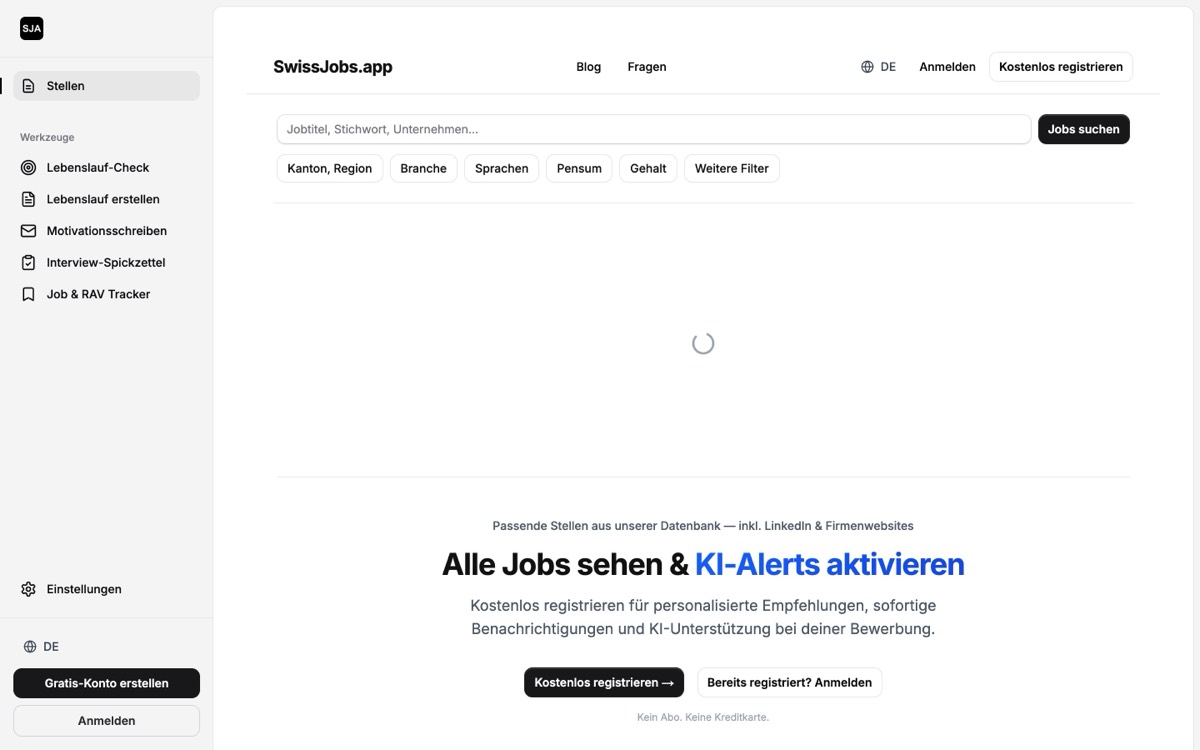
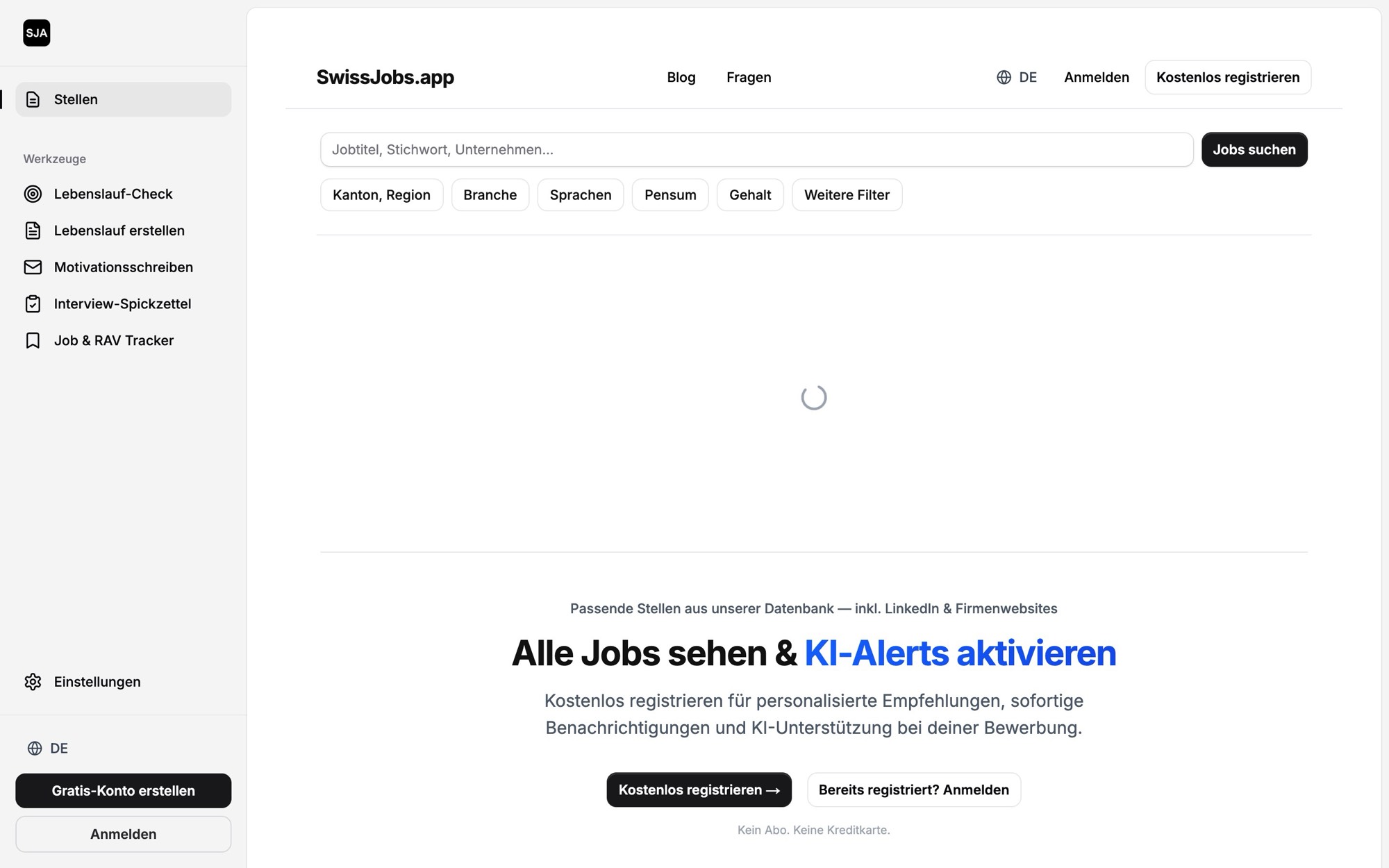
1. SwissJobs.appOur app
Over 21,000 open Swiss roles from ATS systems, company sites and LinkedIn in one place — and from any advert, straight into a CV, a motivation letter, a CV check and interview prep. The RAV job-search-efforts form fills itself from your application tracker. Free to use; the account is asked for at save.
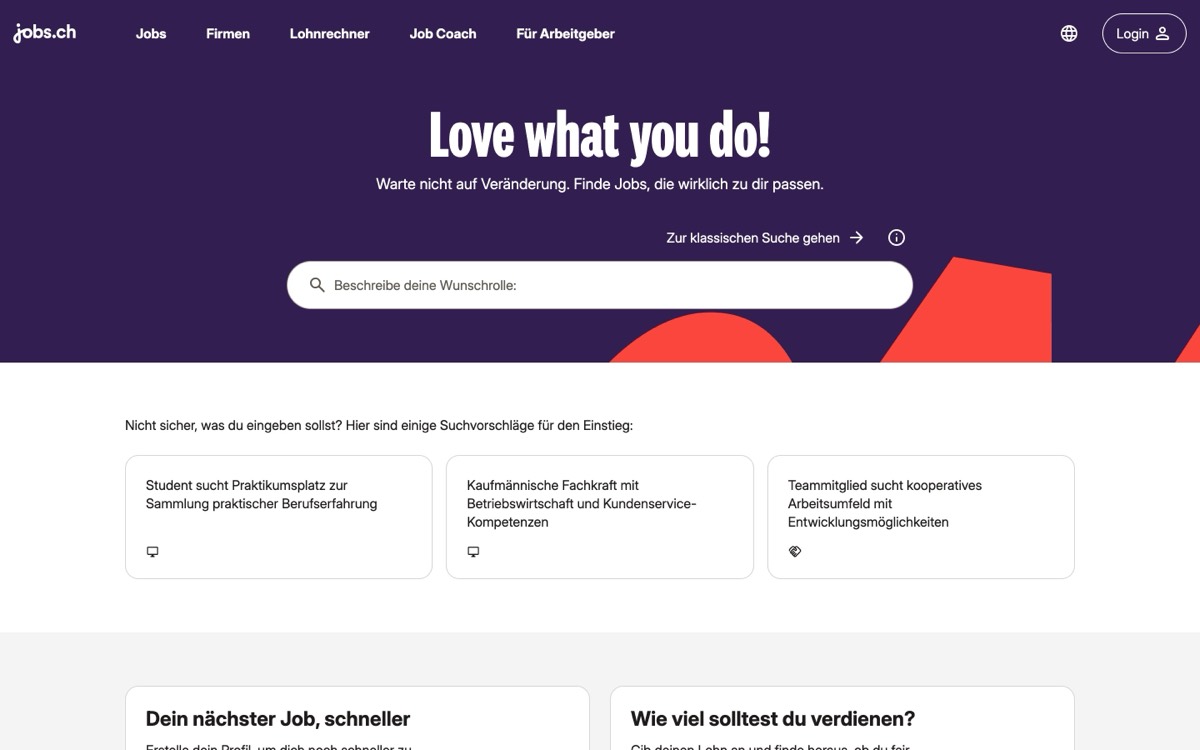
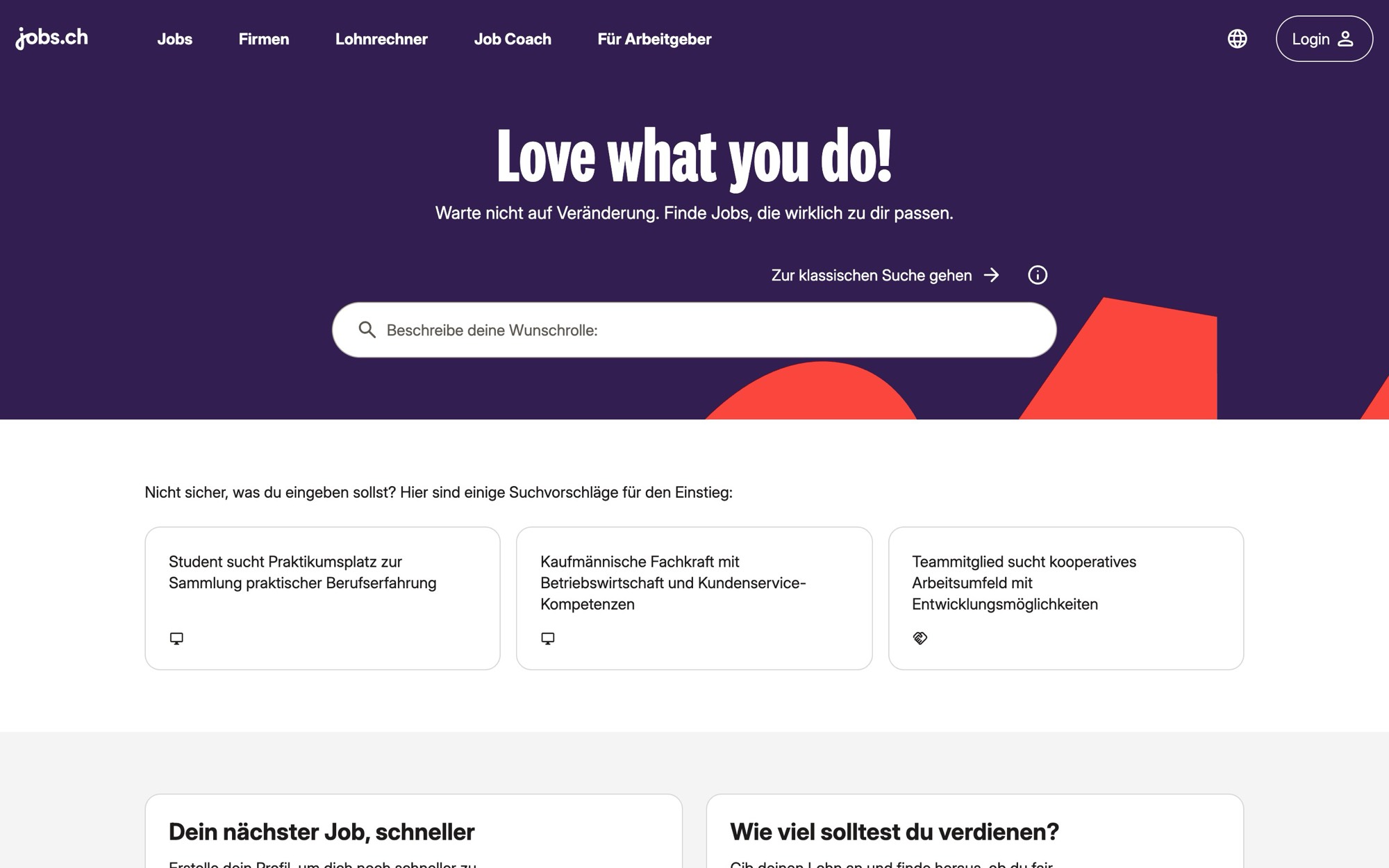
The best-known board in German-speaking Switzerland and the largest index in the country. Owned by JobCloud AG — as are jobup.ch and JobScout24.
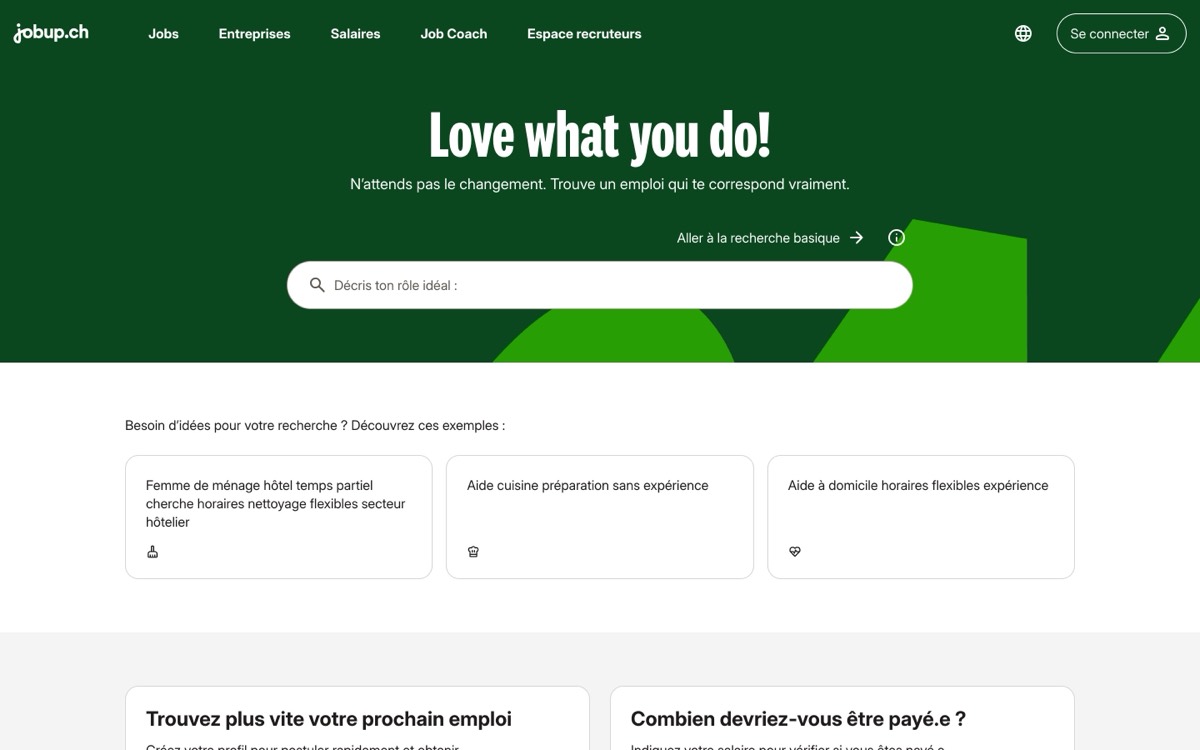
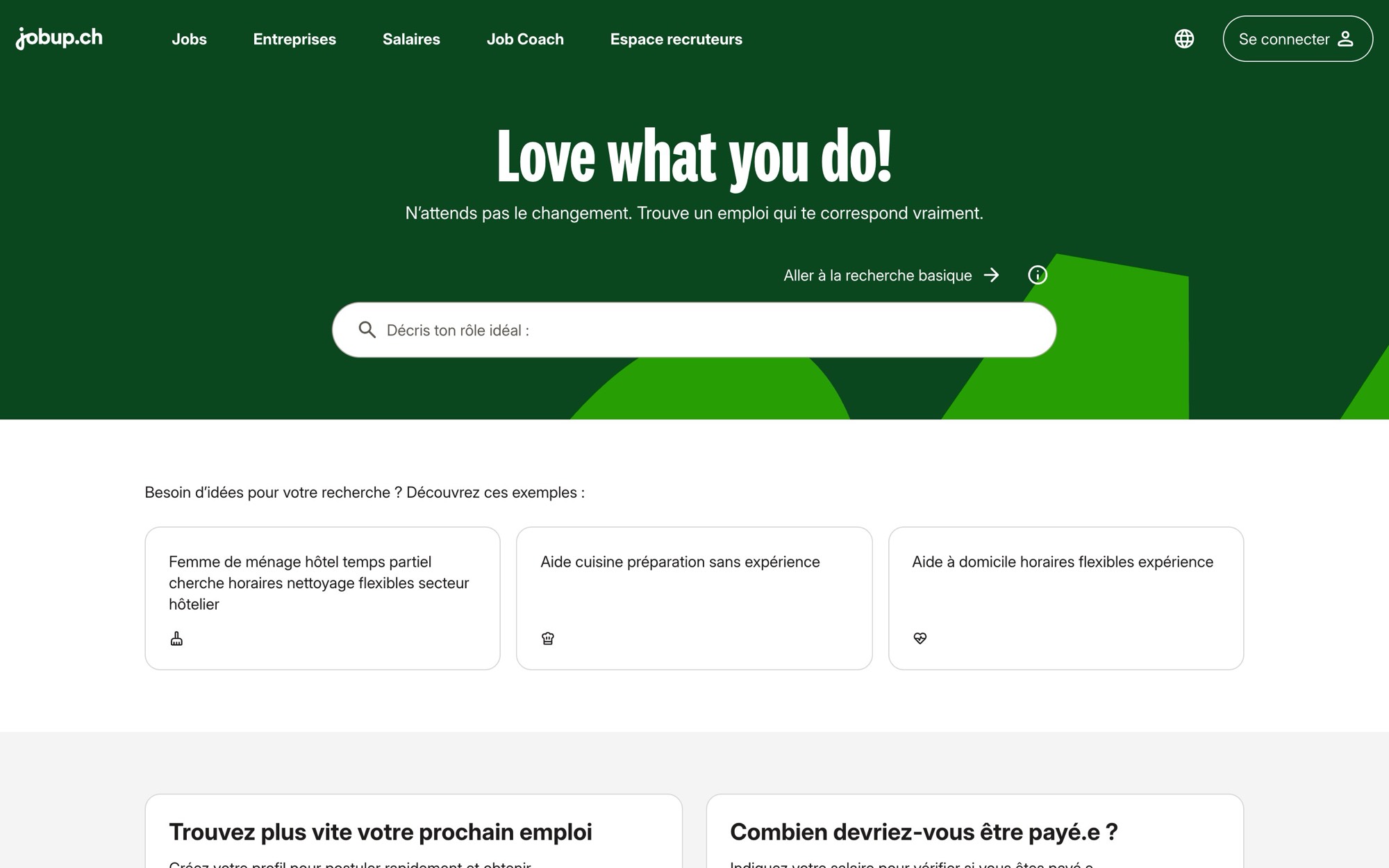
The standard in French-speaking Switzerland and the first place to look for the Romandie — but the same JobCloud AG as jobs.ch.
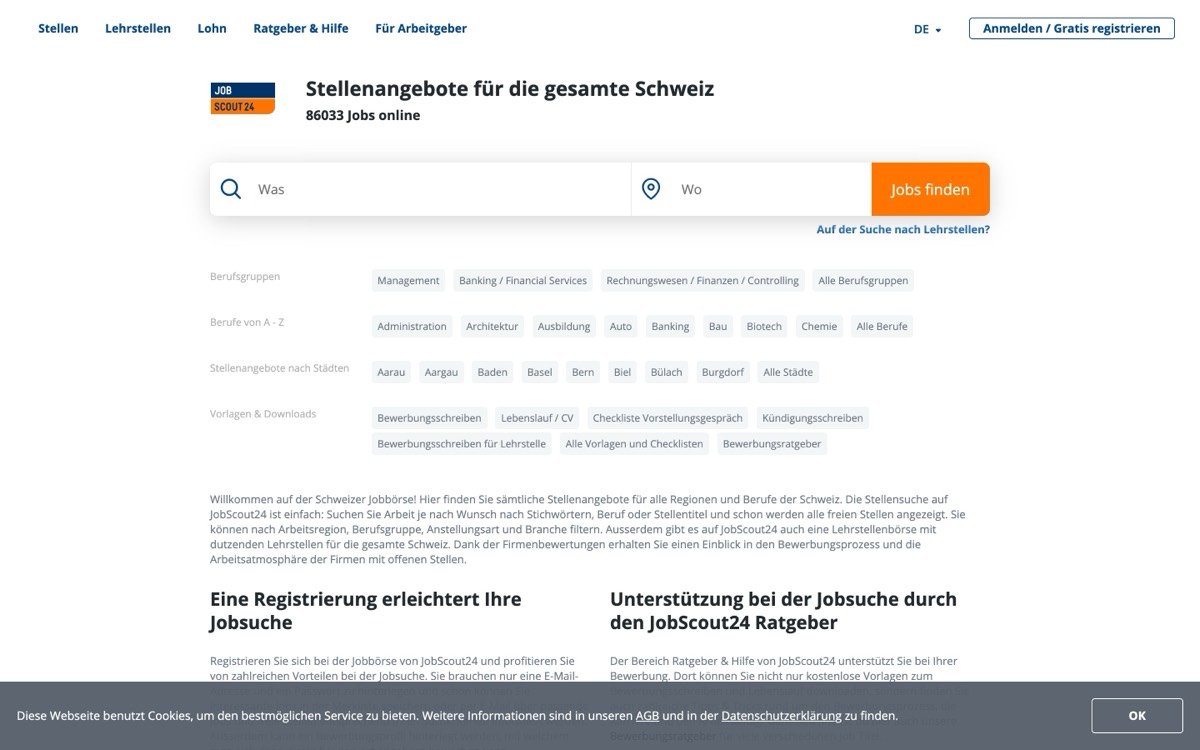
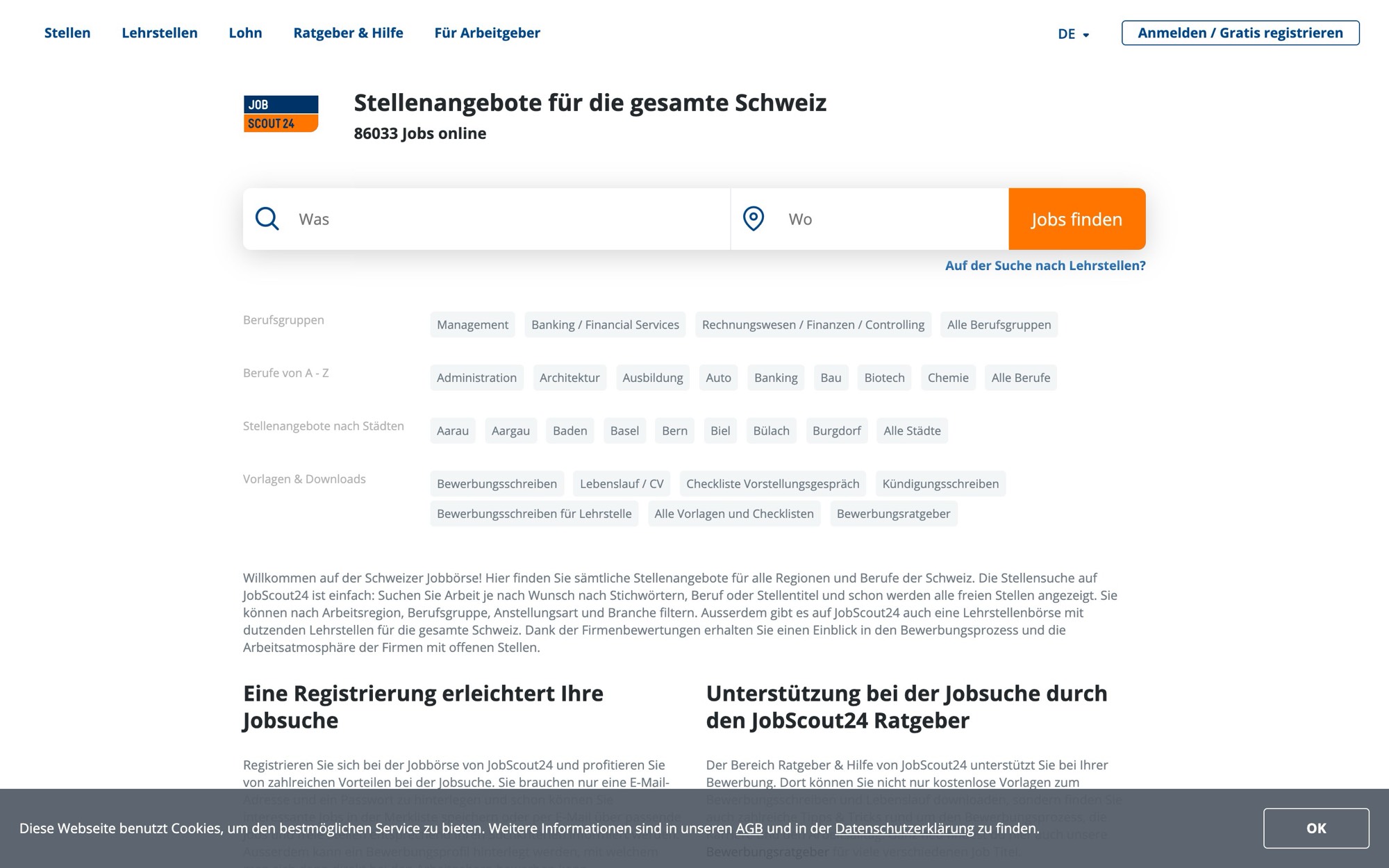
A third brand from the same company. Searching all three to widen your search means searching one provider three times.
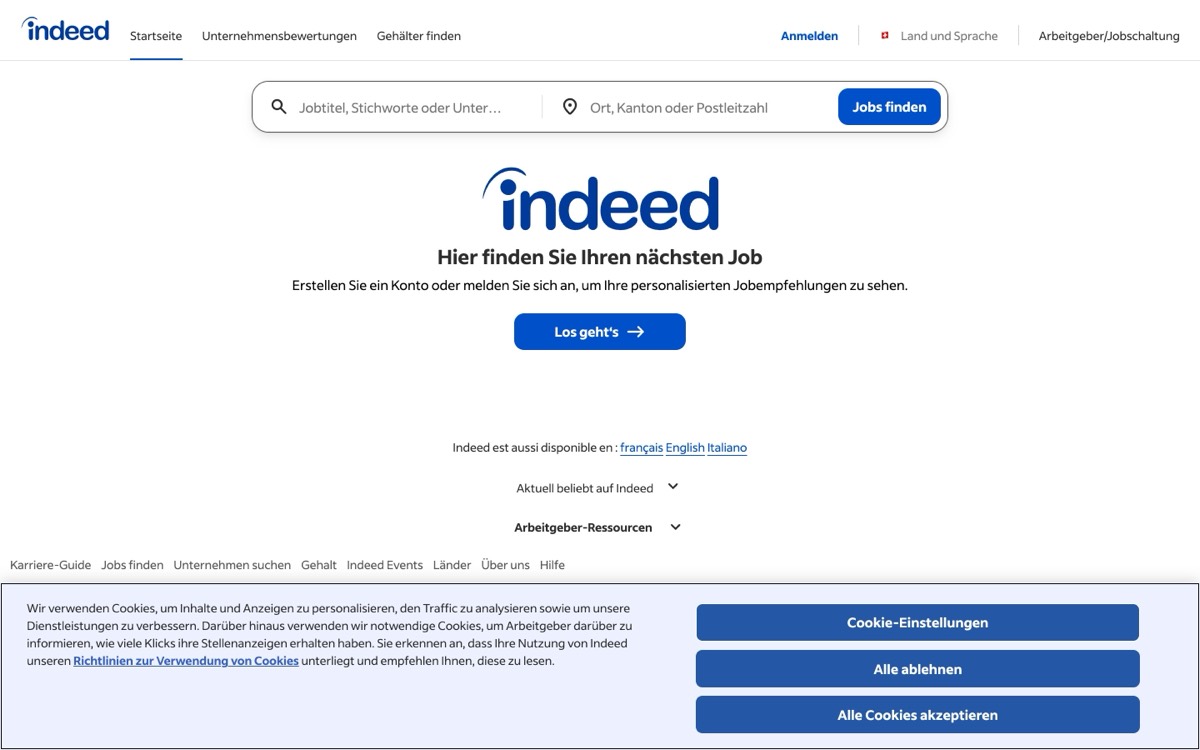
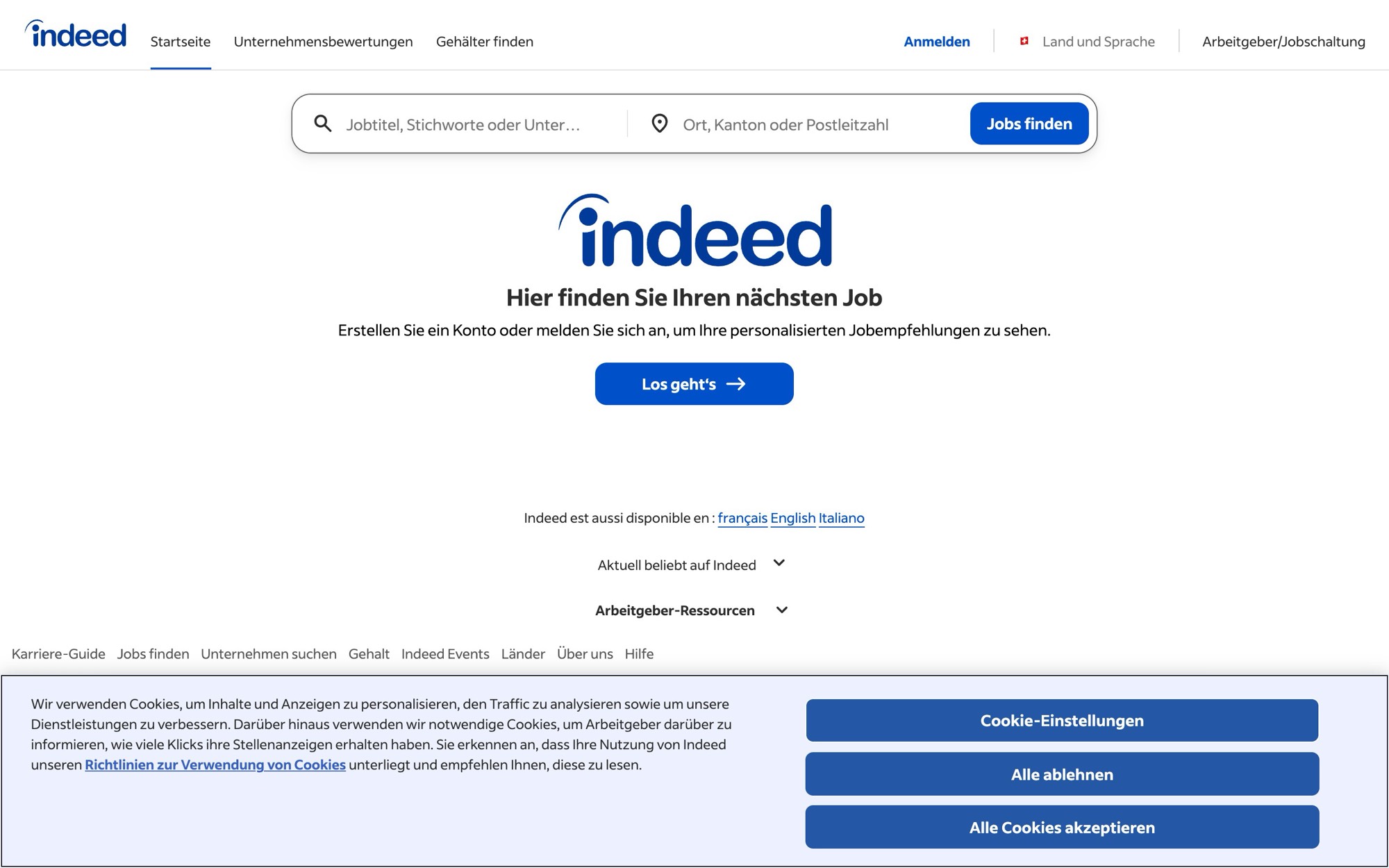
The broadest aggregation, because Indeed also collects from other boards — at the cost of many duplicates of the same advert.
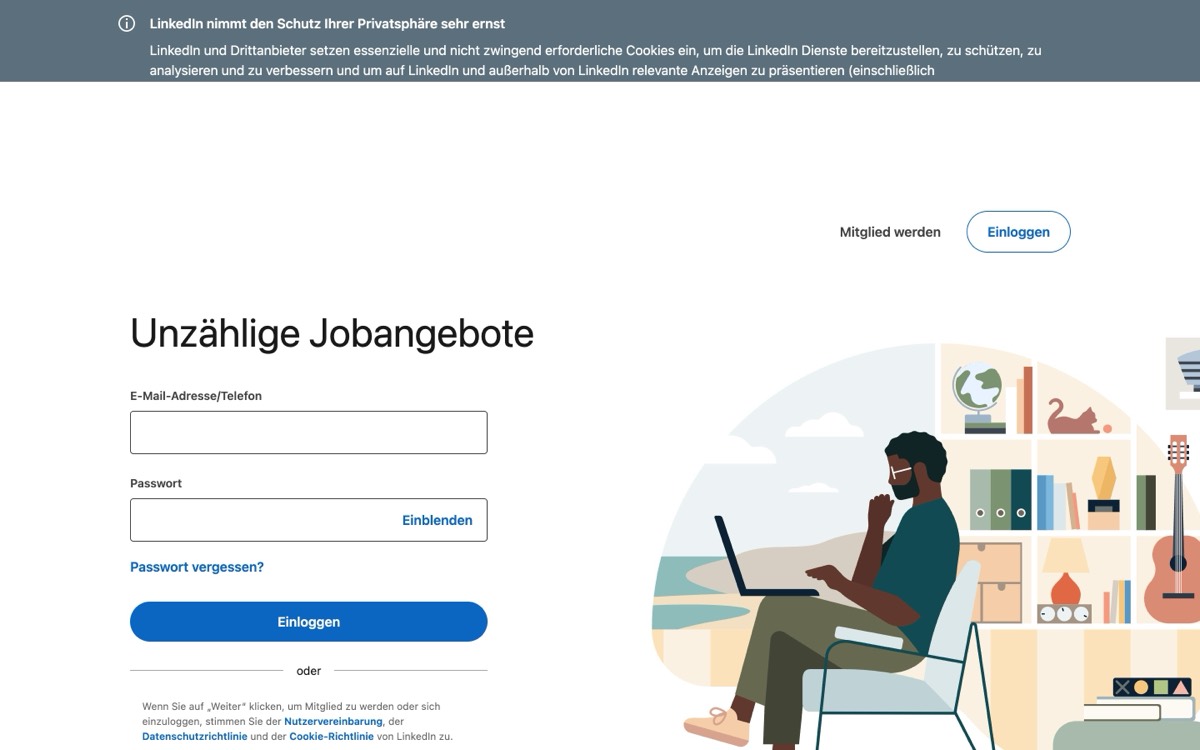
The best reputation for English-speaking and international roles in Switzerland. Considerably thinner for trades, care and commercial roles.
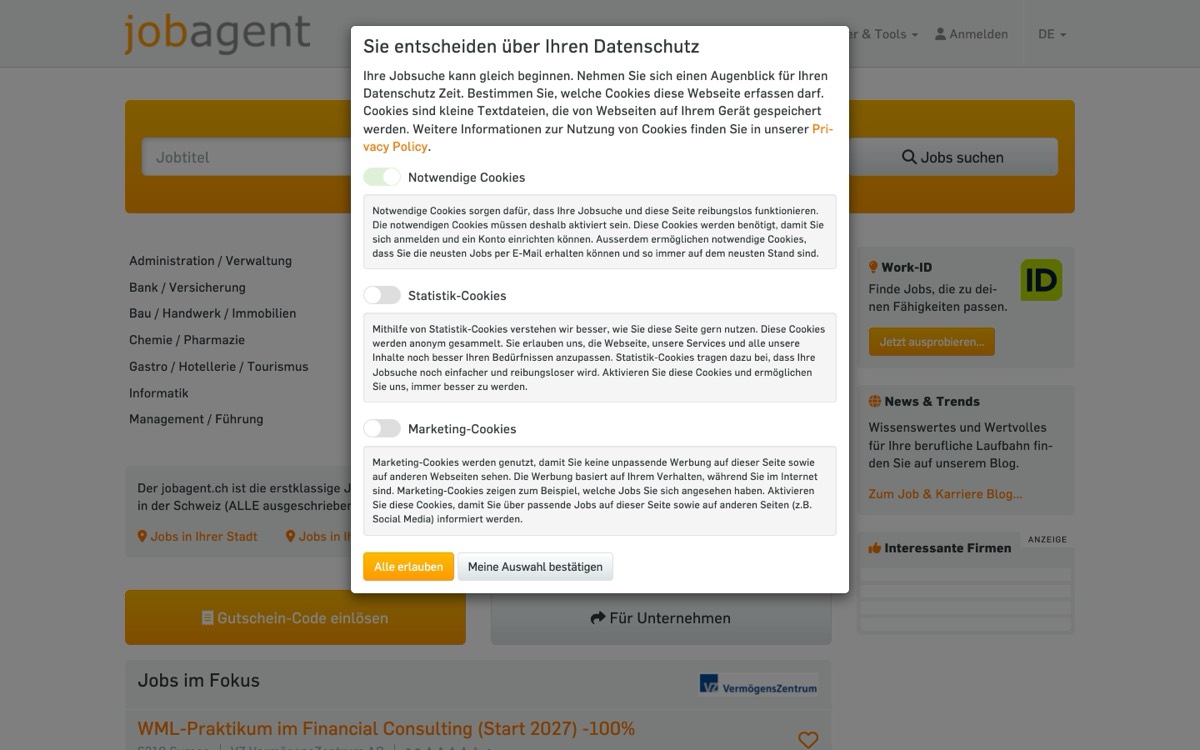
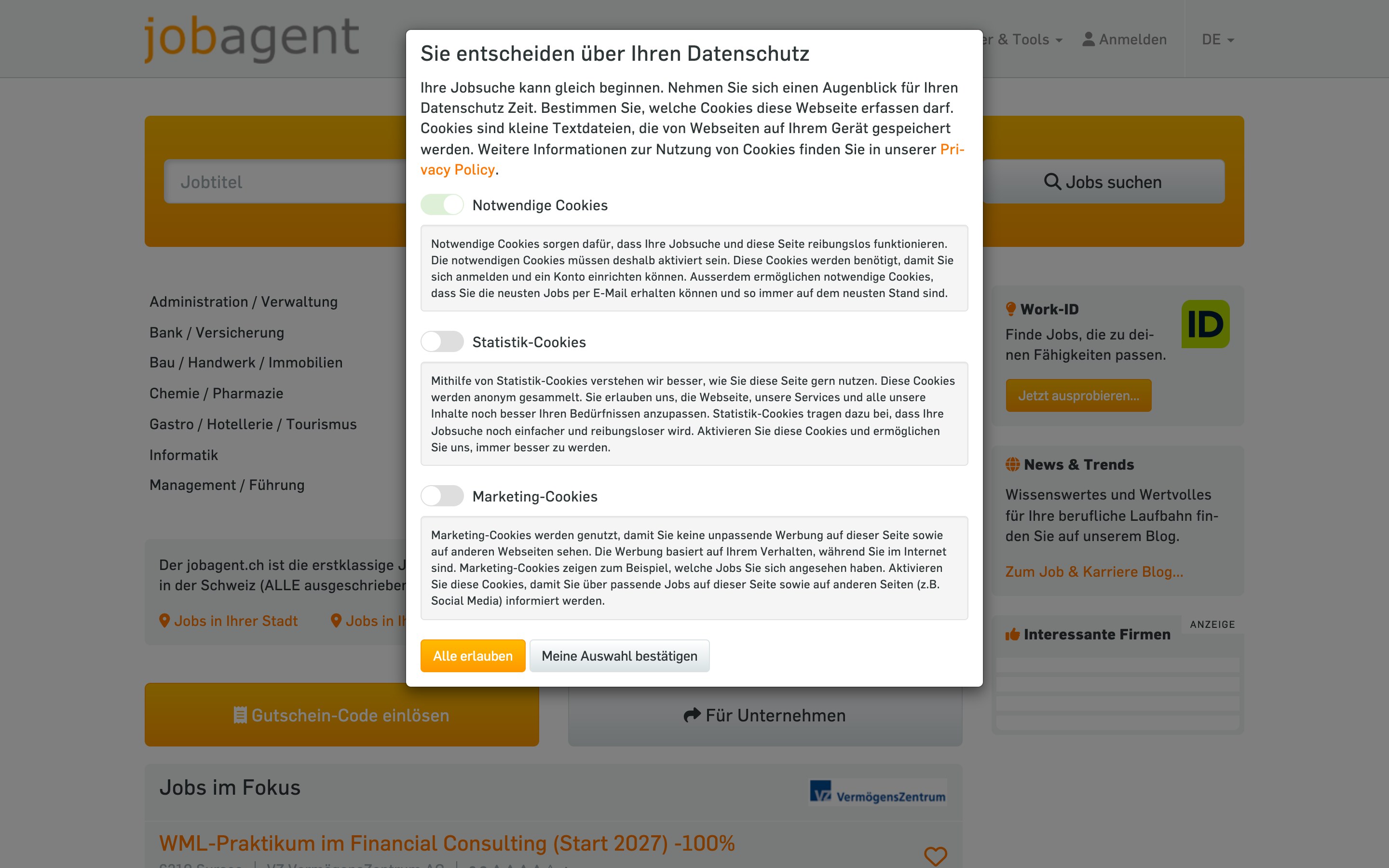
A meta-search across the Swiss job boards, "every job in Switzerland at a glance". Its strength is the Job-Abo: a saved search that mails you new adverts from every portal it covers. Salary calculator and application guides alongside.
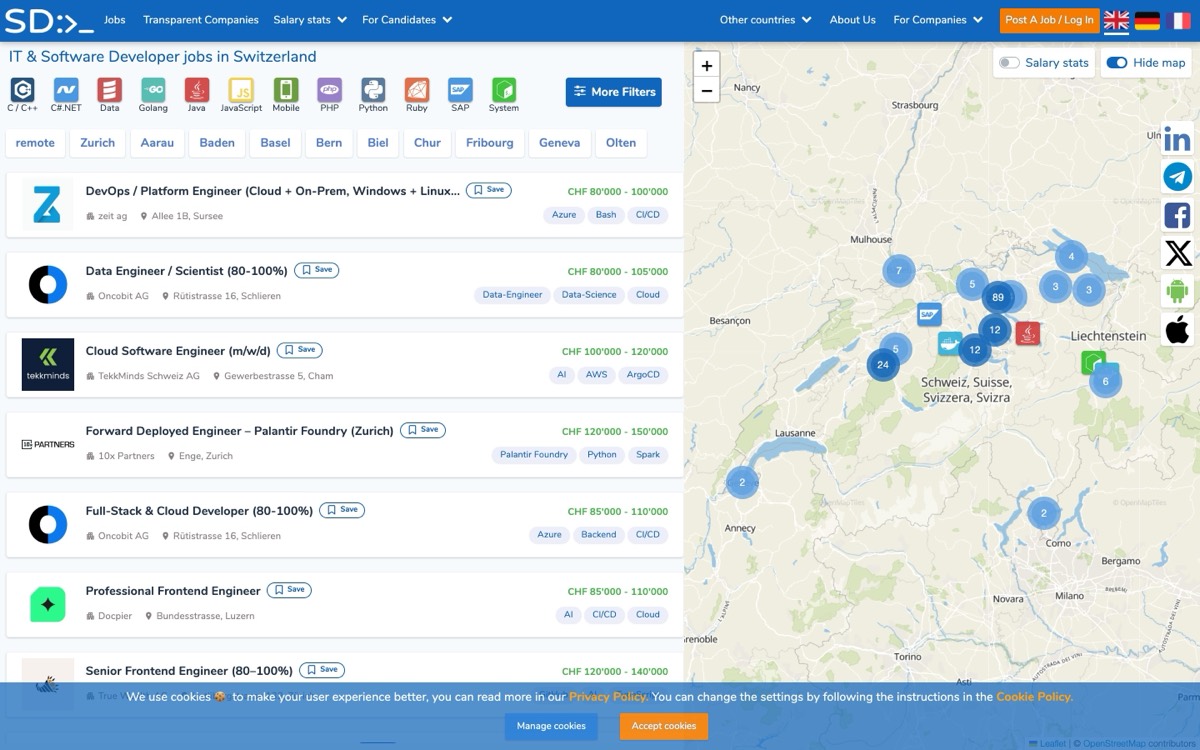
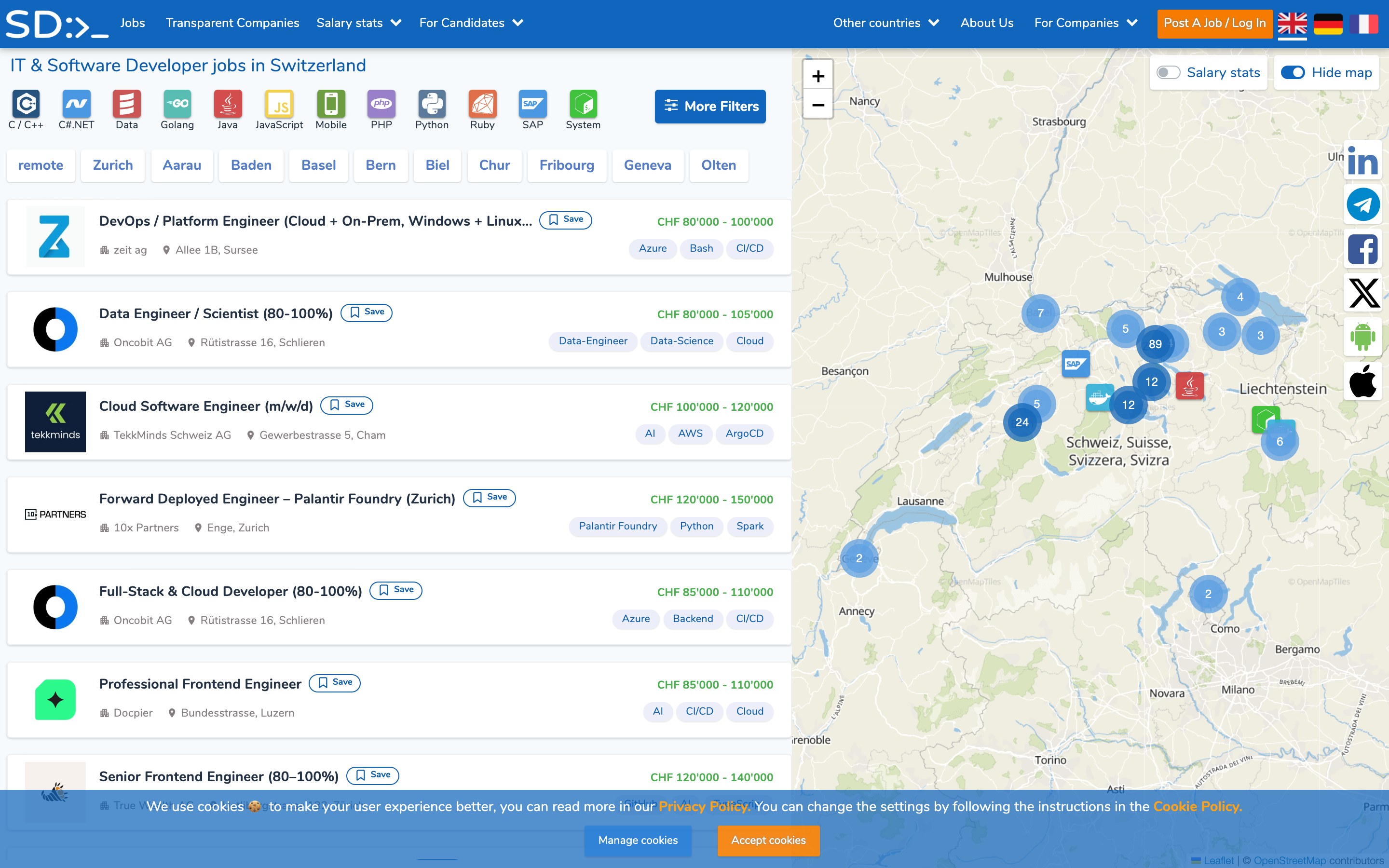
IT and software only, and thorough about it: "183 IT & Software developer jobs in Switzerland", filtered by technology (C#, Java, Python, DevOps, ML) rather than by industry. Publishes salary statistics and lists the companies that disclose their ranges. The site itself is in English.
Jobs by profession, city or language
Type a profession, a city or a language, the page shows the adverts currently open for it.
By profession
- Consultant
- Project Manager
- Retail Sales
- Nurse
- Nursing & Care
- Administrative Assistant
- Account Manager
- Software Engineer
- Public Administration
- Architect
- Insurance
- Chef
71 more — narrow the search
By work type
That last point matters more here than anywhere else in the market. 43.9 percent of the IT adverts we hold carry the name of a recruitment agency or staffing firm rather than the employer, against 8.3 percent across the rest of the market, and one single recruitment platform accounts for 40.2 percent of all IT adverts on its own. So for roughly every second IT result you cannot tell from the advert which company you would actually be working for.
It also distorts the one signal jobseekers trust most. Counting every IT advert, the median is 12 days old, which looks encouragingly fresh. Counting only adverts posted by the employers themselves, the median is 30 days — older than the 22 days of the rest of the market, with 34.1 percent past two months. Continuously refreshed agency adverts are what make an IT list look young. A six-week-old bank advert is normal here, not stale.
As for where the roles sit: mostly not in tech companies. 70.6 percent of employer-posted IT adverts come from organisations whose vacancy list is mostly non-IT — banks, insurers, hospitals, manufacturers, energy utilities and federal offices. The distribution is flatter here than in any other field, too: no single employer accounts for even 2 percent of these adverts, and 59 percent of the employers with an IT vacancy have exactly one. Watching only software houses means watching the smaller half of the field.
Share of IT adverts whose title carries each word. Computed without the single largest advertiser, a recruitment platform with formulaic titles that would otherwise dominate the shape. A title can carry several of these words, so the values do not add up to a hundred. Rolling analysis of the open Swiss vacancies we track, August 2026.
- 66.4 percent of employer-posted IT adverts carry none of the three obvious words — no "IT", no "Informatik", no "Software" — anywhere in the title.
- 72.1 percent of those titles are built from English role words: Engineer, Developer, Specialist, Architect, Analyst, Consultant. National-language role words appear in 9.5 percent.
- 41.4 percent of employer-posted IT adverts are written in English, against 20.2 percent of the market as a whole. Only 5.9 percent are written in French.
- Of the IT adverts that state a language requirement, 46.2 percent are workable in English alone, against 20.7 percent in the rest of the market — but 43.8 percent still require professional German.
- 24.5 percent of IT titles say Senior or Lead, against 7.2 percent elsewhere. Junior, trainee, graduate and internship titles together reach 3.5 percent.
- 2.8 percent of IT adverts give the location only as "Switzerland", nearly twice the rate of the rest of the market — they drop out of every city search.
Three searches that beat one
Start from the shape of the titles rather than from the name of the field. Across employer-posted IT adverts, "Engineer" appears in 36.5 percent, Software in 16.7, Developer or Entwickler in 10.8, System in 9.6, Data in 8.3, Security or Cyber in 7.9, Architect in 6.6 and SAP in 6.5 percent. "IT" itself reaches 12.6 percent, ICT 6.3 and the German family around Informatik 4.2 percent.
Two-thirds of the field — 66.4 percent — carries none of "IT", "Informatik" or "Software" in the title. That is the concrete cost of searching by field name. Three or four saved searches built on role words cover far more ground than one saved search built on the label of the profession, and they cost the same to maintain.
The second habit worth building is a search with no location filter at all. 2.8 percent of IT adverts state the location only as "Switzerland", nearly twice the rate of the rest of the market. Those adverts appear in no city search, and they skew towards internationally posted roles — exactly the ones many people arriving from abroad are looking for. Run the role search once with a canton filter and once without.
Read the sender before you read the job
Swiss IT recruitment runs through intermediaries to a degree no other field matches. 43.9 percent of the IT adverts in our index are posted under the name of a recruitment agency, a staffing firm or a specialised placement service, against 8.3 percent in the rest of the market. One recruitment platform alone posts 40.2 percent of all IT adverts we see.
The largest of these senders has a recognisable signature, and it is typical of the genre. Every one of its adverts carries a gender tag in the title, the location is usually a large city rather than the workplace address, and 41.1 percent of them share a title with at least one other advert from the same sender. Its most repeated title appears thirty-five times. That is not thirty-five distinct vacancies; it is one recurring profile.
So treat the sender as part of the posting. Where the name is an agency, the questions "which company, which town, employed by whom?" belong in the first phone call, not in the final interview. And do not count several such hits as several targets — two agencies can be working the same vacancy, and applying through both puts you into one process twice, which is a bad look at no benefit.
None of this makes agencies a detour. Many Swiss employers fill IT roles exclusively through them, and a good specialised recruiter knows vacancies that are never advertised. The point is only to keep the two channels separate in your head: agency contacts are a relationship to build, not a job list to work through.
The employers you would never think to watch
70.6 percent of employer-posted IT adverts come from organisations whose vacancy list is mostly not IT at all. This is the single most useful fact on this page, because it says the watchlist you need looks nothing like a tech watchlist.
In our index those employers are, above all, banks and wealth managers — Vontobel, Julius Baer, Union Bancaire Privée, Lombard Odier, Banque Cantonale Vaudoise; insurers such as Zurich, Helvetia, Generali and Visana; hospitals including Kantonsspital Baden, Luzerner Kantonsspital, Kantonsspital Graubünden and University Hospital Basel; industrial firms such as Stadler, Bühler, Endress+Hauser, Liebherr, Rieter, V-ZUG, Hilti and SKAN; utilities and transport including Axpo, Swissgrid and the federal railways; Roche and Solvias in pharma; Coop in retail; and research addresses such as CERN, the Paul Scherrer Institute and ETH.
The public sector carries 10.7 percent of employer-posted IT adverts — about the same share as it holds in the market overall, but with the largest single public-sector address in the field, the Federal Office of Information Technology and Telecommunications in Bern. The federal administration itself, swisstopo, the armed forces, RUAG and cantonal bodies such as the State of Fribourg all advertise IT roles regularly. These employers rarely appear high in a keyword search, because they post under their institutional name and a plain role title.
The pure IT houses are the smaller group: adesso, Sword Group, Bechtle, Oracle, Accenture, PRODYNA, Proton, Aveniq, Sopra Steria, T-Systems, Abraxas, isolutions, finnova and Centris are the recurring names. Worth watching — but if half your watchlist is not made of tech companies, you have built it wrong.
How much German you need depends on which IT you mean
Of the IT adverts that state a language requirement at all, 46.2 percent can be worked in English alone, against 20.7 percent in the rest of the market. That is the good news. The other half of the field is the correction: 43.8 percent still require German at professional level.
The split runs along one line — how close the role sits to the people who use the system. Among adverts stating a requirement, data and AI roles are workable in English alone in 68.9 percent of cases, software development in 61.6, cloud, DevOps and platform work in 53.3, and security in 53 percent. Then it drops: systems, network and infrastructure roles 45.3 percent, project management and consulting 28.8, SAP, ERP and business applications 27.9, and support and service desk just 25.4 percent — where 69.8 percent of adverts want professional German.
That gives a usable rule if you are arriving without a national language. Product-facing engineering, data and research roles are genuinely open to you today. Internal IT, ERP work, consulting and anything user-facing will mostly not be, whatever your technical level. Aim your search at the first group, and treat the second as a target for later rather than a wall.
Language also shapes where the adverts are written. 41.4 percent of employer-posted IT adverts are in English, more than double the market rate of 20.2 percent, while only 5.9 percent are in French. Searching in English is not a workaround in this field; it is the main track.
Where the roles are, region by region
IT is more concentrated than the market around it. 30.3 percent of employer-posted IT adverts sit in the Zurich and Winterthur region, against 19.8 percent of everything else. Geneva and Vaud follow with 14.6 percent, the Bern region with 10.5, central Switzerland with 6.1, Basel with 5.9, Aargau and Solothurn with 5.3, Fribourg, Neuchâtel, Jura and Valais with 4.6, eastern Switzerland with 3.8 and Ticino with 1.1 percent.
Bern punches above its weight because of federal IT, the armed forces and the federally linked companies around them — employers with no equivalent anywhere else in the country. Geneva and Vaud are the second cluster and a distinctly international one: CERN, the private banks, and product companies such as Proton and Sonar. Basel is life sciences with an IT layer attached rather than a tech market of its own.
Zurich, Geneva with Vaud, and Bern are in fact the only three regions where IT is more strongly represented than the market around it. Everywhere else, including Basel, central and eastern Switzerland, Aargau with Solothurn and the western cantons around Fribourg and Neuchâtel, IT makes up a smaller share of the adverts than the market at large does. And a stretch of the field has no city at all: research campuses and industrial sites in small municipalities that appear in no city list, which is another argument for the search without a location filter.
Getting in is the bottleneck, not the supply
If you already have a few years behind you, this field will find you quickly. If you are entering it, the numbers are unkind. 24.5 percent of IT titles carry Senior or Lead, against 7.2 percent in the rest of the market. Junior, trainee, graduate and internship titles together reach 3.5 percent — below the market average of 4.3 percent. Apprenticeship titles account for 3.9 percent against 6 percent elsewhere.
The way in therefore rarely runs through a job search and almost always through an institution. In our index the vocational IT apprenticeships are advertised mainly by large employers — federal offices, cantons, hospitals, banks and manufacturers, the same addresses that carry most of the finished IT roles. Subscribing to their career pages beats waiting for a search to surface them.
Part-time is scarce too: 3.4 percent of IT adverts are posted as part-time roles against 6 percent in the rest of the market, and only 17.9 percent state a workload percentage in the title at all, against 23.6 percent. If you need a reduced workload, it is a conversation to have with the employer, not a filter that will find you anything.
Why the official portal gives you no head start in IT
General advice often sends jobseekers to Job-Room, the portal of the public employment service, first. For some occupations that is exactly right. Where an occupation type has high unemployment, employers must report vacancies to the regional employment centre, and the role may only be advertised elsewhere five working days after publication in the protected area of Job-Room. Registered jobseekers get those five working days of advance notice and application time.
None of that applies to IT. The sole criterion is the unemployment rate: an occupation type is subject to the requirement if it reaches at least 5 percent as a national twelve-month average, measured by the Swiss Standard Classification of Occupations CH-ISCO-19. The list in force for 2026 on arbeit.swiss contains no computing or ICT occupation type at all. The only mentions of information and communication technology are exclusions — technical sales roles are listed explicitly as excluding ICT.
For context, that list has been growing elsewhere: 6.5 percent of the workforce were in notifiable occupations in 2025 and 10.8 percent are in 2026, with cleaning staff and chefs newly added. For an IT jobseeker the practical conclusion is simply that there is no five-day advantage to wait for. Job-Room remains a useful extra channel, but in this field employer career pages and saved role-based searches are the first stop, not the portal.
Shares come from our rolling analysis of the open Swiss job adverts we track, August 2026. An advert counts as IT here when its title names a computing, software, systems, data, security, applications or ICT role, or carries a recognisable technology word; "IT" as the language code for Italian and retail titles are excluded. Where the text says employer-posted, agencies and staffing firms identifiable by the sender name have been removed. Regions are grouped from the location line of the adverts and do not cover every municipality, so their shares do not add up to a hundred. Language figures cover only adverts that state a requirement. We publish shares, never absolute stock figures.
Sources
Related questions
What our job index says about the Swiss market
Computed live from our own index, not quoted from a study. Shares only, as of today.
Language the advert is written in
- Deutsch
- 60%
- English
- 23%
- Français
- 13%
- Italiano
- 3%
Of adverts that state a language requirement, the share asking for
- Deutsch
- 70%
- English
- 43%
- Français
- 21%
- Italiano
- 3%
19% posted in the last 7 days · Largest markets: Zürich 18% · Bern 10% · Genève 5% · Basel 5%