Where do I find retail jobs in Switzerland, and why does a job board find so few of them?
Updated:
In short
Swiss retail openings are held by a very short list of employers. Retail shop roles are about 5.1 percent of the open Swiss adverts we hold, but the ten largest posters account for 68.1 percent of them and the single largest for 34.1 percent; on an equal-sized slice of the rest of the market those figures are 21.6 and 10.5 percent. So the fastest route into a shop job is not a search box. It is a dozen chain career pages, which between them advertise in 283 separate Swiss towns.
The Swiss job portals at a glance
Click an image for the full-size view. What each portal actually is stands beside it.
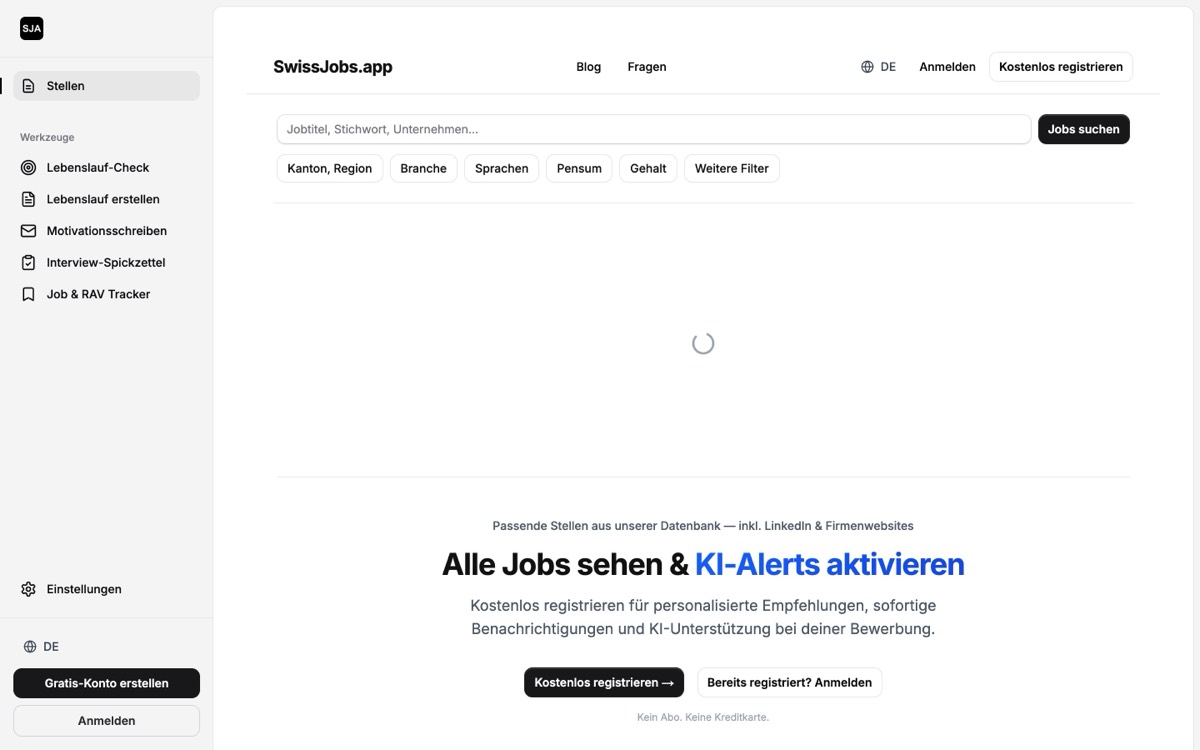
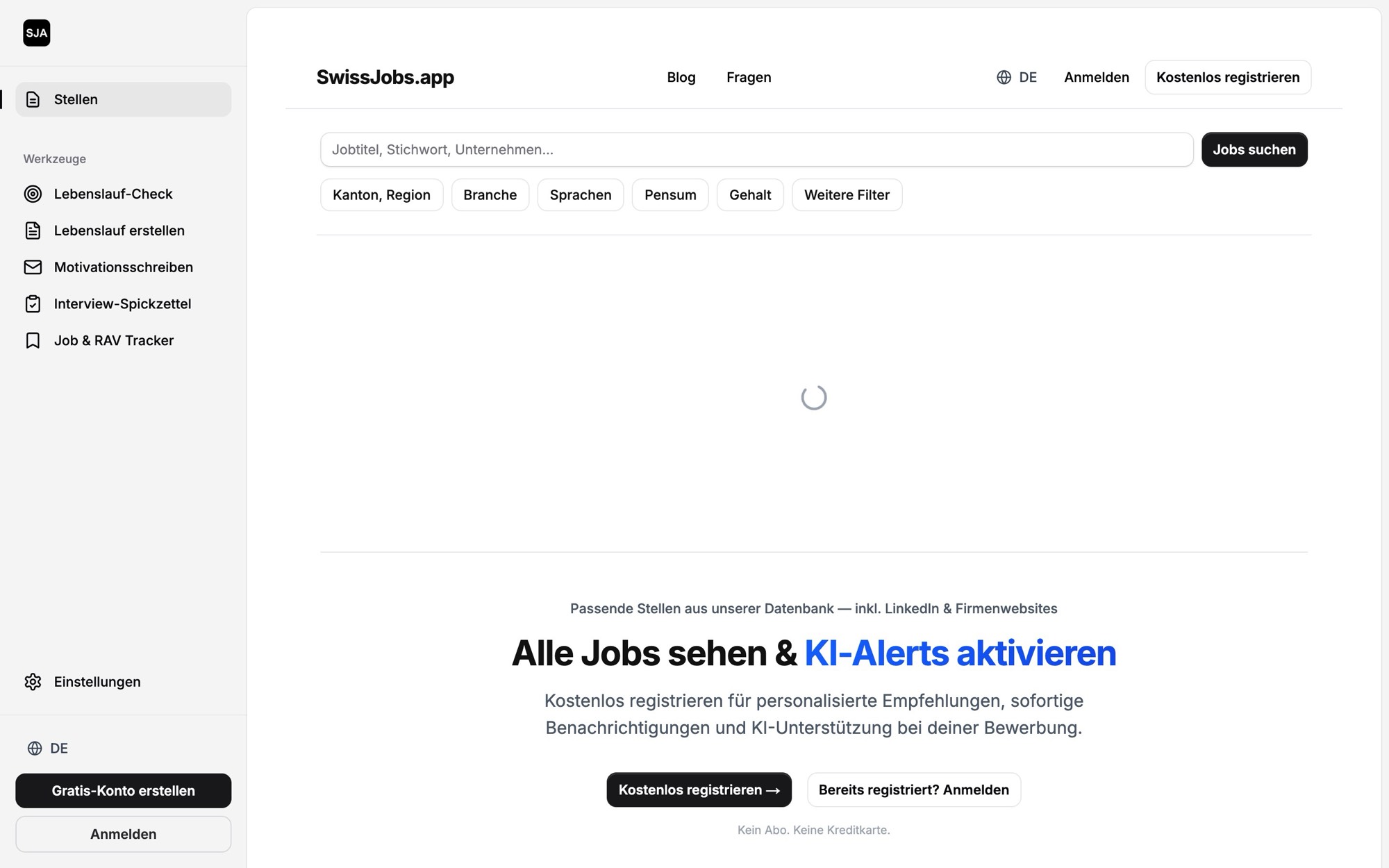
1. SwissJobs.appOur app
Over 21,000 open Swiss roles from ATS systems, company sites and LinkedIn in one place — and from any advert, straight into a CV, a motivation letter, a CV check and interview prep. The RAV job-search-efforts form fills itself from your application tracker. Free to use; the account is asked for at save.
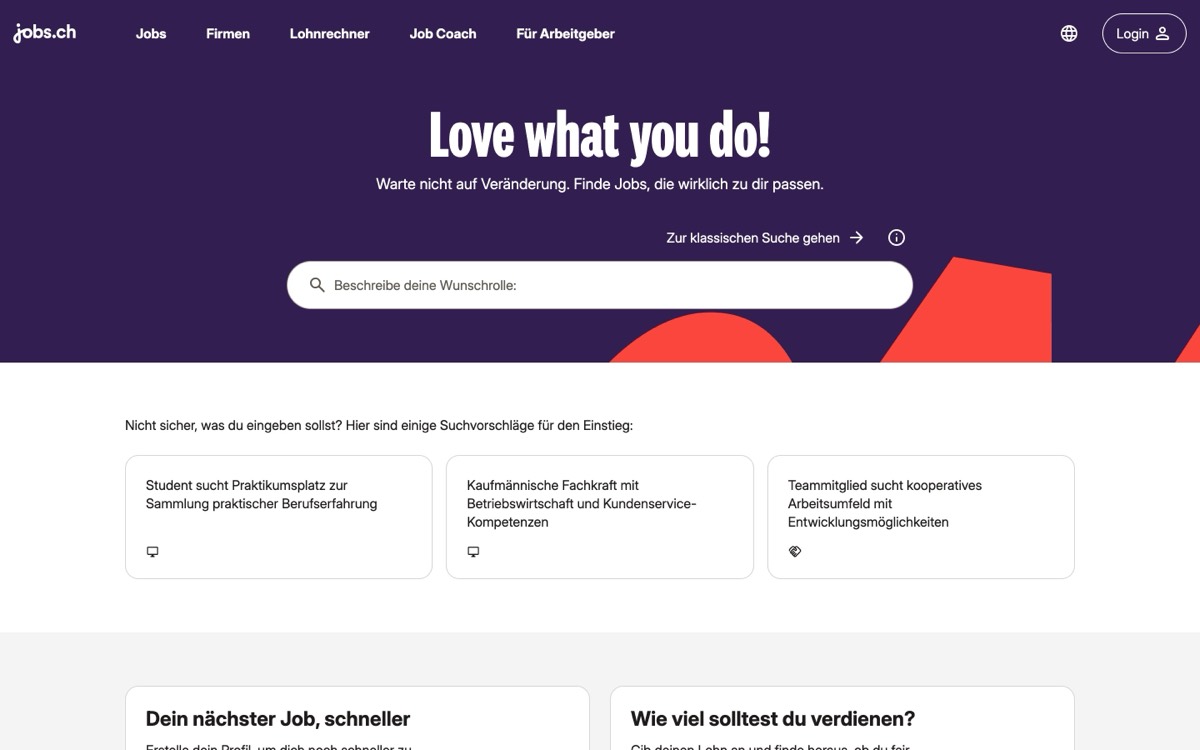
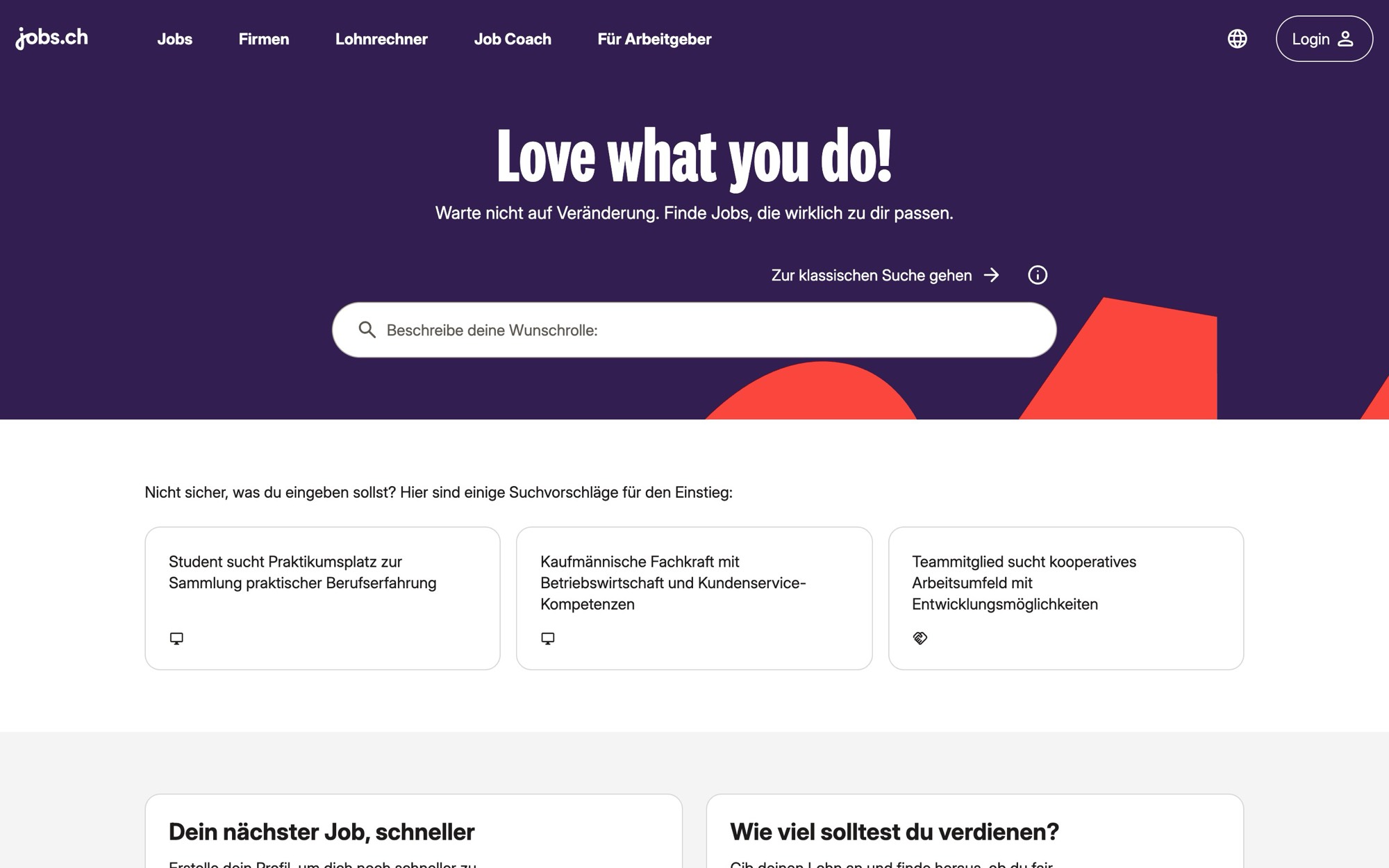
The best-known board in German-speaking Switzerland and the largest index in the country. Owned by JobCloud AG — as are jobup.ch and JobScout24.
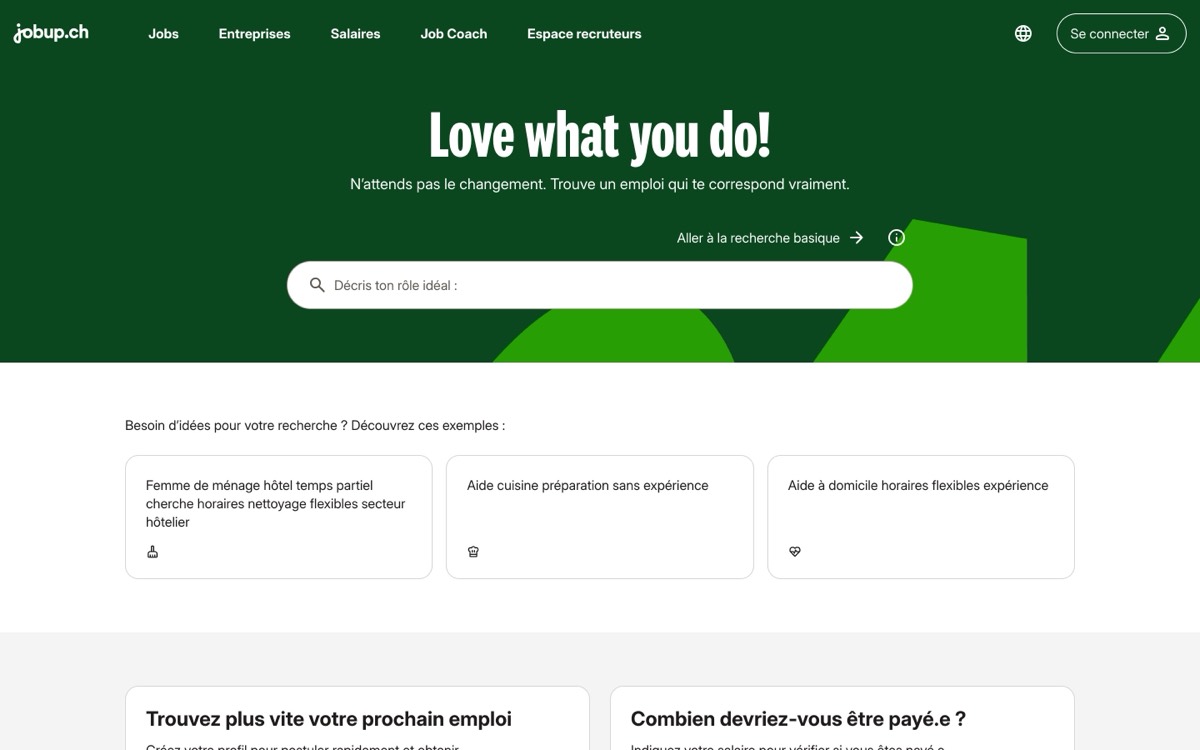
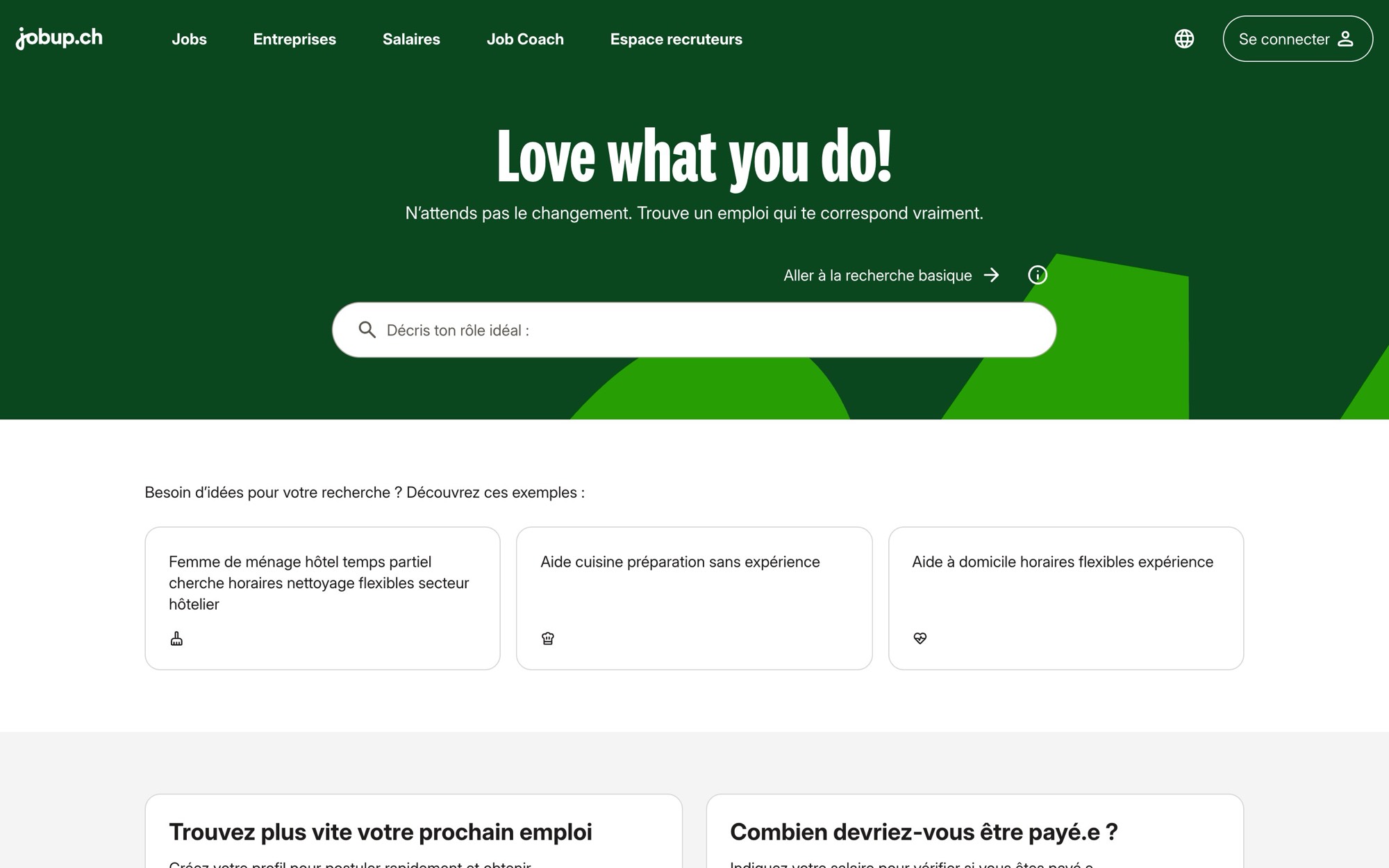
The standard in French-speaking Switzerland and the first place to look for the Romandie — but the same JobCloud AG as jobs.ch.
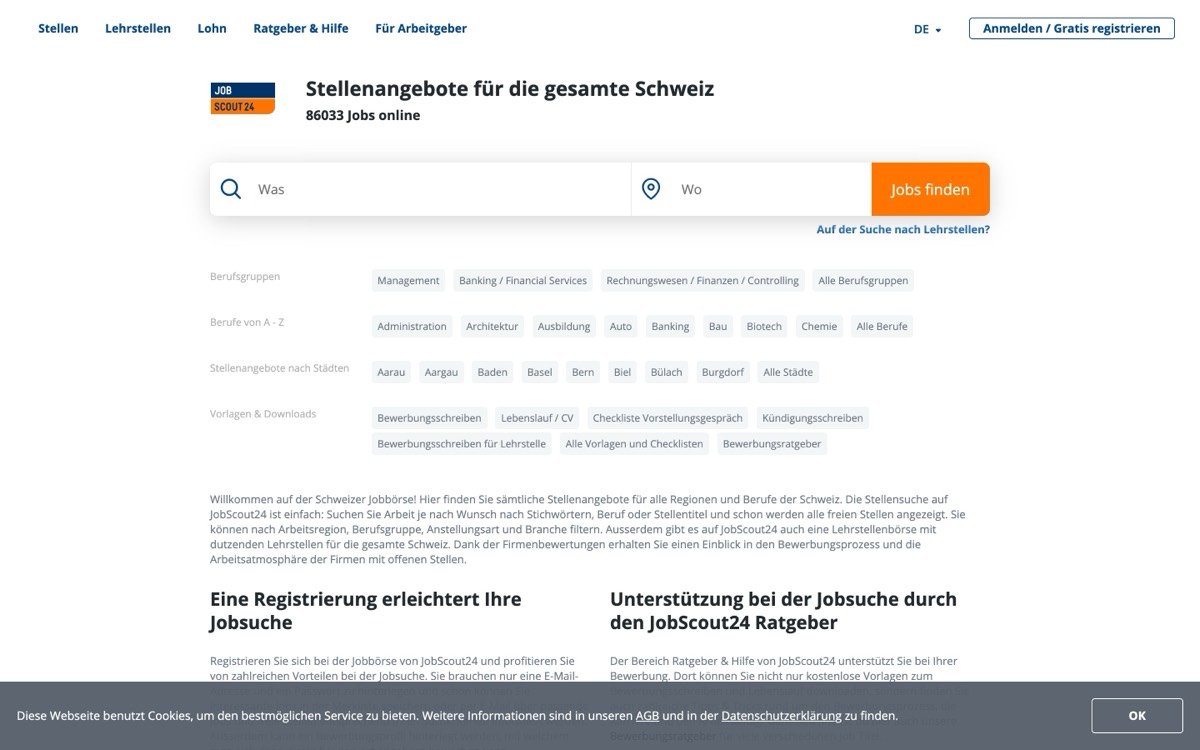
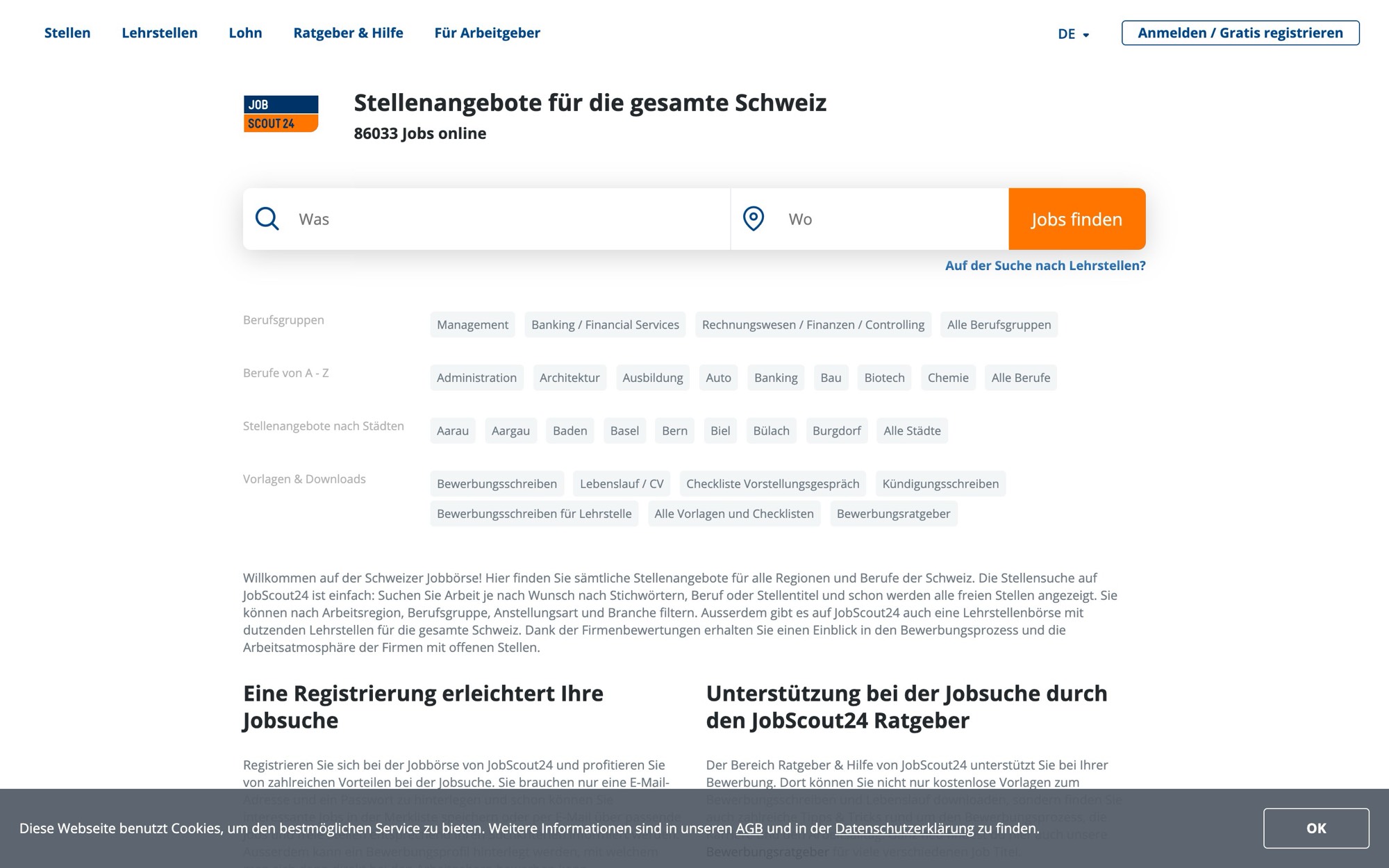
A third brand from the same company. Searching all three to widen your search means searching one provider three times.
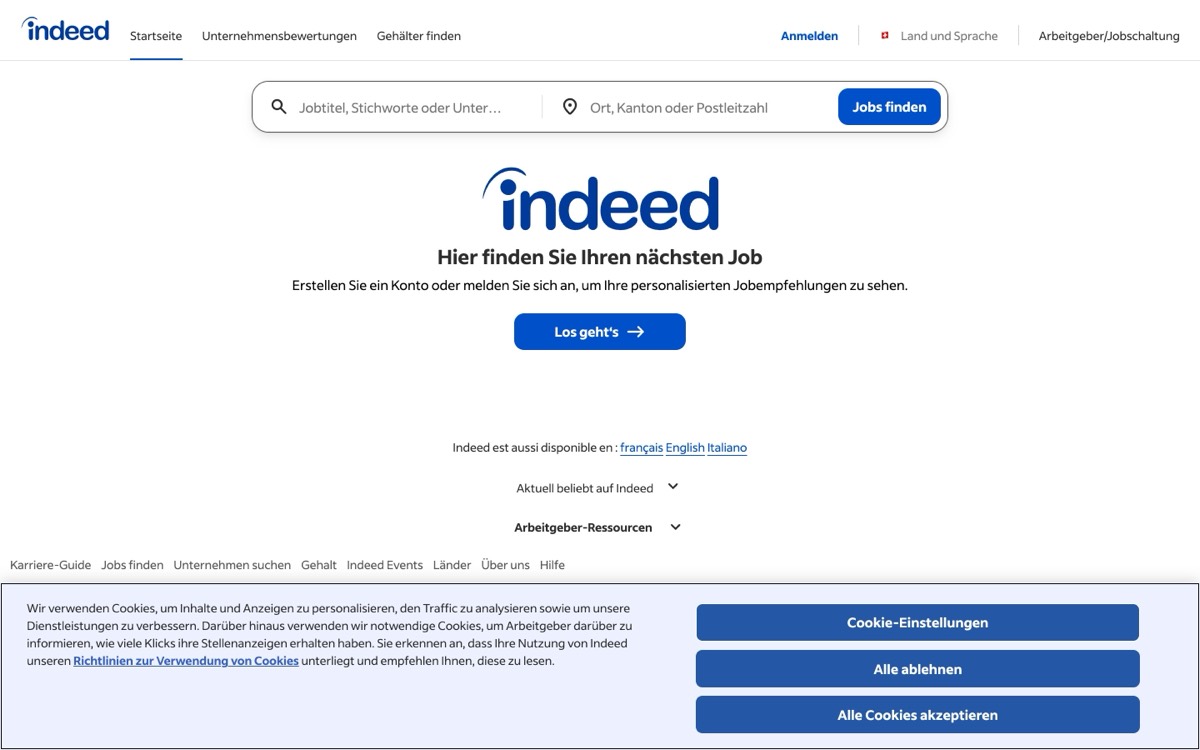
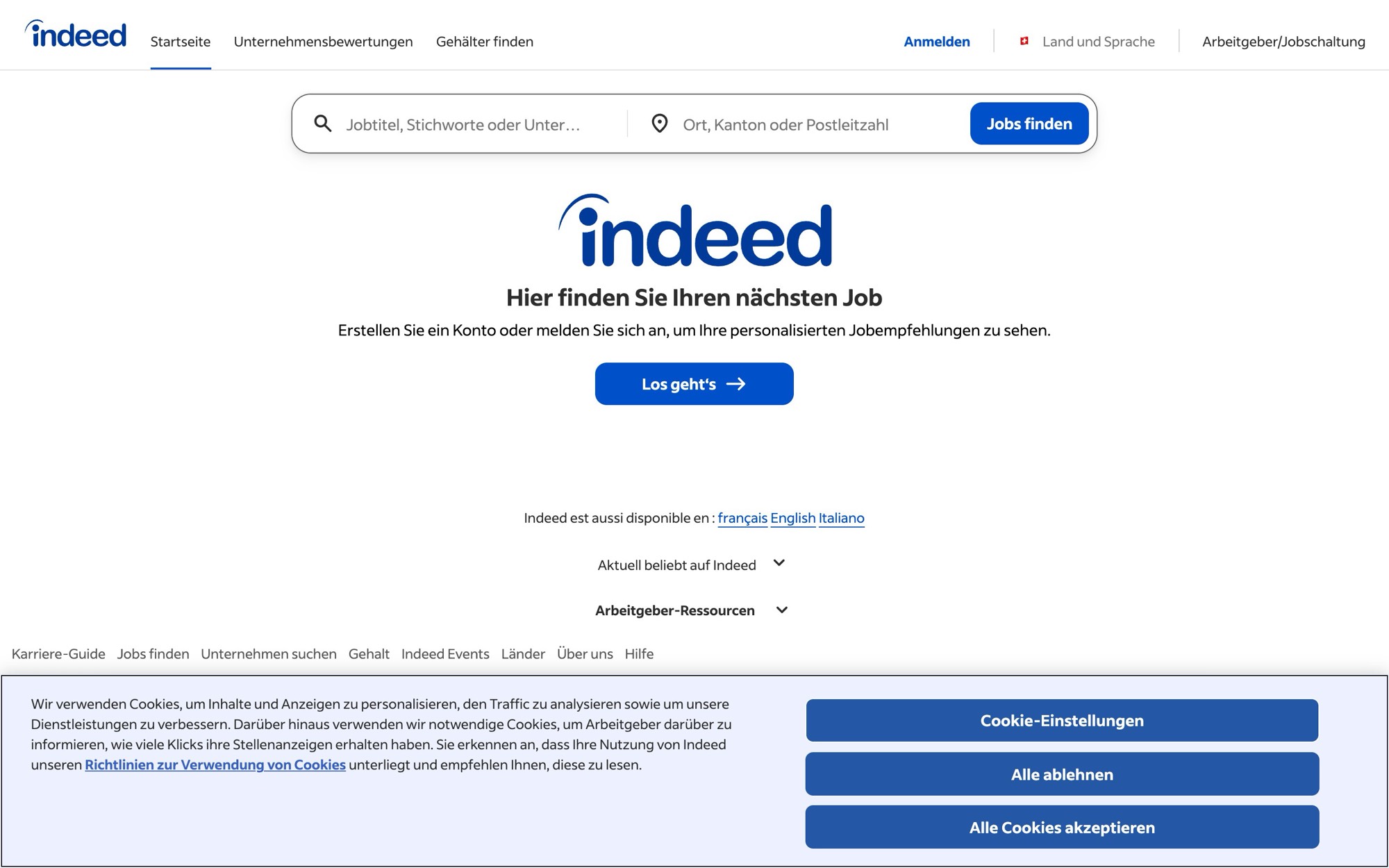
The broadest aggregation, because Indeed also collects from other boards — at the cost of many duplicates of the same advert.
The best reputation for English-speaking and international roles in Switzerland. Considerably thinner for trades, care and commercial roles.
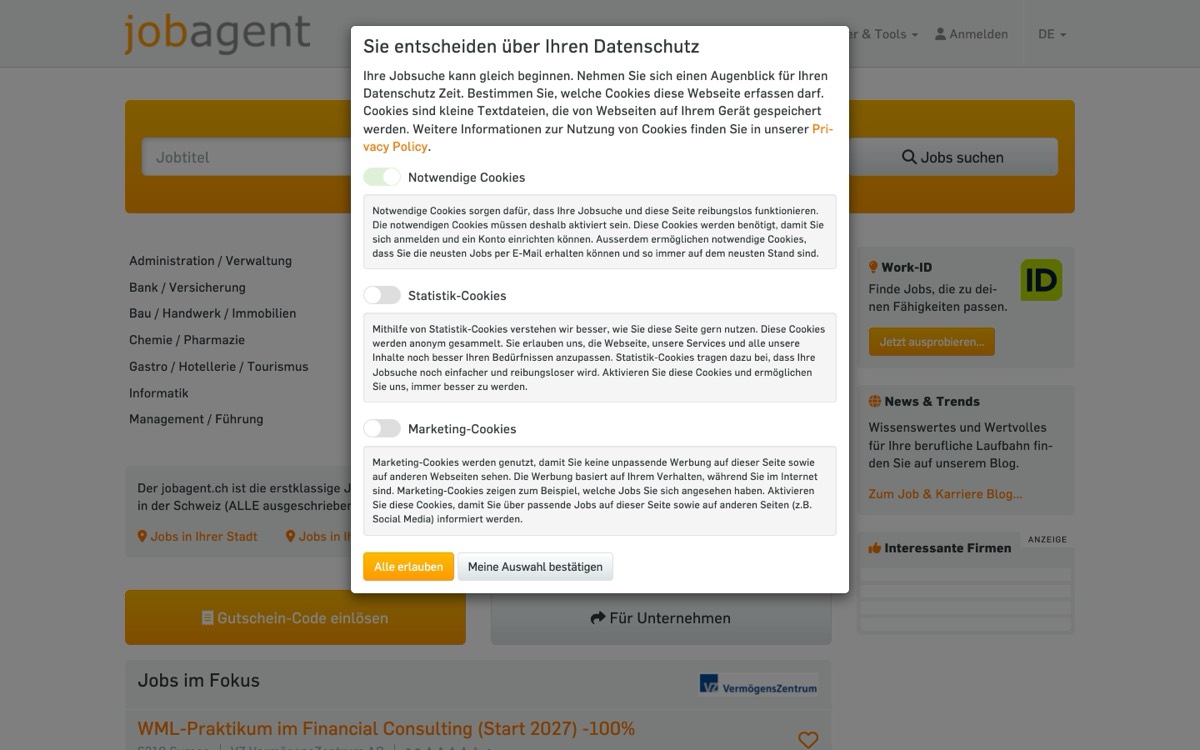
A meta-search across the Swiss job boards, "every job in Switzerland at a glance". Its strength is the Job-Abo: a saved search that mails you new adverts from every portal it covers. Salary calculator and application guides alongside.
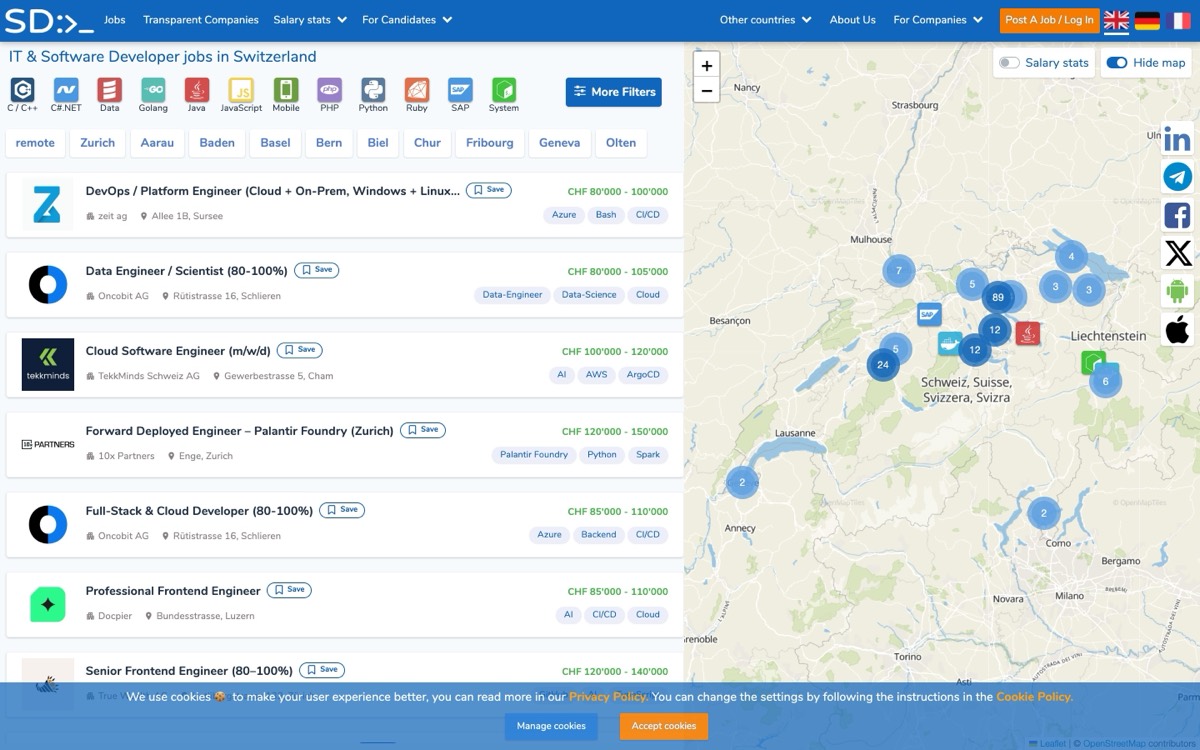
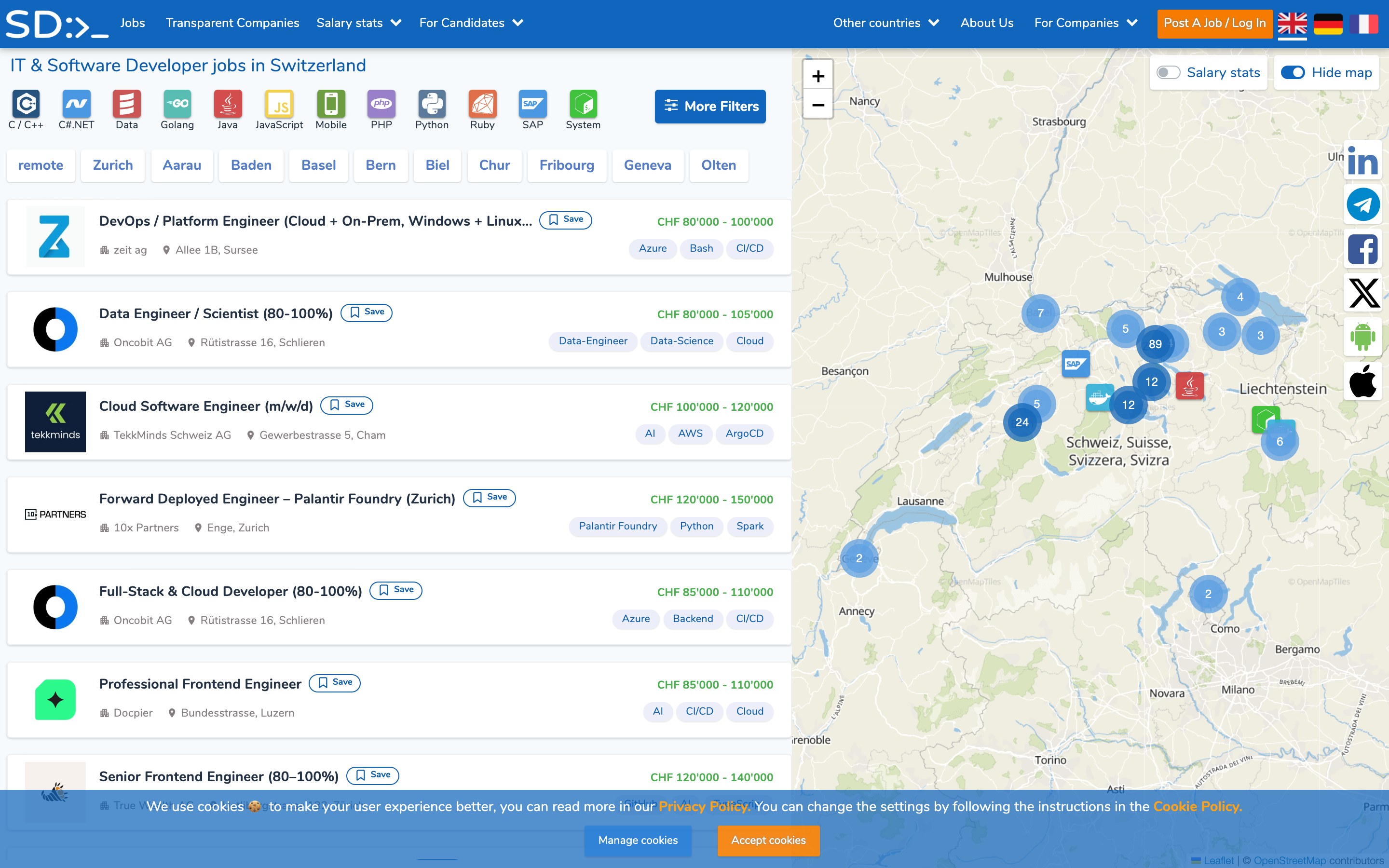
IT and software only, and thorough about it: "183 IT & Software developer jobs in Switzerland", filtered by technology (C#, Java, Python, DevOps, ML) rather than by industry. Publishes salary statistics and lists the companies that disclose their ranges. The site itself is in English.
Jobs by profession, city or language
Type a profession, a city or a language, the page shows the adverts currently open for it.
By profession
- Consultant
- Project Manager
- Retail Sales
- Nurse
- Nursing & Care
- Administrative Assistant
- Account Manager
- Software Engineer
- Public Administration
- Architect
- Insurance
- Chef
71 more — narrow the search
By work type
That concentration also explains why searching feels unproductive. A job board ranks by keyword and recency across the whole market, so a chain posting the same shop role in forty towns either floods your results or gets collapsed away, and the small independent shop you would actually walk to is a single advert buried behind them. Sorting by employer instead of by keyword inverts the problem: once you know the twelve names, the map takes care of itself.
The second thing to settle before you start is which kind of sales you mean, because English speakers routinely land in the wrong half. Alongside the retail adverts, another 4.2 percent of what we hold is business-to-business sales — account managers, field sales, inside sales, key account, business development. Together they are 9.2 percent of everything, split 54.8 percent shop and 45.2 percent B2B. The two halves behave in opposite ways, and for an English speaker the difference is decisive: 55.5 percent of the B2B adverts are written in English, against 5.3 percent of the retail ones.
Share of adverts held by the largest posters, retail shop roles against an equal-sized slice of the rest of the market. Equal-sized slices are used so that sample size does not create the gap. Rolling analysis of the open Swiss adverts we hold, August 2026.
- Retail is the least metropolitan part of the market we measure: 38.9 percent of its adverts sit in the ten largest cities, against 45.5 percent for the rest. Half of the 283 towns involved carry exactly one advert.
- Only 1.7 percent of retail adverts are posted under an agency or recruitment-consultancy name, against 13.8 percent across the rest of the market. Almost every application goes straight to the employer.
- Of the retail adverts that state a language requirement, 91 percent ask for German and 95.7 percent of those German mentions are at professional level. English is asked for in 12.6 percent, against 41.4 percent in the rest of the market.
- 13.5 percent of retail adverts are apprenticeship places rather than jobs — 8.4 percent name the EFZ, 6.2 percent the EBA. That is the highest training share of any occupation group we track.
- Retail adverts are the freshest list we hold: median age 18 days against 20 for the rest of the market, and only 16 percent older than two months against 28.1 percent.
- 11.9 percent of retail adverts are flagged part-time, against 5.2 percent elsewhere; and of the retail adverts that put a workload percentage in the title, 41.2 percent quote 80 percent or less, against 22.4 percent in the rest of the market.
The employer list is short — start there, not in a search box
Concentration is the one fact that changes how you should look. Among the retail adverts we hold, the five largest posters carry 56.9 percent, the ten largest 68.1 percent and the 25 largest 79.7 percent. Run the same measures on an equal-sized slice of everything else and they come out at 16.5, 21.6 and 30.6 percent. The whole field involves 175 posting employers, which is a list a person can actually read in an afternoon.
The names are the supermarket, discount, village-shop, electronics, DIY, perfumery, fashion and sports chains you already walk past: Coop, Lidl Switzerland, Volg, JUMBO, OTTO'S, Interdiscount, Coop City, fenaco and its LANDI shops, migrolino, Denner, Import Parfumerie, Decathlon, Transa, Fust, Globus, Pandora, Christ, and the shop networks run by AMAG and localsearch. Subscribe to a dozen of those career pages in your region and you are watching most of the field before any search is needed.
Chains are also why retail reaches further into the country than any other occupation group. The largest poster advertises in 117 different towns, the second in 57, the village-shop network Volg in 47, OTTO'S in 29 and Interdiscount in 26. Across all 175 employers that comes to 283 towns, and 140 of those towns hold exactly one advert. Only 38.9 percent of retail adverts sit in the ten largest cities, against 45.5 percent for the rest of the market, and 31.2 percent sit in places with three adverts or fewer.
One caveat belongs here, and it argues for the same method rather than against it. Our own coverage of the chains is uneven: some of the largest Swiss retailers appear only a handful of times, or not at all, because they publish exclusively on their own portals and nowhere else. If a continuously maintained collection still misses whole chains, a general job board will miss them too. That is precisely why, in this field, the chain's own career page comes before the job search rather than after it.
Retail is where English does not open the door
If you are searching in English, this is the number that matters most. Of the retail adverts whose language we can read, 87.9 percent are written in German, 6.9 percent in French and 5.3 percent in English. Across the rest of the market, 27 percent are in English. Retail is, with nursing, one of the two most linguistically closed parts of the Swiss market we measure — and unlike IT, pharma or finance, it has no English-speaking sub-segment to fall back on.
The stated requirements say the same thing more sharply. 75.8 percent of retail adverts name at least one language. Of those, 91 percent ask for German, and 95.7 percent of those German mentions are at professional rather than conversational level. English appears in 12.6 percent, French in 9.9 percent, Italian in 0.9 percent. Compare that with the rest of the market, where English shows up in 41.4 percent of language mentions. The reason is not gatekeeping: a shop job is customer conversation in the local language for eight hours a day, and the adverts describe it accurately.
The B2B half is the mirror image, and this is the practical opening for an English speaker. Among business-to-business sales adverts that state a language, 76 percent ask for English and 68.9 percent for German — most ask for both — and 55.5 percent of those adverts are actually written in English. Account management, field sales, inside sales and business development in international firms around Zurich, Zug and Basel are genuinely reachable on English plus developing German, in a way that a supermarket floor is not.
If you want the shop floor specifically and your German is still building, be aware of a trap in the English-language results. Most of the English retail adverts we hold are not shop jobs at all: they are head-office roles at brand headquarters — retail operations, retail merchandising, retail planning, retail marketing — clustered in Zurich and Ticino at sportswear and fashion groups. Searching the English word retail therefore returns the office above the shop far more often than the shop.
The genuine English-language shop-floor adverts do exist, and they sit where you would expect: brand stores in tourist and outlet locations and in city centres — store manager roles in Verbier and St. Moritz, a key holder position at a fashion outlet in Landquart, sales associate roles in Zurich and Basel. A second, smaller opening is the 3.3 percent of German mentions pitched at conversational rather than professional level. Everything beyond those two pockets is a language project first and an application second, and it is better to know that before sending fifty applications.
Reading a Swiss retail advert: EFZ, EBA and the workload figure
Swiss retail adverts are unusually literal, and three codes carry most of the meaning. EFZ marks a completed three-year federal apprenticeship, in this field almost always Detailhandelsfachfrau or Detailhandelsfachmann — retail specialist. EBA marks the two-year federal certificate, Detailhandelsassistent — retail assistant. A percentage such as 80% or 60–80% is the workload, the share of a full week the role covers. Between them, 8.4 percent of retail adverts name the EFZ, 6.2 percent the EBA and 21.1 percent carry a workload figure.
Those two qualifications are also the standard way into the field for someone changing career, and they are worth understanding before you dismiss an advert as out of reach. The official profession pages describe the retail specialist EFZ as a three-year apprenticeship served in a shop belonging to one of the 22 recognised training branches, with three to four days a week in the business and one to two at vocational school, plus 14 days of inter-company courses across the three years, and two specialisms: designing shopping experiences, and running online shops. Entry requires completed compulsory schooling, and some businesses set an aptitude test.
The retail assistant EBA runs two years, four days a week in the business and one at school, plus ten days of inter-company courses. Recommended apprentice pay is CHF 835 in the first year and CHF 1050 in the second for both routes, with a third year at CHF 1520 for the EFZ. The official description is candid about the work itself: you are on your feet for long periods, and hours can be irregular because depending on the shop you also work evenings and public holidays.
The practical consequence is a filter. 13.5 percent of the retail adverts we hold are apprenticeship places rather than open jobs — the highest training share of any occupation group we track, against 5.7 percent in the rest of the market — and many carry a start date a year or two ahead. If you want work now, screen out titles containing Lehrstelle, Lernende or a future year. If you are changing career, do the opposite: the EBA is the lowest formal bar in this field, and the employers offering it are the same chains.
Search words, workload and how long an advert really lasts
When you do search, the word you type decides most of the outcome, and the obvious English word is not the best one. Typing sales returns the B2B half almost entirely: of every advert in our set whose title contains sales, under a tenth is a shop role. Retail is precise but narrow, appearing in 5.4 percent of retail adverts. Store manager appears in 2.5 percent, sales assistant in 2 percent. The high-recall terms are German: Verkäufer covers 44.1 percent of retail adverts and matches almost nothing else, Detailhandel 16.7 percent, Verkaufsberater 13.5 percent, Filialleiter 5.3 percent, Kasse 5.8 percent. In French, vendeur covers 3 percent.
No single word finds more than about half the field, which is the real lesson. Set up four saved searches rather than one — Verkäufer, Detailhandel, Verkaufsberater, Filialleiter — and add store manager and retail if you want the international brand stores. Avoid the bare word Verkauf: it appears in only 16.3 percent of retail adverts, and only 57.3 percent of the adverts containing it are shop roles at all, the rest being sales managers and inside-sales positions.
Two more words cut the field by merchandise rather than function, which is often what you actually care about. 28.1 percent of retail adverts name the food side in the title — Food, Frischprodukte, fresh produce, dairy, butchery, bakery — against roughly 1 percent in the rest of the market, so fresh-food roles are close to a third of everything on offer. And 9.7 percent name a management or deputy-management role, against 1.3 percent elsewhere, which is where the field's promotion path is visible from the outside.
Finally, treat retail adverts as more perishable than others. The median retail advert is 18 days old against 20 for the rest of the market, 19.4 percent are under a week old, and only 16 percent are older than two months against 28.1 percent elsewhere. Chains fill quickly and repost quickly. So unlike nursing, where a two-month-old advert is usually still live, a stale retail advert often is not — check daily, apply the same week, and let the workload figure in the title tell you whether a role is worth opening before you open it.
Shares come from our rolling analysis of the open Swiss job adverts we hold, August 2026. A retail advert here is one whose title names a shop-floor sales, branch-management or till role (Verkäufer, Verkaufsberater, Detailhandel, Filialleiter, store manager, vendeur, commesso, sales assistant and related terms); a B2B sales advert is one whose title names sales, Vertrieb, field or inside sales, key account or business development without also being a shop role. Comparison figures for the rest of the market are computed on an equal-sized slice where concentration is involved, so that sample size does not create the difference. Language requirements are counted only across adverts that state one. A small number of foreign store locations mistagged as Swiss has been excluded. We publish shares, never absolute holdings — and our coverage of the chains is uneven, which the text says explicitly.
Sources
Related questions
What our job index says about the Swiss market
Computed live from our own index, not quoted from a study. Shares only, as of today.
Language the advert is written in
- Deutsch
- 60%
- English
- 23%
- Français
- 13%
- Italiano
- 3%
Of adverts that state a language requirement, the share asking for
- Deutsch
- 70%
- English
- 43%
- Français
- 21%
- Italiano
- 3%
19% posted in the last 7 days · Largest markets: Zürich 18% · Bern 10% · Genève 5% · Basel 5%