Job alerts compared: which Swiss job board notifies first?
Updated:
In short
Job-Room, the unemployment insurance portal, notifies first — but only for occupations subject to the job registration requirement. A vacancy in those may be advertised elsewhere only five working days after it appears in Job-Room's protected area, and in 2026 that covers occupations employing 10.8 per cent of the Swiss workforce. Among private boards nobody is instant: jobs.ch and jobup.ch offer daily or weekly and require an account, Job-Room daily, every 3 or every 5 days. Our alert goes out on weekday mornings, with no account. Checked 4 September 2026.
The Swiss job portals at a glance
Click an image for the full-size view. What each portal actually is stands beside it.
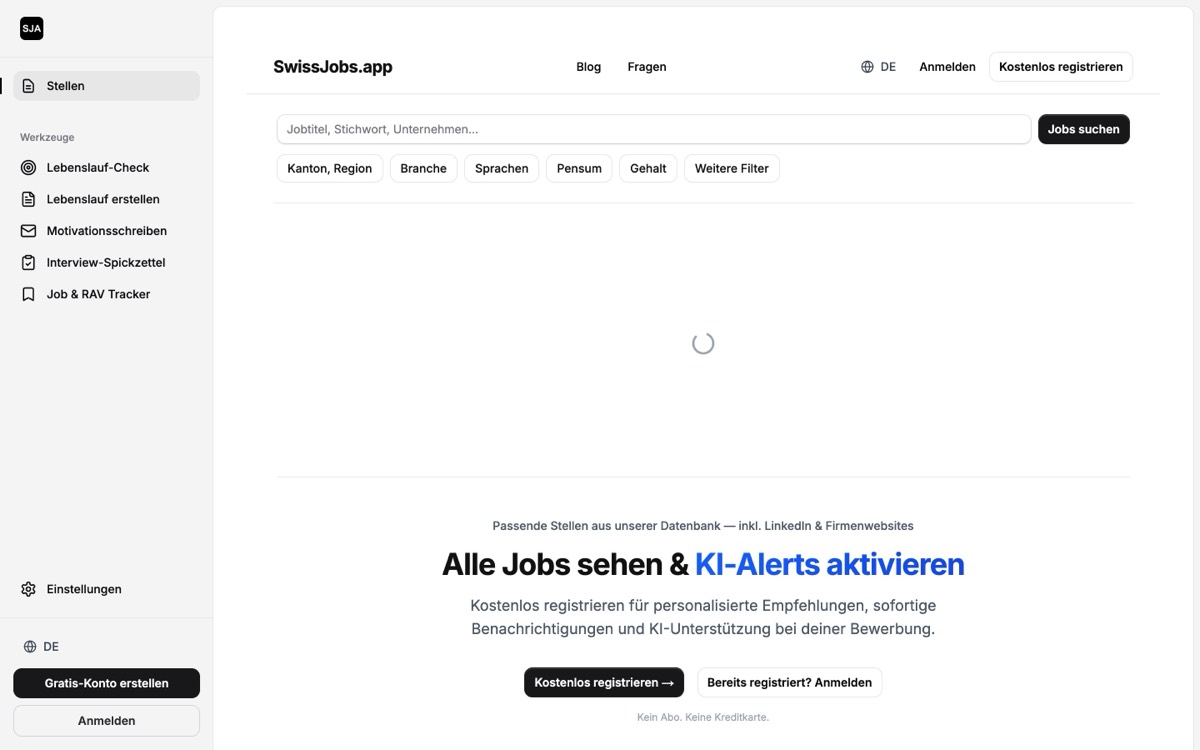
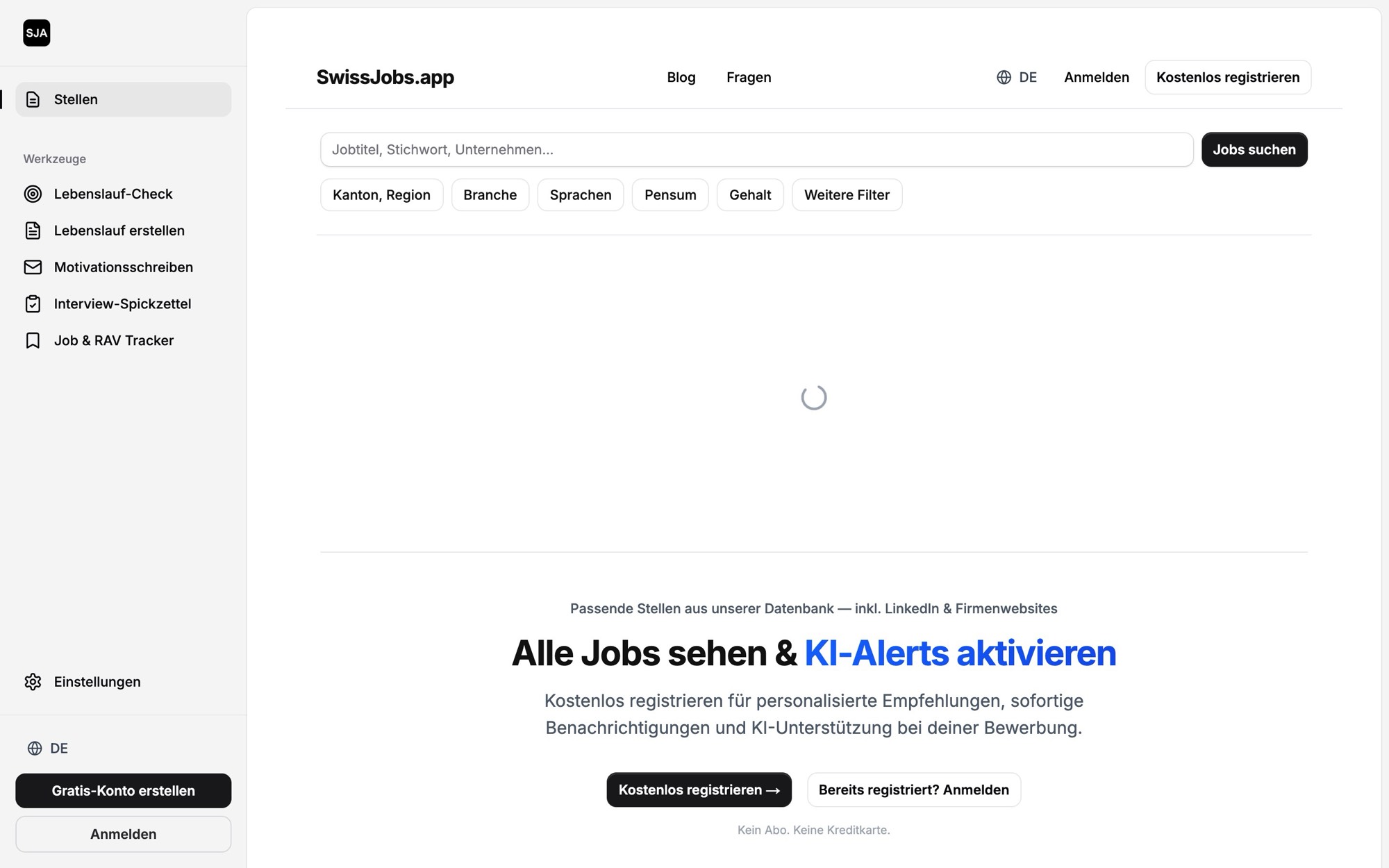
1. SwissJobs.appOur app
Over 21,000 open Swiss roles from ATS systems, company sites and LinkedIn in one place — and from any advert, straight into a CV, a motivation letter, a CV check and interview prep. The RAV job-search-efforts form fills itself from your application tracker. Free to use; the account is asked for at save.
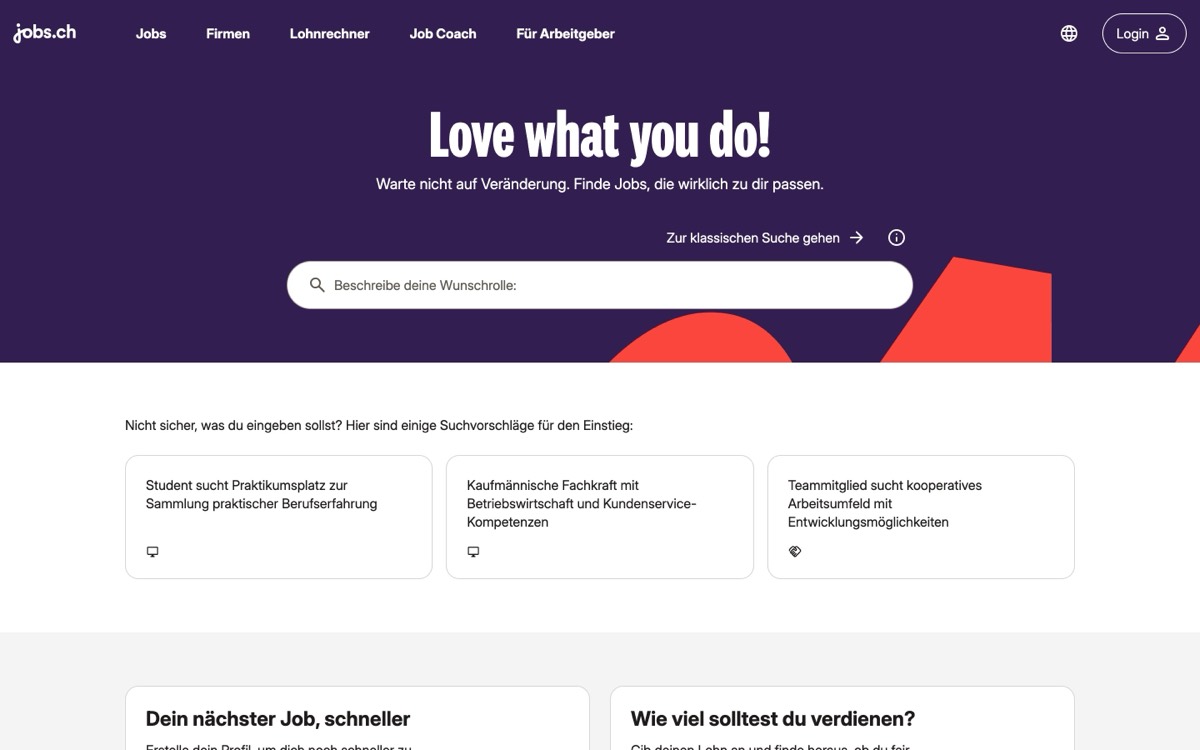
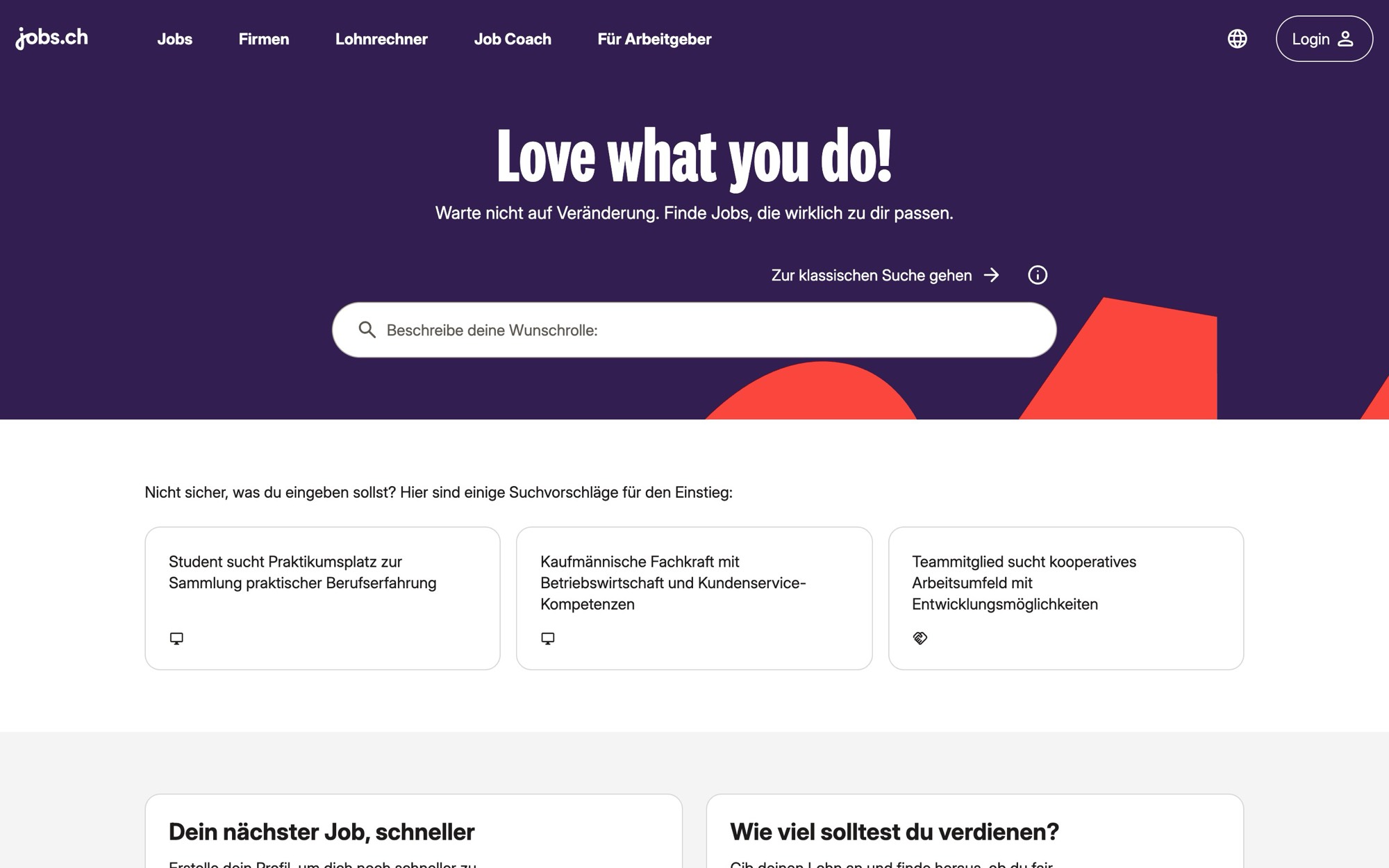
The best-known board in German-speaking Switzerland and the largest index in the country. Owned by JobCloud AG — as are jobup.ch and JobScout24.
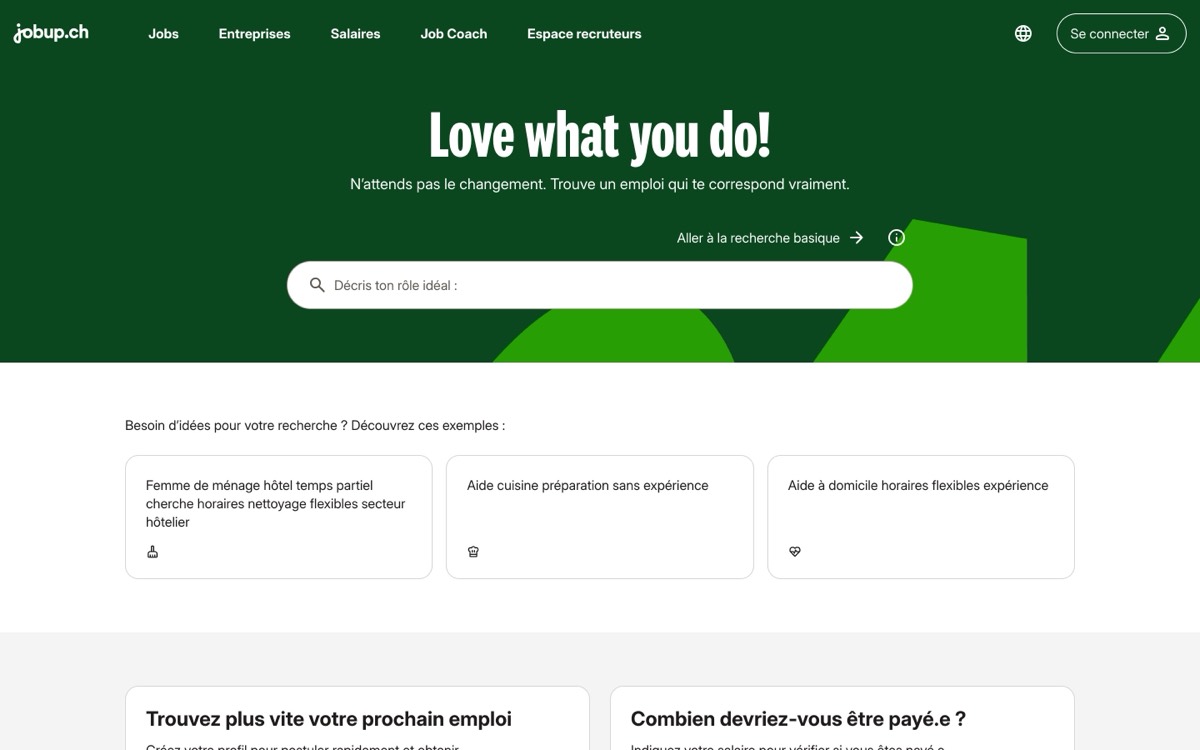
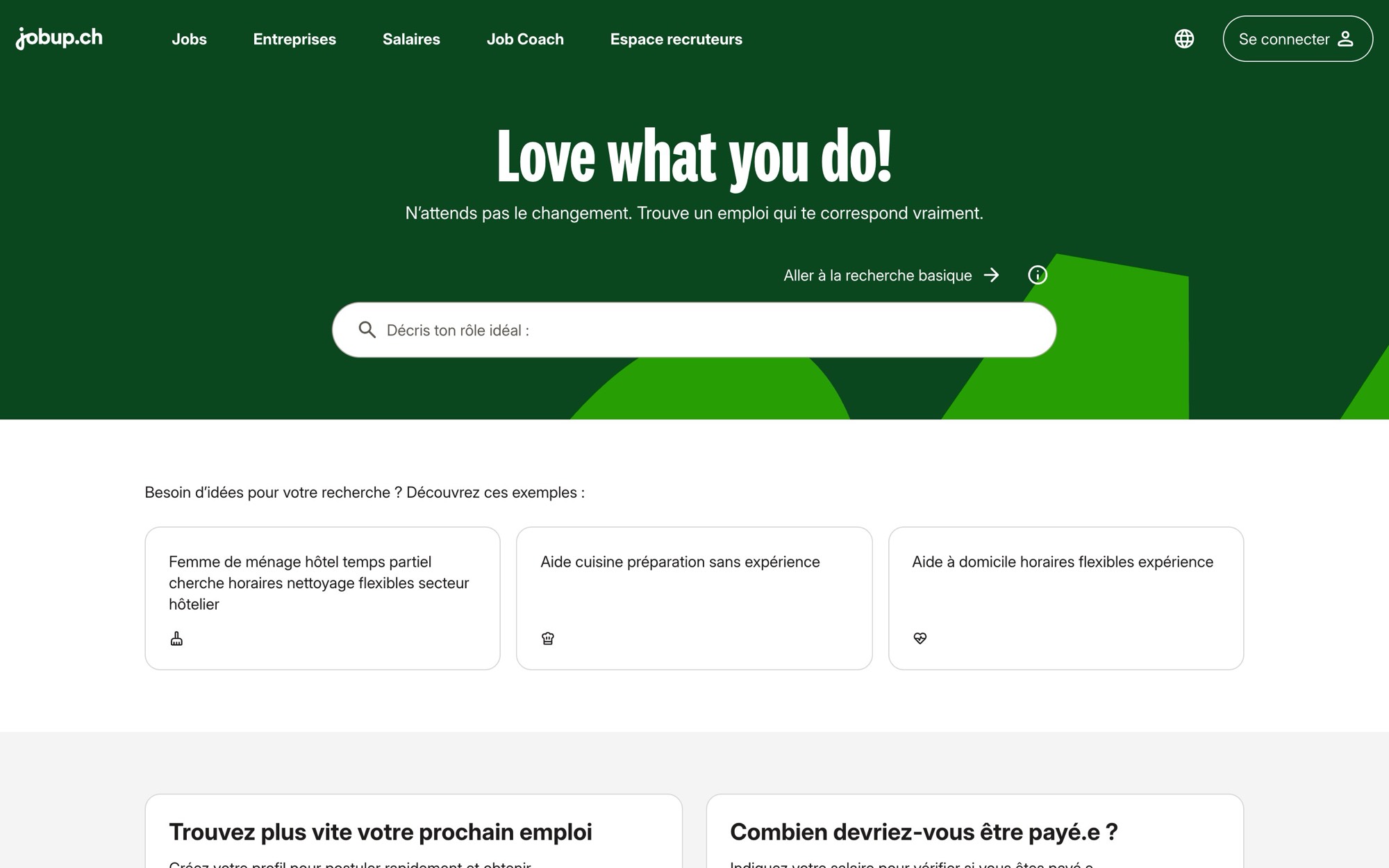
The standard in French-speaking Switzerland and the first place to look for the Romandie — but the same JobCloud AG as jobs.ch.
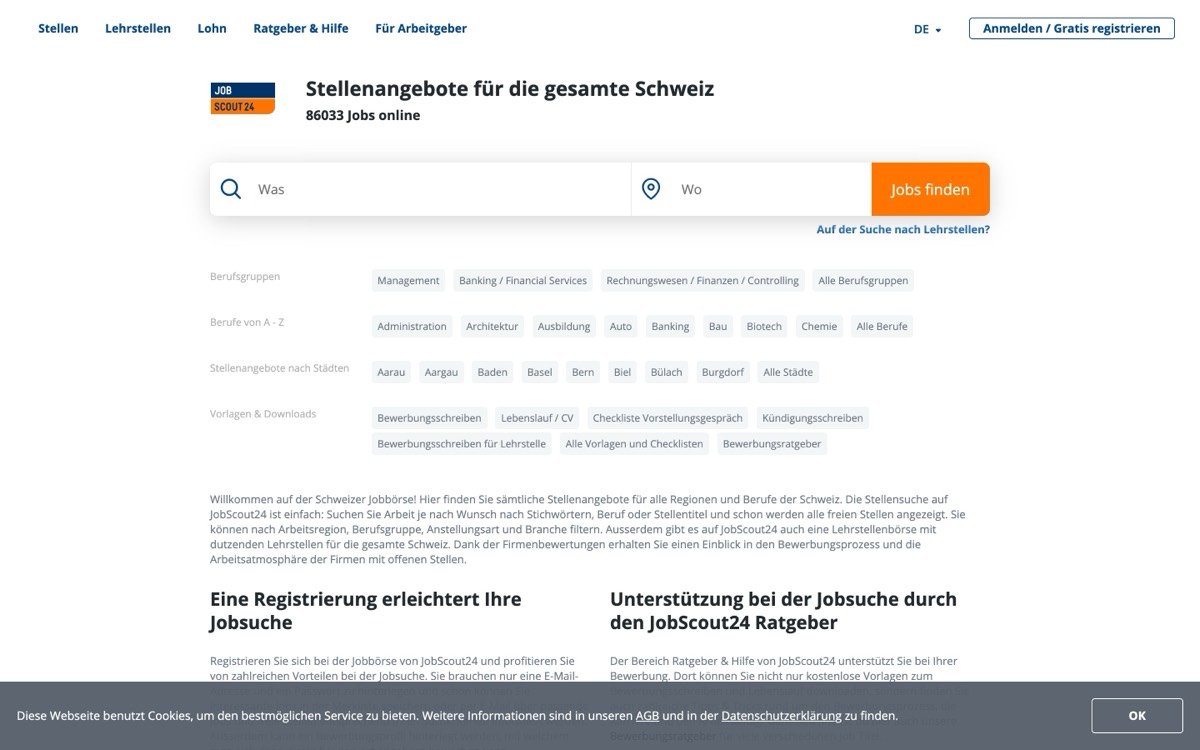
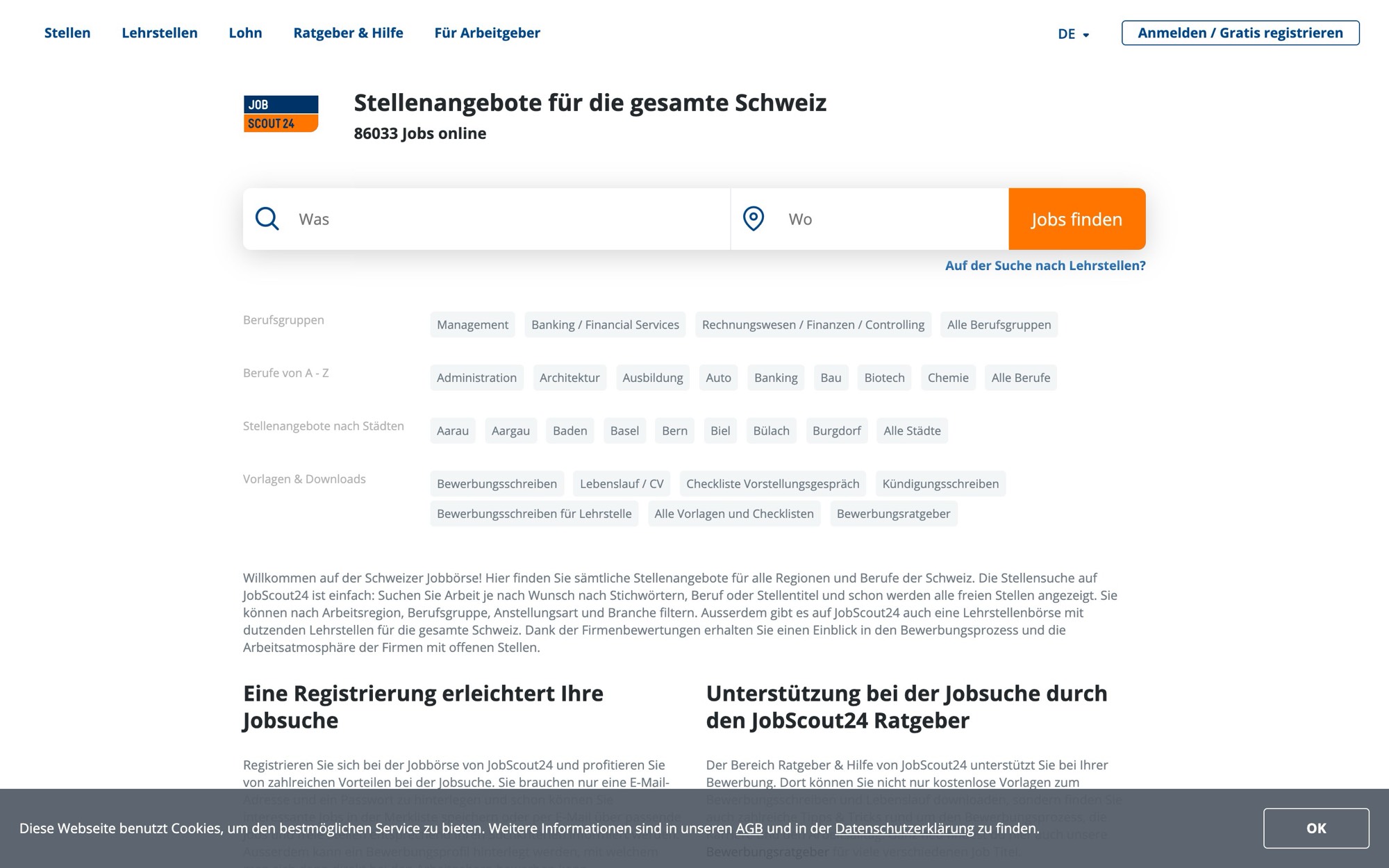
A third brand from the same company. Searching all three to widen your search means searching one provider three times.
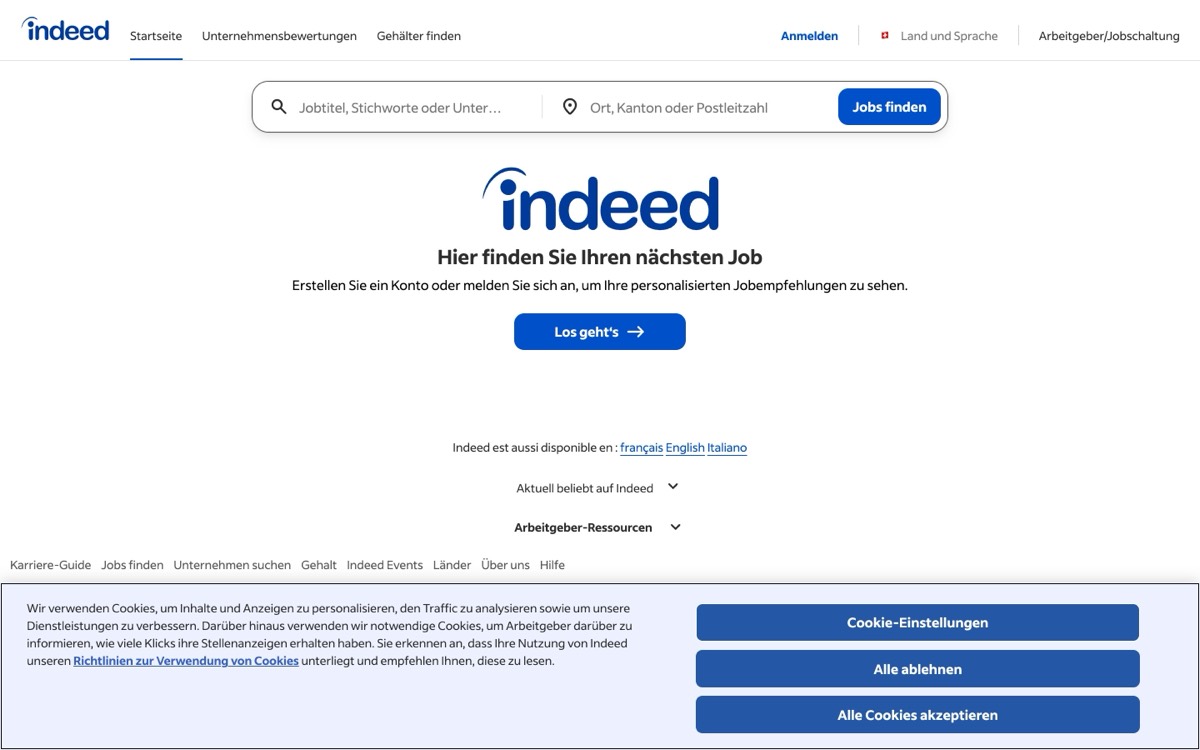
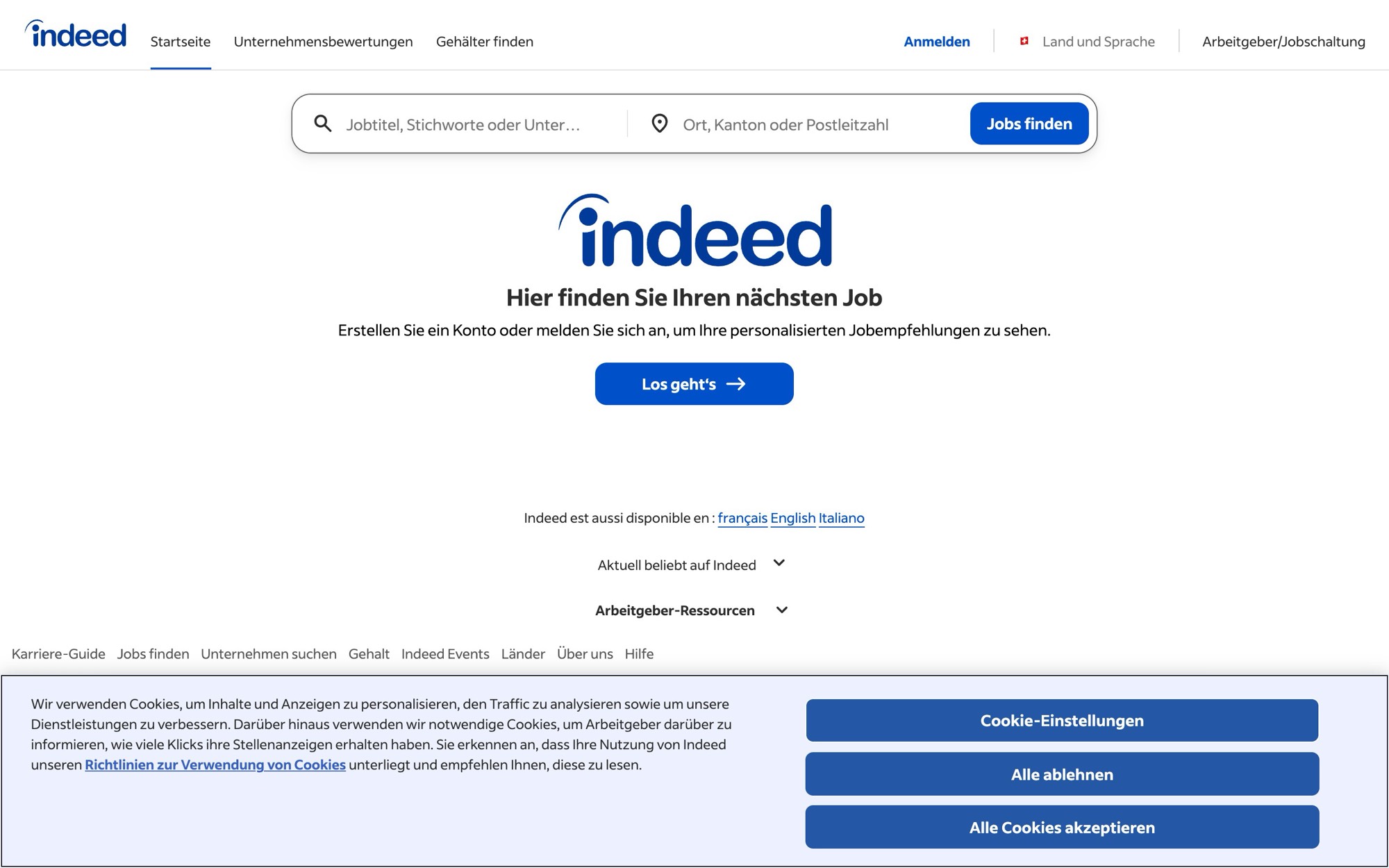
The broadest aggregation, because Indeed also collects from other boards — at the cost of many duplicates of the same advert.
The best reputation for English-speaking and international roles in Switzerland. Considerably thinner for trades, care and commercial roles.
A meta-search across the Swiss job boards, "every job in Switzerland at a glance". Its strength is the Job-Abo: a saved search that mails you new adverts from every portal it covers. Salary calculator and application guides alongside.
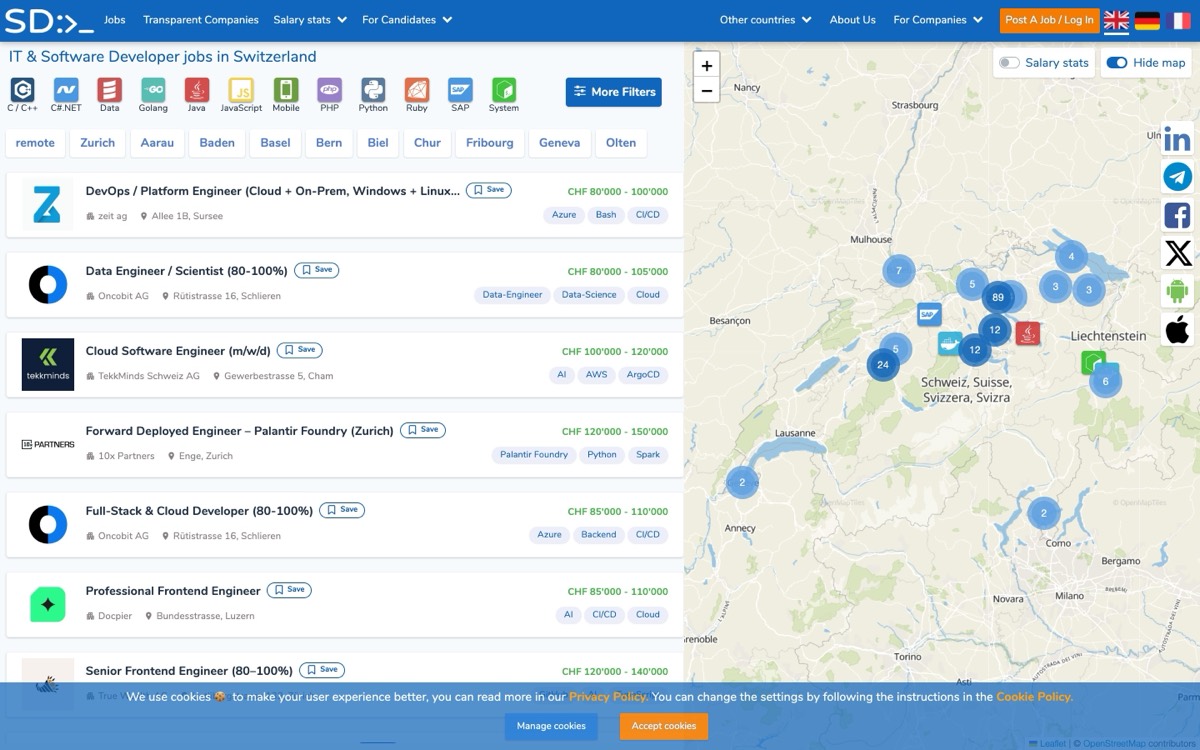
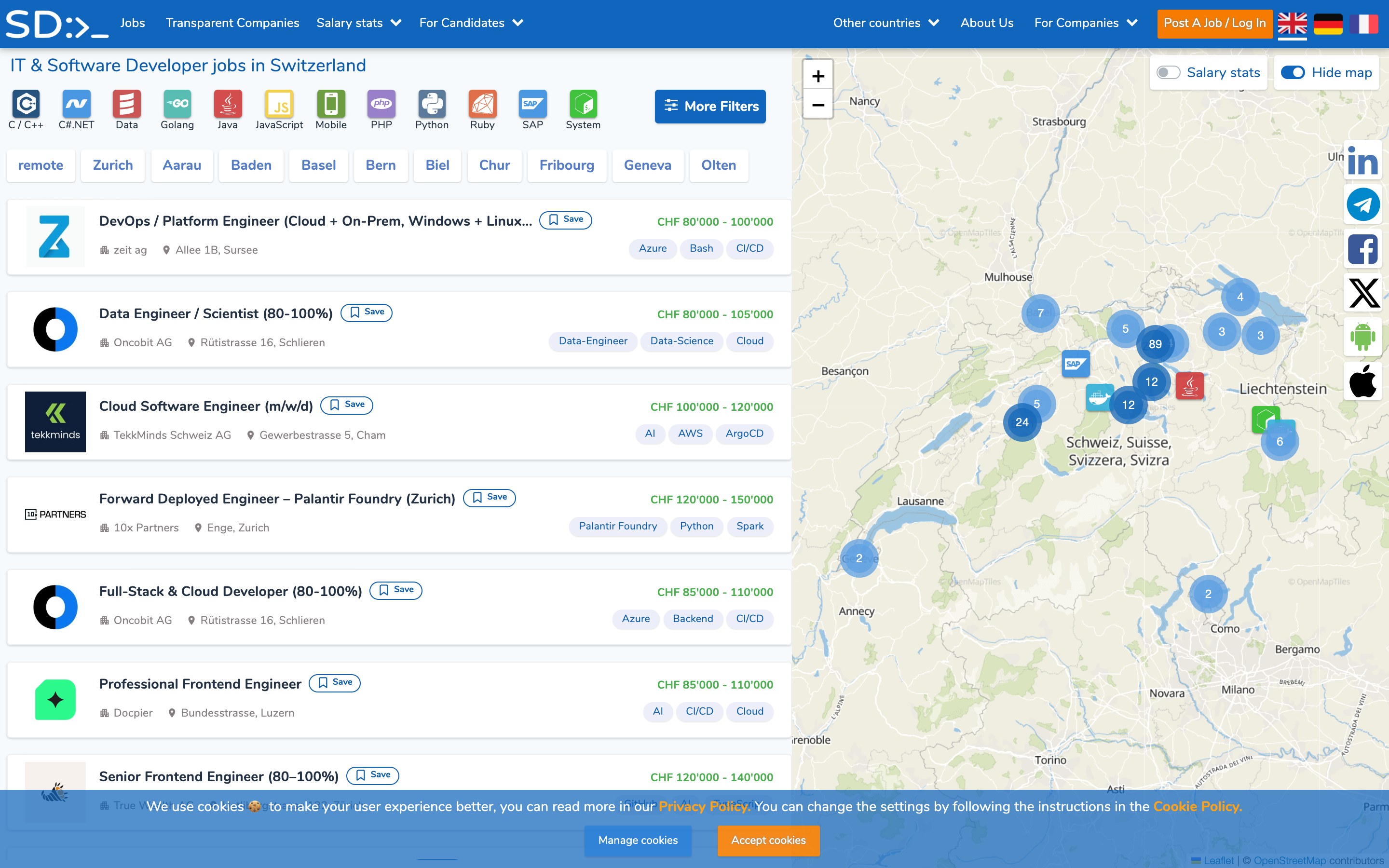
IT and software only, and thorough about it: "183 IT & Software developer jobs in Switzerland", filtered by technology (C#, Java, Python, DevOps, ML) rather than by industry. Publishes salary statistics and lists the companies that disclose their ranges. The site itself is in English.
Jobs by profession, city or language
Type a profession, a city or a language, the page shows the adverts currently open for it.
By profession
- Consultant
- Project Manager
- Retail Sales
- Nurse
- Nursing & Care
- Administrative Assistant
- Account Manager
- Software Engineer
- Public Administration
- Architect
- Insurance
- Chef
71 more — narrow the search
By work type
None of this is taken from marketing pages. On 4 September 2026 we retrieved the boards' home pages and result lists, read the interface strings that jobs.ch and jobup.ch ship to the browser, opened Job-Room's four language files, and worked through the arbeit.swiss pages on the job registration requirement. Where a page said nothing, the table says "not stated" — never a guessed no.
And the interval is only half the answer. A board can notify you only once the posting has reached it, and no board publishes that delay. We do: in our index the median gap between the publication time the source states and the moment the posting is with us is 10.3 hours, and 93.8 per cent of the postings from the last 30 days are in within a day.
Postings published in the last 30 days, measured against the publication time their source states. "Company career pages" are vacancies we take directly from employers' own sites; they are the slower half, and the reason the overall figure is not higher. Our own index of open Swiss vacancies, 4 September 2026.
- An occupation becomes notifiable when its national unemployment rate reaches at least five per cent, averaged over twelve months on the federal statistical office's CH-ISCO-19 occupation nomenclature. In 2025 that covered 6.5 per cent of the workforce; in 2026 it is 10.8 per cent.
- Newly notifiable in 2026: cleaning staff and helpers in offices, hotels and similar settings, and cooks — both at an unemployment rate of 5.3 per cent. If that is your field, not being registered with an RAV costs you five working days on every vacancy.
- The head start runs in both directions. Within three working days of a vacancy being posted, the RAV sends the employer the dossiers of matching jobseekers. In these occupations the fastest "alert" may be the one the employer receives about you.
- Job-Room's own alert offers three intervals — daily, every 3 days, every 5 days — and a maximum of five active notifications. Its own notice adds that notifiable vacancies are visible only in the protected area, and only when logged in.
- jobs.ch and jobup.ch offer exactly three settings: no notification, daily, or weekly. In its navigation bar jobs.ch describes the same service as "informed immediately about new jobs" — the setting itself knows only daily and weekly.
- Both boards cap an alert's search term at 35 characters, and both warn after unsubscribing that notifications can keep arriving for up to an hour.
- Swiss vacancies go online in the afternoon, not the morning: 47.7 per cent of the postings of the last 30 days carry a publication time between 12:00 and 18:00 and 23.1 per cent between 18:00 and midnight, against 3.8 per cent between 06:00 and 09:00.
- Our weakest number is in the same analysis: postings we take from companies' own career pages are in the index after a median of 20.7 hours, and a quarter of them take longer than eight days. From the LinkedIn source, 98.3 per cent are in within a day.
Who to choose
An alert is worth something only when the email turns into an application. That is where these tools separate: the other boards send you a link, while with us the posting is already loaded in the generator.
Choose Job-Room (ALV) if
Job-Room (ALV) — the public employment service's own portal: free, and notifiable vacancies appear there five working days earlier.
Choose SwissJobs.app if
The posting is already in the generator — We run the Swiss job index ourselves. From the alert you open a CV written against that specific advert, the check against that advert, the motivation letter and the interview preparation — no other CV tool carries its own Swiss job index alongside.
An alert without an account — Every profession and city page carries the same form: type an email, press "Get alerts", done — "No account needed, unsubscribe any time". On jobs.ch, jobup.ch and JobScout24 the same path starts with a registration.
Only genuinely new postings, at most eight — We send what has appeared for that exact search since the last email, capped at eight postings. If there is nothing new, no email goes out — the fastest way to lose a list is to send the same jobs twice.
Four languages, four alerts — German, English, French and Italian, each with its own pages and its own alert email. jobs.ch has no Italian interface, jobscout24.ch/it answered 404 on 4 September 2026, and jobup.ch runs in French and English.
The RAV form fills itself — Tracked applications flow into the official SECO job-search-efforts form in German, French or Italian. You still have to file them with your RAV — we fill the form, we do not replace the step.
Job alerts on Swiss job boards — checked 4 September 2026
| Criterion | SwissJobs.app | Job-Room (ALV) | jobs.ch | jobup.ch | JobScout24 | ostjob.ch |
|---|---|---|---|---|---|---|
| Shortest interval offeredNot one of the boards we checked offers a real-time or hourly notification. | Weekday mornings | Daily | Daily | Daily | not stated | Daily |
| Other intervals | — | Every 3 days, every 5 days | Weekly | Weekly | not stated | not stated |
| Account required for the alertOn jobs.ch, /konto/job-alarm/neu/ redirects straight to the login; JobScout24 lists email notifications as a benefit of registering. | No | Yes — registration as a jobseeker with an RAV | Yes | Yes | Yes | not stated |
| Price | Free | Free | Free | Free | Free | Free |
| Legal head start on notifiable vacanciesThe blocking period applies to every private channel equally: before it expires the vacancy may not appear there at all. | No | Yes — five working days | No | No | No | No |
| Maximum simultaneous alerts | not limited | 5 | not stated | not stated | not stated | not stated |
| What the alert sits onThis is our limit: our alert hangs off an existing profession-and-city page, while jobs.ch and jobup.ch take free text — though by their own notice only up to 35 characters. | A profession or city page, not free text | A saved search profile | Free search term, 35 characters | Free search term, 35 characters | not stated | Search term, radius or company |
| Email only when something is genuinely newIf nothing new has appeared for that search since the last send, we send nothing. | Yes | not stated | not stated | not stated | not stated | not stated |
| Postings per email | Up to 8 | not stated | not stated | not stated | not stated | not stated |
| Interface languagesChecked on 4 September 2026: jobs.ch/it lands on the German site, jobup.ch/de on the French one, jobscout24.ch/it answers 404. | German, English, French, Italian | German, French, Italian, English | German, French, English | French, English | German, French, English | German |
| Coverage | All of Switzerland | All of Switzerland, incl. the protected area | All of Switzerland | Mainly French-speaking Switzerland | All of Switzerland | Eastern Switzerland |
| Tools attached to the posting | CV, motivation letter, check, interview prep | No | not stated | not stated | Template downloads | No |
| RAV job-search-efforts formThe efforts still have to be filed with your RAV: we fill the form, we do not replace the step. | Yes — official SECO form ALV 716.007, filled from tracked applications | Yes — ALV eService | No | No | No | No |
| Unsubscribingjobs.ch's own message after unsubscribing: it can take up to an hour before notifications actually stop. | One click in every email | Switched off in the setting | One click, up to an hour of run-on | One click, up to an hour of run-on | not stated | not stated |
Everything retrieved first-hand on 4 September 2026: the boards' home pages and result lists, the interface strings shipped by jobs.ch and jobup.ch, the four language files of Job-Room, and the arbeit.swiss pages on registration and the job registration requirement. "not stated" means the pages we read said nothing about it — not that the feature is missing.
Where the time between publication and inbox goes
| Stage | Duration | Where the figure comes from |
|---|---|---|
| Notifiable vacancy: blocking period in the protected area | Five working days | arbeit.swiss, FAQ on the job registration requirement |
| RAV sends matching dossiers to the employer | Within three working days | arbeit.swiss, FAQ on the job registration requirement |
| Publication to our index (median) | 10.3 hours | Our own analysis, postings of the last 30 days |
| Publication to our index, nine out of ten postings | Under 23 hours | Our own analysis, postings of the last 30 days |
| Postings taken from employers' own career pages (median) | 20.7 hours | Our own analysis; a quarter of them take longer than eight days |
| Index to alert email | By the next weekday morning | Our own send schedule, Monday to Friday |
The first two rows are law, the rest is measurement. No alert can be faster than the sum of these stages — which is why the interval alone says little about who notifies first.
The one legal head start: five working days in Job-Room
Since 1 January 2020 employers have been legally required to report vacancies in occupations with a national unemployment rate of at least five per cent to the regional employment centre (RAV). arbeit.swiss states the consequence plainly: the vacancy has to sit in the protected area of Job-Room for five working days before it can be advertised anywhere else. The same page adds that this blocking period cannot be shortened or circumvented.
So for part of the market, "who notifies first" is not a question of technology but of law. Jobseekers registered with an RAV and logged in see those vacancies before any private board is even allowed to show them — Job-Room's own notice says it in one line: vacancies subject to the registration requirement can be viewed only in the protected area, by registered jobseekers who are logged in.
How large that part is comes from the same source. The only criterion is the unemployment rate of an occupation type, measured nationally over twelve months on the CH-ISCO-19 nomenclature. In 2025, 6.5 per cent of the workforce worked in notifiable occupations; in 2026 it is 10.8 per cent. Newly added this year are cleaning staff and helpers in offices and hotels, and cooks, both at 5.3 per cent.
The recommendation that follows runs against us, and we will still make it: if you are registered with an RAV and looking in a notifiable occupation, set your first alert in Job-Room. There is no private route to those five working days, and pretending otherwise would cost you time. The same applies to proof of job-search efforts — they count once they are filed with the RAV. Our form fills itself from your tracked applications; it does not replace the filing.
If you are not registered with an RAV, the head start passes you by
This is the part that matters most to readers arriving from outside Switzerland, and to everyone currently in a job. The services tied to registration are, in arbeit.swiss's own words, available exclusively to people registered as jobseekers with an RAV, and registering means an AGOV login, an AHV social security number and the eight-digit personal number your RAV issues. If you are employed, or applying from abroad, that door is closed — and the five working days pass without you.
For that reader the race starts when the vacancy becomes public, and there only two things decide: how quickly a board takes the posting in, and how often it sends. Which is exactly why we publish our own intake delay below, and why the interval table above is the wrong place to stop reading.
One more thing worth knowing before you compare boards on speed. A Swiss application is not a US-style resume: employers expect reference letters from previous employers (Arbeitszeugnisse), a photo is conventional rather than discouraged, language skills are stated as CEFR levels such as B2 or C1 rather than "fluent", workload appears as a percentage (a Pensum), non-Swiss applicants add a line naming their permit, and two pages is the norm. The fastest alert in the world does not help if what arrives at the other end reads as foreign.
"Immediately" in the navigation, "daily" in the setting
jobs.ch describes its Job Alert in the navigation bar as keeping you "informed immediately about new jobs". Open the setting and it holds exactly three values: no notification, daily, or weekly. The explanatory line inside the form says it too — you receive matching vacancies daily by email. Both strings come from the same interface text the site served on 4 September 2026.
jobup.ch runs on the same platform and shows the same three values in French: none, quotidienne, hebdomadaire. Two further details apply to both and come from their own notices: an alert currently works only with search terms of up to 35 characters, and after unsubscribing it can take up to an hour before notifications actually stop.
Job-Room is built more honestly in this respect. Its language files name three intervals — daily, every 3 days, every 5 days — and a ceiling of five active notifications. JobScout24 presents email notifications on its home page as a benefit of registering, needing "only an email address and a password", but states no interval. ostjob.ch advertises its free Jobabo as sending matching jobs to your inbox daily, but covers only eastern Switzerland and runs in German only.
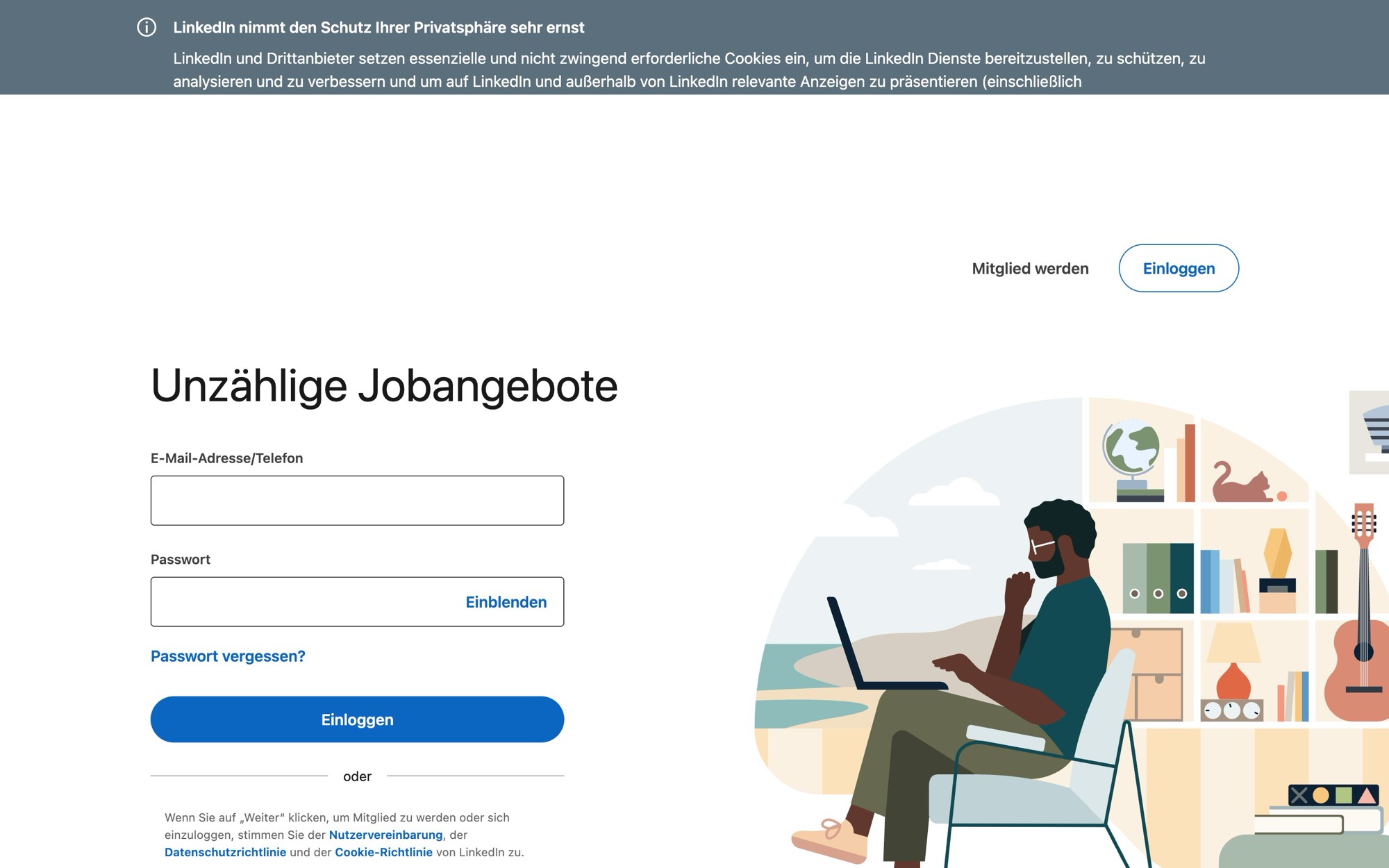
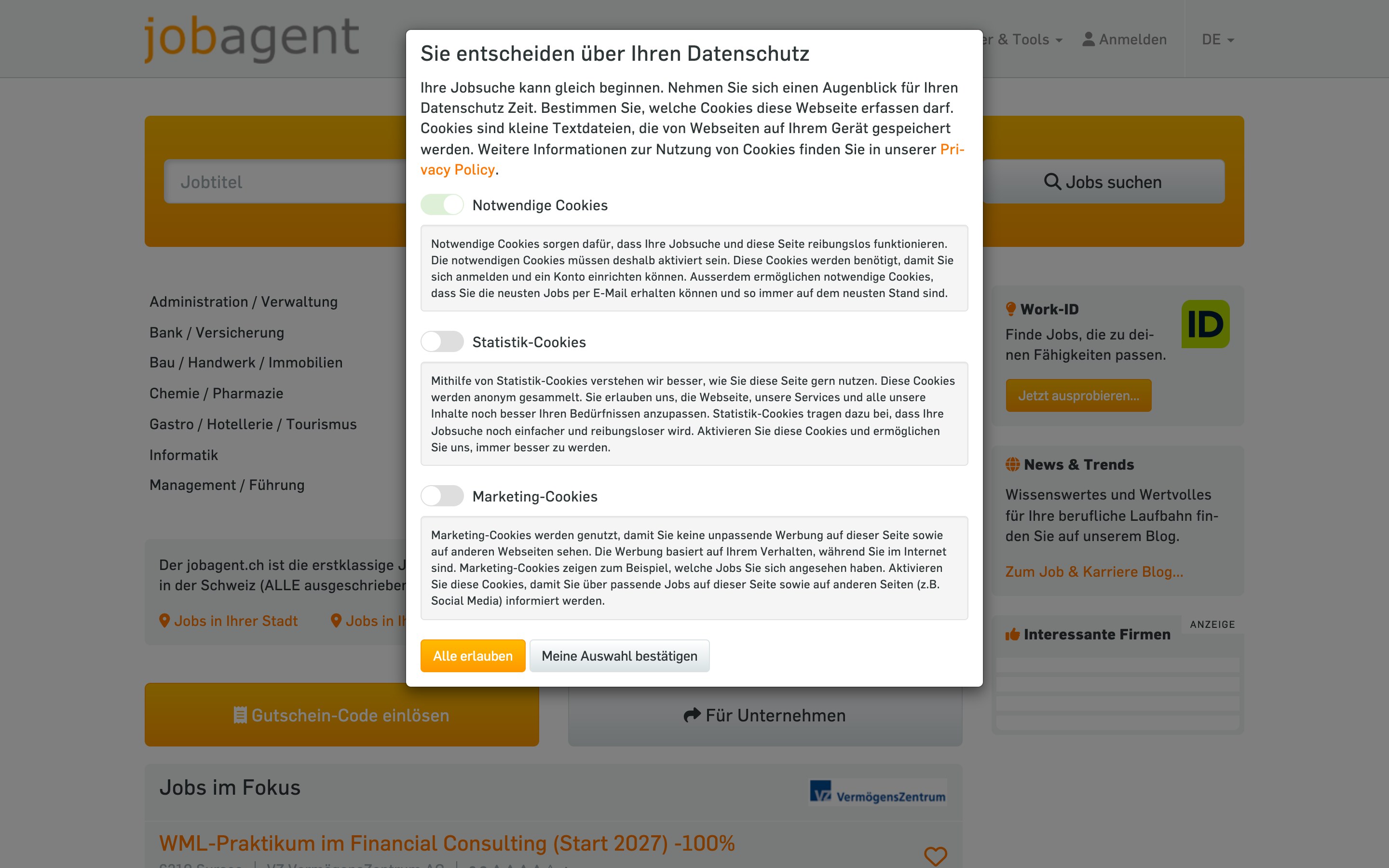
Three well-known names are missing from the table on purpose: jobagent.ch, Indeed and LinkedIn all refused our retrievals on 4 September 2026. We have a separate, fully checked answer on jobagent.ch; for Indeed and LinkedIn we would have had to guess, and guessing is what this page exists to avoid.
The invisible half: until the posting is even there
An alert can never be faster than the intake behind it, and that delay is the number no board publishes — even though it often dominates the interval. A daily email is worth little if the posting only reaches the index three days after it went live.
So we measure it on ourselves. For postings from the last 30 days, the median gap between the publication time the source states and the moment the posting is in our index is 10.3 hours. A quarter are in after 4.3 hours, 93.8 per cent within a day, nine out of ten in under 23 hours.
That average hides two very different routes. Postings coming in from the LinkedIn source are in within a day 98.3 per cent of the time, median 9.0 hours. Postings we take directly from companies' own career pages need a median of 20.7 hours — and a quarter of them longer than eight days. That is our weakest number, and it belongs here, because a comparison page that shows only its own good figures is worth nothing.
It also produces the most honest advice on this page: if you are targeting one specific employer, the fastest alert is the one on their own careers page. That is where the vacancy appears first, with no intermediary — and every job board, ours included, is a step behind it.
Swiss vacancies appear in the afternoon
To know what an interval costs, you need to know when vacancies actually go online. In our index, 47.7 per cent of the postings from the last 30 days carry a publication time between 12:00 and 18:00, and another 23.1 per cent between 18:00 and midnight. Between 06:00 and 09:00 — the classic window for a morning email — 3.8 per cent appear. The single busiest hour is 14:00, with 13.4 per cent.
That is why a mid-morning email is not a lost day: it carries yesterday afternoon's and yesterday evening's postings, which is most of a day's output, and it reaches you at a time when you can actually apply. A real-time ping at 14:20 while you are at work rarely produces a faster application — it produces one you have to search for again in the evening.
One caveat belongs with the figure: the timestamp is the one the source states. For postings fed in through an aggregated source, that is the moment of the feed rather than the moment somebody in an HR office pressed publish. For the only question an alert cares about — from when is the vacancy visible — it is still the right moment.
What an alert costs, and where our free tier stops
The alert itself is free on every board we checked, ours included. The money is elsewhere, and since this is the figure comparison pages tend to leave out, here is ours: the editor runs without an account, saving or downloading needs a free account, and free means 5 documents per day and 10 per rolling week — the same ceiling applies to motivation letters and to AI edit prompts. After that come 7 days of full-access trial and then CHF 15 per month or CHF 95 per year, cancellable any time. Neither the PDF nor the Word export carries a watermark.
On Job-Room the price is not money but a condition. According to arbeit.swiss, the services tied to registration are available exclusively to people registered as jobseekers with an RAV, and registration itself requires an AGOV login, an AHV number and the eight-digit personal number issued by the RAV. If you are employed and simply want to look, there is no alert for you there.
Which alert to pick
Registered with an RAV and searching in a notifiable occupation: Job-Room first, set to daily. Those five working days are the largest head start available in this market, and no private board can make up for them.
Widest possible coverage of the Swiss market, and an account is no obstacle: jobs.ch, or jobup.ch in the French-speaking part. Both offer daily or weekly, both are large, both are free — and both cap the search term at 35 characters, which bites sooner than it sounds with compound German job titles.
Searching in eastern Switzerland: ostjob.ch, daily and free. A regional board is often tidier for a regional search than a national one.
Arriving from abroad, or currently employed: start without an account, put the alert on one specific search, and write the dossier straight out of the email — which is what we are built for. We are not the largest board and do not claim to be. Our argument is that there is no step between the email and the application, and that we are the only one publishing how long a posting takes to reach us. In exchange, our alert is tied to an existing profession-and-city page: if you want to watch an unusual free-text query, jobs.ch serves you better.
And combining is the real answer: two alerts on two boards cost nothing, overlap partly and together cover more than either alone. Setting up only one is not choosing a channel — it is giving up the others.
Every statement about the boards was retrieved first-hand on 4 September 2026: home pages, result lists and interface strings from jobs.ch, jobup.ch, JobScout24 and ostjob.ch, Job-Room's four language files, and the arbeit.swiss pages on jobseeker registration and the job registration requirement. The percentages on publication time and intake delay are computed on our own index of open Swiss vacancies, 4 September 2026, using the postings of the last 30 days.
Swiss jobs by profession and city — with an alert on any search, no account
Sources
- FAQ on the job registration requirement — arbeit.swiss (SECO)
- Job registration requirement and the 2026 list of occupations — arbeit.swiss
- Jobseeker registration, including the job alert — arbeit.swiss
- Job-Room — the unemployment insurance job portal
- jobs.ch — job search and Job Alert
- jobup.ch — jobs in French-speaking Switzerland
- JobScout24 — registration and job search
- ostjob.ch — free Jobabo
Related questions
What our job index says about the Swiss market
Computed live from our own index, not quoted from a study. Shares only, as of today.
Language the advert is written in
- Deutsch
- 60%
- English
- 23%
- Français
- 13%
- Italiano
- 3%
Of adverts that state a language requirement, the share asking for
- Deutsch
- 70%
- English
- 43%
- Français
- 21%
- Italiano
- 3%
19% posted in the last 7 days · Largest markets: Zürich 18% · Bern 10% · Genève 5% · Basel 5%